Cart
No products in the cart.
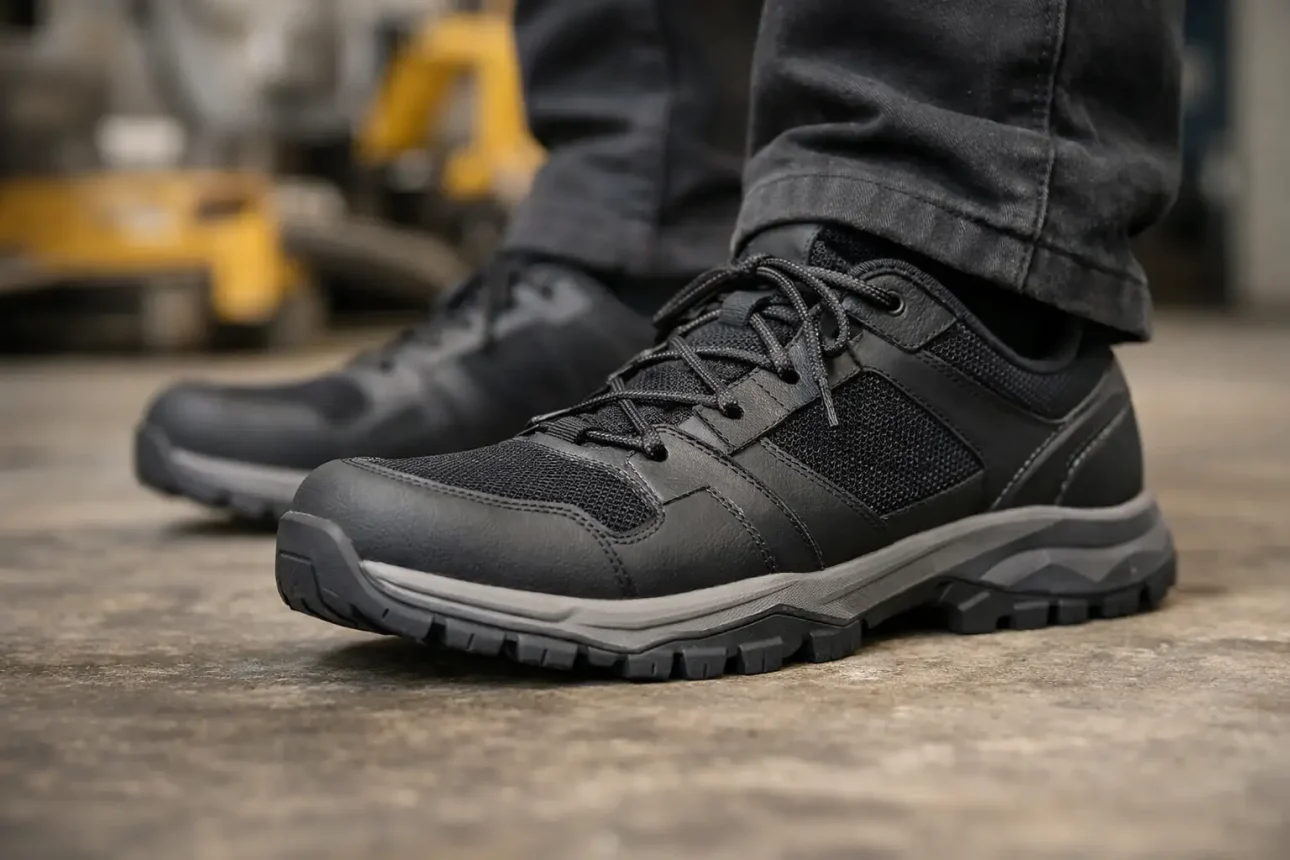
Your feet usually tell the truth by hour six.
A pair can feel fine when you lace it up at 8 a.m. Then by lunch, your arches are barking, your heel is rubbing, and every hard floor in the building feels personal. That’s why knowing how to pick work sneakers matters. Not for the first five minutes. For the last two hours of your shift.
A lot of people buy work shoes the wrong way. They shop by brand loyalty, by looks, or by whatever pair is on sale. We like a deal too, but cheap gets expensive fast when your sneakers flatten out, start squeaking, or make standing all day feel worse. Work sneakers need to earn their spot.
Start with the floor, not the shoe.
If you work on concrete, tile, or warehouse flooring, you need more underfoot protection than someone moving around a carpeted office. Hard surfaces beat up soft midsoles fast. In that case, we pick sneakers with real cushioning and enough structure to stop your feet from doing all the work. Plush is good. Mushy is not. If the foam collapses when you press it with your thumb, skip it.
If your job means a lot of walking, weight matters too. A heavy sneaker can feel solid at first, then start dragging by mid-shift. Walking all day usually calls for something lighter with a smooth ride. If you mostly stand in place, a little more structure can be worth it.
And if your work includes quick turns, ladders, stockroom runs, or carrying boxes, don’t get seduced by super-soft running shoes with tall, unstable stacks. They can feel amazing in a straight line and sloppy everywhere else. For work, stable beats flashy.
Most people don’t need a lecture on foam compounds. They need a shoe that fits right without drama.
The toe box is the first thing we check. Your toes need room to spread a bit, especially if you’re standing for hours and your feet swell during the day. If the front feels snug in the morning, it’ll feel worse later. On the other hand, if your foot is sliding around, that’s not comfort. That’s friction waiting to happen.
Heel fit matters just as much. A little padding around the collar helps, but what you really want is lockdown. Your heel should stay put when you walk. If it lifts every few steps, the shoe either doesn’t fit or doesn’t suit your foot shape.
Width gets ignored way too often. Some people keep sizing up when the real problem is that the shoe is too narrow. That just gives you extra length and a weird fit. If you know your feet run wide, shop like it. Don’t force a narrow shoe to become something it’s not.
Don’t judge a pair by standing still on a clean bedroom floor for thirty seconds. Put them on later in the day if you can, when your feet are closer to work-shift size. Wear the socks you actually work in. Walk. Turn. Stand. Bend.
If something feels off right away, trust that. Work sneakers are not the place to gamble on a break-in period. A shoe can soften a little. It won’t become a different shoe.
This is where people get tripped up. Soft and supportive are not the same thing.
Cushioning is what takes the edge off impact. Support is what keeps the shoe from feeling sloppy or collapsing under you. For long shifts, you usually need both. A soft midsole with no structure can feel great for an hour and lousy after that. A firm shoe with no give can feel tough in all the wrong ways.
We usually steer people standing all day toward sneakers with moderate to high cushioning and a stable base. Think comfortable, but not sinky. If the shoe feels like a mattress, that’s probably not your work shoe. If it feels like a plank, that’s not great either.
This is where some running shoes do well for work, and some absolutely don’t. Brands like Hoka, Brooks, New Balance, Asics, and Nike all make models that can handle long hours, but the right pick depends on how stable the platform feels under your foot. Not every popular runner belongs on a work floor.
The bottom of the shoe decides a lot.
If you walk on slick tile, polished concrete, or floors that see spills, traction matters. A nice-looking upper won’t save you if the outsole is flat and sketchy. Look for rubber coverage and tread that actually grips. Some lifestyle sneakers look clean but have bottoms that belong nowhere near a fast-paced shift.
Durability matters too. If the outsole is thin or the heel area already looks light on rubber, expect it to wear down fast. That’s fine for a casual pair you rotate in on weekends. Not for work. Your work sneakers should take abuse without looking cooked in a month.
Mesh feels great when it’s hot and you’re moving a lot. It breathes well and keeps the shoe lighter. The downside is simple: it gets dirty faster and usually offers less protection.
Leather or coated uppers are easier to wipe down and often feel tougher. They make more sense if your job is messy or if you need a cleaner look. The trade-off is heat. They usually run warmer.
That’s why there isn’t one perfect upper. There’s the right one for your shift. If you work in heat, heavy leather might annoy you by noon. If you deal with spills or grime, thin mesh might be a bad call.
We sell sneakers. We’re not going to pretend looks don’t matter.
If you’re wearing a pair five or six days a week, you should like how they look. Clean lines, easy colorways, something that works with what you wear to work – all fair game. But don’t let style make the decision for you.
Some sneakers look sharp online and wear terribly. Flat casual models are the usual trap. They can be great for errands, travel, or going out. For all-day standing, a lot of them are just not enough shoe. If your job is hard on your feet, skip the pairs built mostly for looks.
A better move is finding something that sits in the middle. Modern running and walking sneakers often look clean enough for work while still giving you real comfort. That’s where a lot of people land for good reason.
Price matters. So does value. They’re not the same thing.
The cheapest pair on the page can end up costing more if it burns out in ten weeks. But the most expensive pair isn’t automatically better either. Sometimes you’re paying for hype, not wearability.
We look for the point where comfort, traction, and durability all show up without nonsense. If a sneaker feels great but the outsole looks flimsy, we’re out. If it’s tough as nails but feels dead underfoot, same answer.
It also helps to be honest about mileage. If you work full-time on your feet, your shoes are doing serious work. Don’t expect one pair to stay fresh forever. Even solid sneakers lose rebound over time. If you start feeling the floor more than you used to, that’s the shoe telling you it’s done.
People buy too small because they like a snug fit. Bad move for long shifts.
They buy fashion sneakers for warehouse work because they look better. Also a bad move.
They buy max-cushion shoes that wobble when they turn. Feels nice until it doesn’t.
And a lot of people keep wearing dead sneakers way past their limit because nothing is torn yet. Looks can fool you. Flattened foam is still worn out, even if the upper looks fine.
If you want the cleanest way to decide, ask four questions.
What kind of floor am I on all day? Do I stand more, walk more, or both? Does this shoe fit my foot shape without pressure or slop? And will the outsole still make sense after weeks of real wear?
That’s the stuff that matters. Not a fancy name for the foam. Not whatever pair is trending. Not a review from someone who wore them twice and called it research.
We’d rather put you in a sneaker that looks a little less exciting and feels right at 5 p.m. That’s the win. If you’re shopping at Sneaker Loft, that’s how we think about it.
Pick the pair that can handle your shift, not just your mirror. Your feet won’t care what was hyped. They’ll care what held up.