Cart
No products in the cart.
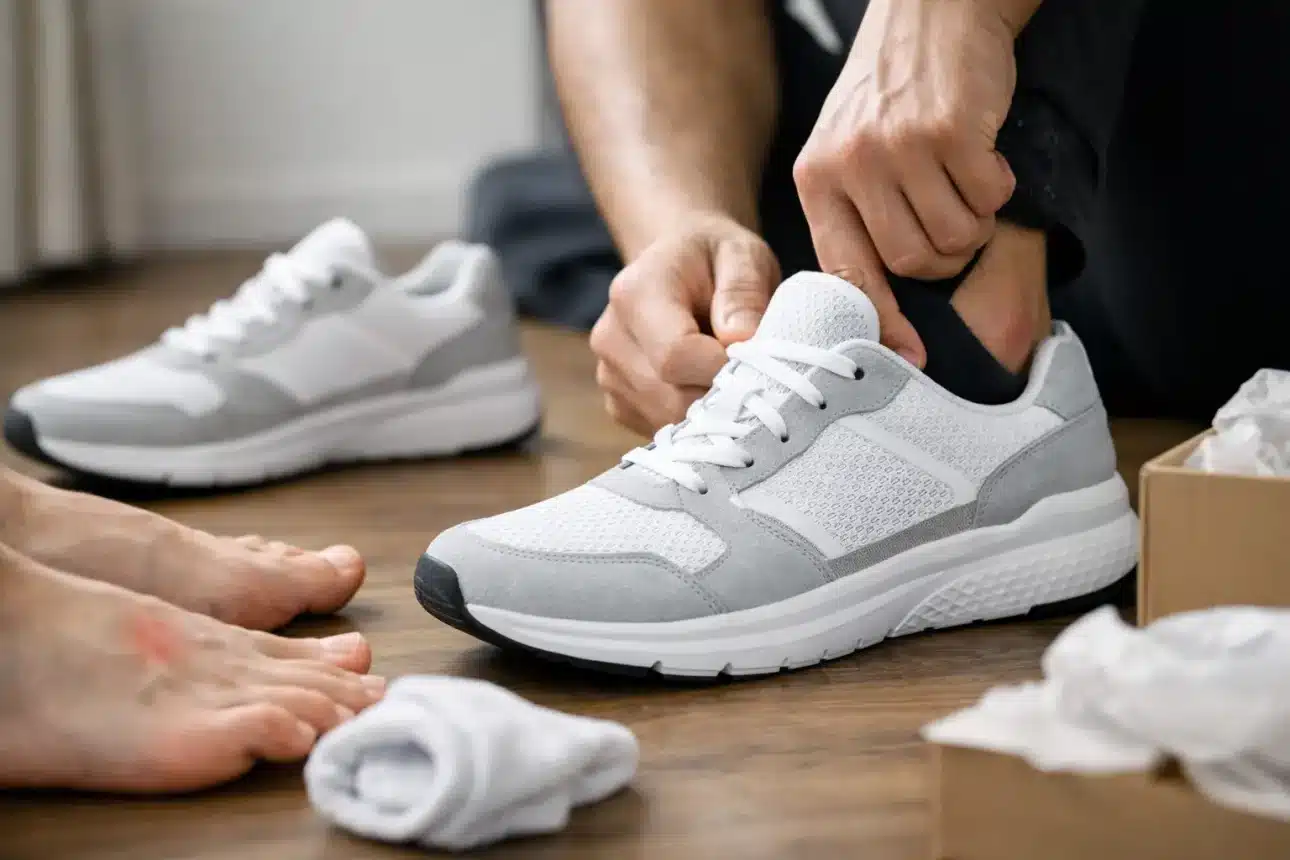
A new pair should feel a little firm, not like it is trying to punish you. That is the line. If you are wondering how to break in sneakers, forget the old advice about suffering through a full day or soaking them in water. Good sneakers need a gradual introduction. Bad sneakers need to go back in the box.
We have all made the mistake: fresh pair, big plans, ten thousand steps, heel rubbed raw by lunchtime. You do not get points for toughing it out. Breaking in sneakers is about letting the upper loosen where it needs to, letting the insole settle, and giving your feet time to notice a problem before it becomes a blister.
Start indoors. Put on the socks you actually plan to wear with the shoes, lace the sneakers properly, and walk around your home for 20 to 30 minutes. Take stairs. Stand at the counter. Bend your toes. This tells you more than sitting on the edge of the bed and admiring the color.
The first few wears should be short. Wear them for a quick errand, a coffee run, or a relaxed walk around the block. Then give your feet and the shoes a break. Do that for several days before making them your all-day pair.
Most sneakers need three to seven short wears to settle in. Thick leather, structured basketball shoes, and retro styles can take longer. Soft knit runners and foam-heavy walking shoes should feel close to right from day one. If a soft modern runner hurts immediately, do not expect a miracle on wear number ten.
A simple rule works here: mild stiffness is normal. Pinching, numbness, sharp pressure, or heel slip is not.
Breaking in can soften materials. It cannot create length, change the shape of a narrow toe box, or turn a too-small shoe into your size. Leather may give a little. Mesh may relax a little. The midsole may feel less rigid after some walking. None of that fixes a sneaker that crushes your toes.
Check the fit while standing, not sitting. Your longest toe needs a little room in front of it, roughly a thumb’s width for running and walking shoes. Your heel should feel held in place, but not squeezed. The widest part of your foot should sit at the widest part of the shoe.
Try both shoes. Feet are rarely identical. Walk on a hard floor and pay attention to where pressure shows up. If your pinky toe is pressed against the sidewall or your big toe hits the front, skip them. A clean-looking shoe that hurts is still the wrong shoe.
Fit can also change by brand and model. A sleek fashion sneaker may run narrower than a cushioned New Balance walking shoe. Some Nike models feel snug through the midfoot. Hoka shoes often have a more substantial platform. That does not make one better. It means you need to judge the pair on your feet, not by the size printed on the box.
Thin, worn-out socks are a fast route to rubbing. Wear a pair with enough cushioning to protect your heel and forefoot, especially while the collar and tongue are still firm. You do not need giant hiking socks unless that is how you normally wear your sneakers. Just do not test a new pair in flimsy socks and then blame the shoe.
Lacing matters more than people think. If your heel is lifting, use the extra top eyelet to make a heel-lock lace. This pulls the shoe closer around the ankle without cranking pressure across the whole foot. If the top of your foot feels squeezed, loosen the middle laces instead of sizing up before you have checked the actual length.
Do not lace them as tight as possible. Your foot expands as you walk, particularly later in the day. A sneaker should feel secure, not vacuum-sealed.
A hot spot is the warning sign. It feels warm, tender, or irritated in one exact place. Stop when you feel it. Do not tell yourself it will disappear after another mile. It usually gets worse.
For a short break-in session, cover the area with a blister bandage or athletic tape before wearing the shoes again. You can also use a small amount of anti-chafe balm where rubbing happens. These are useful tools, but they are not permission to force a bad fit.
Look at what is causing the friction. A stiff heel collar may need a few easy wears. A loose heel may need different lacing. A rough internal seam or a toe box that rubs every time is a reason to return the pair. We would rather see you exchange the shoes than spend two weeks trying to outsmart them.
Do not put new sneakers in the washing machine, soak them, blast them with a hair dryer, or bake them in the oven. Heat can weaken glue, warp foam, and mess with synthetic overlays. Water can stain materials and leave the upper drying in a weird shape. Those internet tricks are for people who do not mind ruining a pair.
Do not bend the shoe hard in your hands over and over. Sneakers are designed to flex at specific points while you walk. Forcing sharp folds can crease leather and damage the upper. Wear does the job better than brute force.
And do not take a brand-new pair on a long run, a full shift, a concert, or a travel day. Those are the worst possible first tests. Your feet swell, you cannot easily change shoes, and you end up stuck with the problem. Break them in on a day when you can call it early.
Running shoes should not need a painful break-in period. A fresh pair may feel firmer than an old, worn-down pair, but the fit should be comfortable immediately. Take them on a short walk first, then an easy run. Save speed work, hills, and long distances until you know there is no rubbing or pressure.
Leather lifestyle sneakers are different. A structured leather upper can feel stiff around the toe crease, collar, and sides for the first few wears. Short sessions work best. The leather should slowly mold to your foot, but it should never make your toes curl or leave deep pressure marks.
Canvas sneakers can soften quickly, yet their flat soles are not made for every job. They look sharp with almost anything. They are not what we pick for an eight-hour shift on hard concrete. If you are on your feet all day, choose a sneaker with real cushioning and support instead of trying to make a flat casual shoe do work it cannot do.
Basketball and court-inspired sneakers often have stiff soles and padded collars. They may feel bulky at first. Wear them around the house, then for short outings. If you bought them to actually play in, do not make your first session a full game. Your feet need to learn the shoe, and the shoe needs to show whether it stays stable when you move.
There is a difference between new-shoe stiffness and a shoe that does not work for you. Return or exchange the sneakers if your toes hit the front, your foot goes numb, the arch feels painfully wrong, your heel keeps popping out after lacing adjustments, or the same hot spot returns every wear.
Pay attention to timing, too. Discomfort that appears after five minutes is a louder warning than a little stiffness after an hour. If you have foot pain that keeps showing up across different shoes, or pain that does not settle after you stop wearing them, talk to a qualified medical professional. Sneakers can make walking feel better or worse, but they are not medical treatment.
Keep new shoes clean while you test them indoors. Most retailers expect returns to look unworn. That means no pavement, no gym floor, and no “just one quick trip” outside until you are sure. It is boring advice. It also saves you from owning an expensive mistake.
At Sneaker Loft, we like a sneaker that feels good early and gets better with wear. Give a new pair a few short outings, use decent socks, and listen when your feet complain. If the shoe needs a battle plan just to be tolerable, it is not the pair.