Cart
No products in the cart.
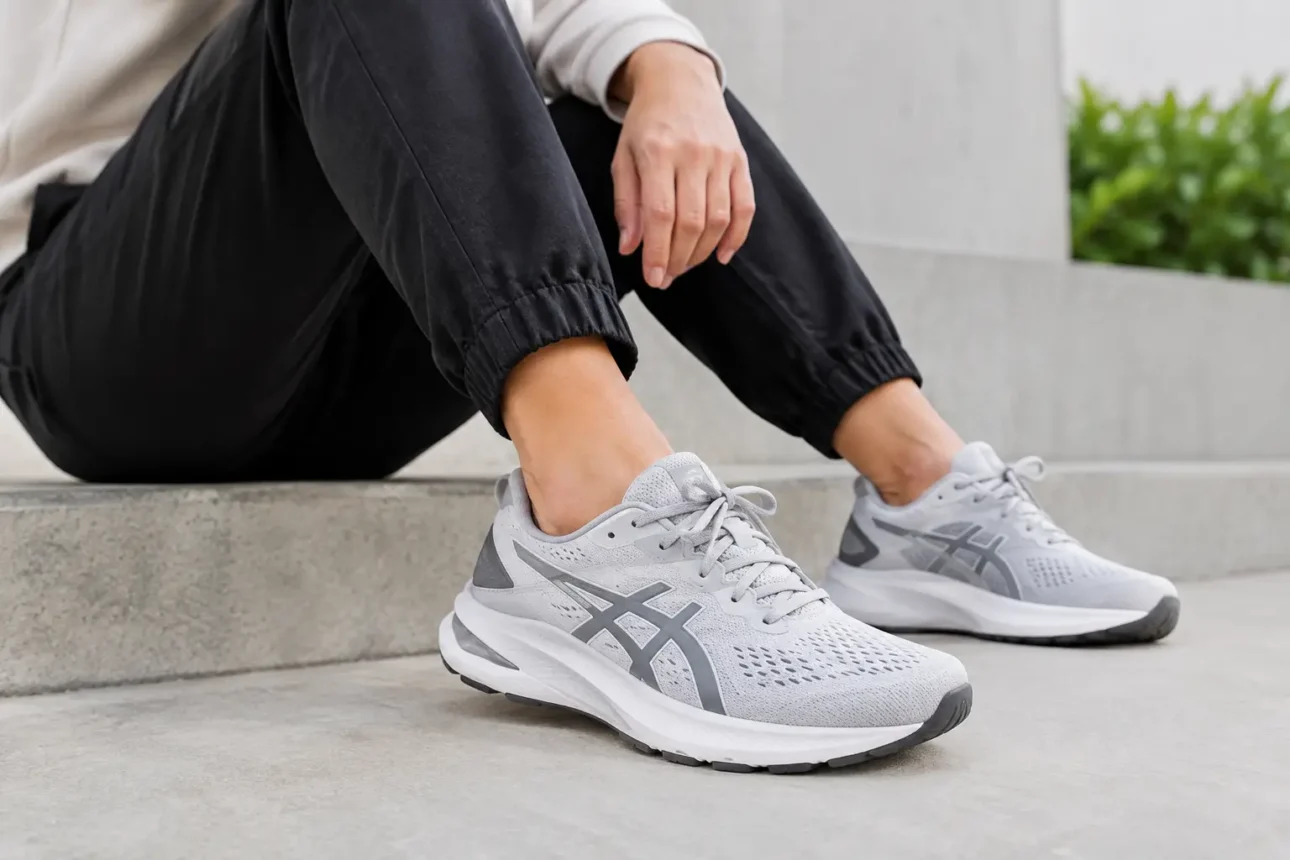
Your favorite running shoes might feel too good to leave by the door. Fair. If you’re asking, can you wear running shoes casually, the answer is yes – but not every running shoe works with every outfit. Some look clean and easy. Others make it look like you got dressed during a fire drill.
We wear running shoes casually all the time. The trick is choosing a pair that matches how you actually live, then not forcing it into situations where it clearly does not belong.
Absolutely. Running shoes stopped being gym-only footwear a long time ago. Plenty of them have a simple shape, neutral colors, and enough comfort for walking, commuting, errands, travel, and standing around all day.
What matters is the shoe’s silhouette. A low-profile pair in white, gray, black, navy, or a muted mix usually works with jeans, joggers, shorts, cargo pants, and casual chinos. Think New Balance daily trainers, clean Asics runners, or a simple Nike or Adidas pair with a balanced shape.
The harder ones to pull off are the loud, race-day-looking shoes. Super-thick midsoles, aggressive rocker shapes, carbon plates, neon uppers, and giant logos have a place. That place is usually your run. They can still work with sporty clothes, but pair them with dark jeans and a nice shirt and the outfit starts fighting itself.
We’re not saying every casual shoe has to be plain. A bold running shoe can look sharp. Just let it be the loud thing. Keep the rest of the outfit simple.
A lot of people wear running shoes casually because they are on their feet all day. That makes sense. Soft foam, breathable mesh, and a stable base can feel a lot better at 5 p.m. than thin flat sneakers.
But a shoe built for running is not automatically the best shoe for daily wear. Some running shoes feel soft for a few miles but unstable when you are standing still, walking slowly, or carrying groceries. Others have a tall stack that feels great on a smooth run but a little wobbly on stairs, uneven sidewalks, or public transit.
If comfort is your main goal, do not buy based on the word “running” alone. Look for a stable platform, a heel that does not slide around, and enough room in the toe box for your feet to spread naturally. If you work long shifts or walk a lot, those details matter more than whether a shoe has the newest foam.
A solid walking shoe, lifestyle runner, or daily trainer is often the better casual pick than a stripped-down speed shoe. The fastest-looking option is rarely the smartest everyday option.
Running shoes look most natural when the outfit already has an easy, practical feel. They are made for movement, so work with that instead of pretending they are dress shoes.
With jeans, choose a pair that does not bunch heavily around the ankle. Straight-leg and relaxed-fit jeans work well with chunkier running shoes. Slim jeans can work with sleeker models, but avoid squeezing them over a thick heel collar. That look is dated, and not in a good way.
Joggers and running shoes are an obvious match, but the fit still matters. Cropped joggers or a clean tapered pair show the shoe off without swallowing it. Baggy sweatpants can work with a chunky runner, especially if the colors are simple. Just skip the worn-out pair with stretched cuffs. Good shoes cannot save lazy pants.
Shorts are easy. Most running shoes look right with athletic shorts, casual nylon shorts, or simple cotton shorts. Keep the socks intentional. White crew socks work with most retro and everyday runners. No-show socks work if you want less attention on the shoe. Do not wear tiny no-show socks with a bulky dad-style runner. The proportions look off.
Casual chinos and running shoes can also work, especially for travel, a casual office, or a day where you need to walk miles. Stick to clean colors and a shoe without too much race-day energy. Gray, cream, black, white, and navy make this easy.
We like a shoe that earns its place. If you run three times a week and walk everywhere else, one pair can do both jobs for a while. A durable daily trainer makes sense. Models from Brooks, Hoka, Asics, Nike, New Balance, Adidas, and Puma can all fit that lane depending on the shape and colorway.
Still, do not make your serious running shoes your only pair if you can avoid it. Daily casual wear adds miles fast. It also means the shoe stays wet, dirty, or compressed when you need it for a run. Rotating between two pairs gives the foam time to rebound and keeps both pairs looking better.
If you only want one shoe, pick a versatile daily trainer over a race shoe. Choose a color you would wear with most of your clothes. White looks clean but gets dirty fast. Black hides grime but can look heavy in summer. Gray, off-white, and muted blue are the easy middle ground.
At Sneaker Loft, we would rather point you toward a shoe you will wear four days a week than a flashy pair that sits in the box because it only matches one outfit.
A running shoe can be casual. It is not magic. There are times to leave it at home.
Skip technical runners for weddings, formal dinners, interviews, and any event with a real dress code. A clean sneaker might be fine at a relaxed restaurant. A bright, oversized marathon shoe is not. Read the room.
Also skip shoes that are visibly cooked. Flattened foam, torn mesh, yellowed midsoles, and a heel worn down on one side make even a good outfit look rough. Running shoes are supposed to get used. They do not need to look brand new. But there is a difference between broken in and beaten up.
Finally, do not buy a shoe a half-size too small because it looked good online. Casual wear means more standing, more heat, and more time in the shoe than you may expect. If your toes are jammed after an hour, the color does not matter.
Walk around indoors with both shoes on. Your heel should feel held in place, not squeezed. Your toes need a little room in front. The upper should not pinch the widest part of your foot. If the shoe feels annoying in the store or at home, it will feel worse after a full day out.
That is especially true with fashion-forward runners. Some look fantastic in photos and feel stiff, narrow, or oddly shaped once you actually wear them. Looks matter. Your feet get the final vote.
You do not need to treat sneakers like museum pieces. You do need basic upkeep. Brush off dirt before it sets in, wipe the midsole now and then, and let wet shoes air-dry away from direct heat. Pull the insoles out if they get soaked.
Mesh uppers pick up dust quickly, especially in light colors. A soft brush and mild soap handle most everyday mess. Do not throw every pair in the washing machine. It can mess with glue, shape, and foam. Hand cleaning is slower, but it is safer.
If you wear one pair constantly, expect it to show. That is another reason two pairs beat one. One can handle rainy errands and dog walks. The cleaner pair can handle the rest of your week.
Running shoes work casually when they look like a choice, not an accident. Pick a pair that feels good, fits your clothes, and can take the miles you give it. Then wear them. Shoes are meant to leave the box.