Cart
No products in the cart.
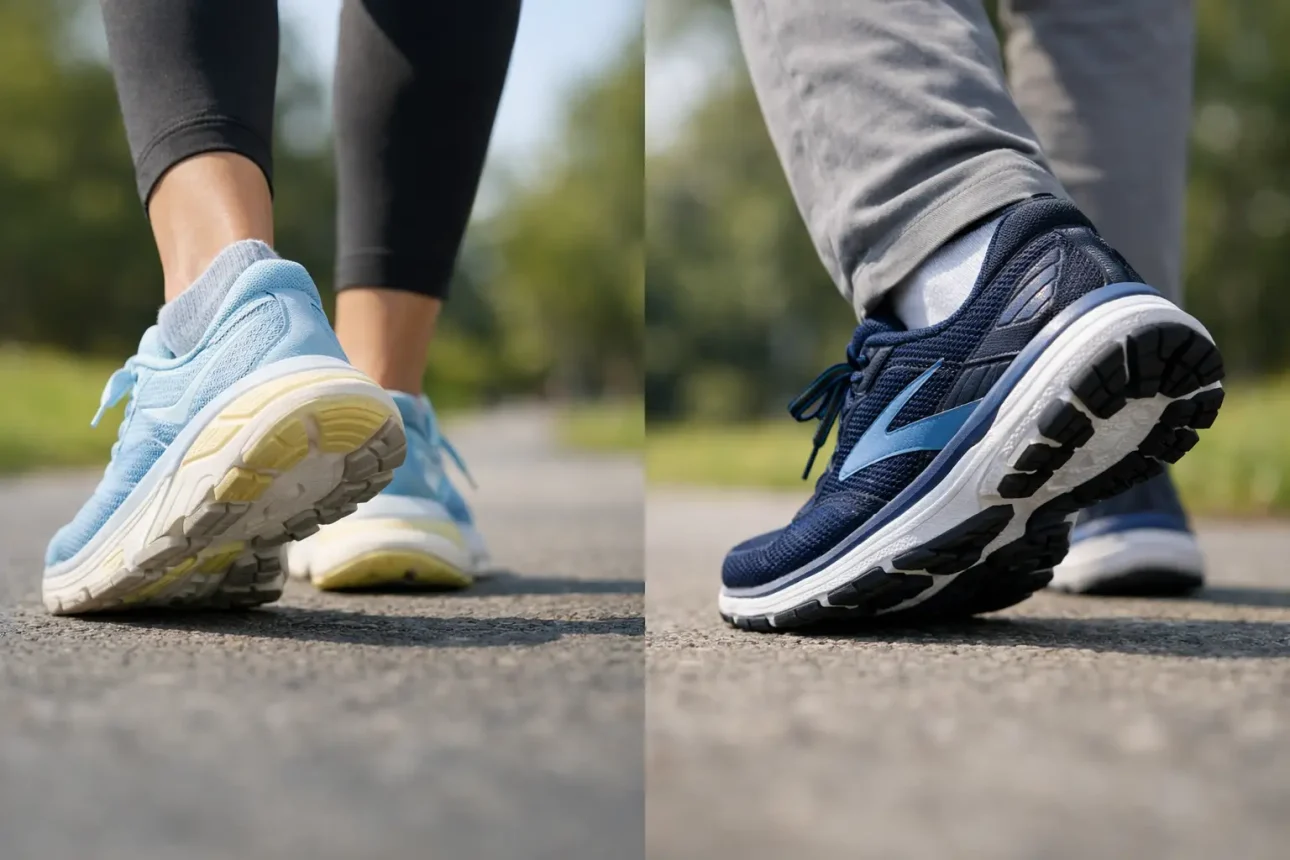
Some walking shoes feel fine for 20 minutes, then turn into a bad decision by lunch. That’s why hoka vs brooks walking is a real debate. Both brands make shoes people swear by, but they do not feel the same on foot. Not even close.
If you want the short version, here it is. Hoka usually wins on soft cushioning and that rolling, easy-stride feel. Brooks usually wins on balance, stability, and a fit that feels more familiar right away. Neither brand is better for everyone. One of them will probably feel right fast. The other might feel weird, bulky, or too firm.
Hoka makes shoes that feel like they were built to take the edge off. You get more stack underfoot, more softness in a lot of models, and a shape that helps move you forward. For some people, that feels amazing on long walks or long shifts. For others, it feels too tall and too disconnected from the ground.
Brooks is usually the safer pick if you like a more grounded ride. Not flat. Just more controlled. The cushioning is often still generous, but it does not usually have that marshmallow feel people expect from Hoka. Brooks tends to feel more stable, more predictable, and less dramatic.
That’s the split. Hoka feels softer and more rocker-driven. Brooks feels steadier and more traditional.
Most people do not care about brand talk. You care about how your feet feel at 5 p.m. That means four things matter more than anything else: cushioning, stability, fit, and weight.
Cushioning is obvious, but too much can be a problem. A very soft shoe can feel great at first, then sloppy later if you need more support. That’s where Brooks often makes more sense. Hoka can be the better call when impact is beating you up, especially on pavement, but not if the shoe feels wobbly under you.
Stability matters more than people think. You do not need a stiff, corrective shoe unless you know you do. But if your ankles feel tired, or you hate feeling perched on top of the midsole, Brooks has the edge. Hoka has stable models too, but the brand’s tall foam look and feel is not for everyone.
Fit might be the dealbreaker. Hoka can run a bit narrow in some models, especially through the midfoot. Brooks often feels easier for a wider range of feet right out of the box. If you have a wide forefoot or just hate being squeezed, do not assume Hoka’s cushion means comfort.
Weight matters on long walks. Some Hokas feel surprisingly light for how much shoe you’re getting. Some Brooks pairs feel a little more planted. Neither brand is brick-heavy in the good walking models, but the sensation is different. Hoka often feels like more foam, less effort. Brooks feels more natural, less float.
Hoka is the brand we’d pick when you want maximum softness without going full sloppy. If your walks are long, your routes are hard pavement, or your feet feel beat up after work, Hoka makes a strong case.
The big win is underfoot comfort over distance. A lot of Hoka walking-friendly models give you that thick, forgiving base that takes pressure off the day. You feel less road. That matters if you walk for exercise, commute on foot, or spend hours moving at work.
The rocker shape also helps. Not everybody notices it right away, but once you do, it can make walking feel smoother. Heel to toe feels quicker. Less clunky. Almost like the shoe helps keep you moving.
There’s a trade-off, though. Some Hokas can feel bulky. Some look bulky too. If you care about a cleaner, lower-profile look, not every Hoka is going to work for you. And if you like feeling connected to the ground, skip the tallest ones.
Brooks wins when you want comfort without the weird adjustment period. A lot of people try Brooks and get it immediately. The platform feels stable. The upper feels secure without being harsh. The ride feels cushioned but controlled.
That makes Brooks a smart pick for work shoes, daily walkers, and anyone who has tried ultra-soft shoes and hated them. If you’re standing, stopping, turning, and walking all day, Brooks often feels more practical than Hoka. Less bounce. More balance.
Brooks also tends to work well for people who want a shoe that can do more than one thing. Walk in it, run a little in it, wear it around town, get through the day. It’s not trying too hard. That sounds boring, but boring is good when a shoe just needs to work.
The downside is simple. If you want that ultra-plush feel, some Brooks models might feel a little plain. Not bad. Just less exciting underfoot.
If you’re on your feet all day at work, we usually lean Brooks if your job involves a lot of turning, standing, and mixed movement. The stable feel helps. If your job is more straight-line walking on hard floors or pavement, Hoka can be a lifesaver.
If you’re walking for fitness, Hoka is hard to ignore. The softer ride and rolling transition can make longer sessions feel easier. Brooks still works well here, especially if you want something a bit firmer and more controlled.
If you have wide feet, Brooks often has the easier fit. That does not mean every Brooks shoe is wide, and it does not mean every Hoka is narrow. But if we had to guess which brand gives fewer fit headaches, we’d pick Brooks.
If you care about style, this gets personal fast. Hoka has improved, but some pairs still look like pure comfort shoes. Brooks can look cleaner and less oversized, though not every model is a fashion win either. If you want a walking shoe that does not scream walking shoe, Brooks usually has the easier options.
This depends more on the model than the logo, but there’s still a pattern. Brooks often feels tougher over time, especially in the upper and overall structure. Hoka midsoles can feel great early on, but some pairs lose that magic once the foam starts packing down.
That does not mean Hoka falls apart. It means the ride can change faster. If your top priority is that soft, fresh feel, expect it to mellow out. Brooks may not wow you on day one the same way, but the feel can stay more consistent.
For daily walking, both brands can hold up well if you rotate pairs and do not grind them into the ground every single day. But if you want the safer durability bet, we’d give Brooks a small edge.
Neither brand is cheap. So value matters.
Hoka can feel worth the money when the cushioning solves a real problem for you. If your feet, knees, or legs just feel less cooked after a long day, that extra spend makes sense. But if you try Hoka and the fit is off, the value disappears fast. Expensive discomfort is still discomfort.
Brooks usually feels like the easier value buy. You know what you’re getting. Comfort, decent support, everyday wearability. It may not feel as flashy underfoot, but it often feels like money spent on something dependable.
That’s our honest take. Hoka has the bigger wow factor. Brooks has the lower chance of regret.
If you want soft cushioning, a smooth rolling ride, and relief from hard pavement, pick Hoka. If you want stable comfort, easier fit, and a shoe that feels normal right away, pick Brooks.
If you’re stuck between the two, we’d keep it simple. Pick Hoka for long-distance walking and impact protection. Pick Brooks for all-day wear, work, and better all-around stability. And if you already know you hate tall, squishy shoes, stop forcing the Hoka thing. Go Brooks.
We’ve seen people overthink this for days. Don’t. Your feet usually tell you fast. The right pair feels good without needing a speech. That’s the one worth wearing.