Cart
No products in the cart.
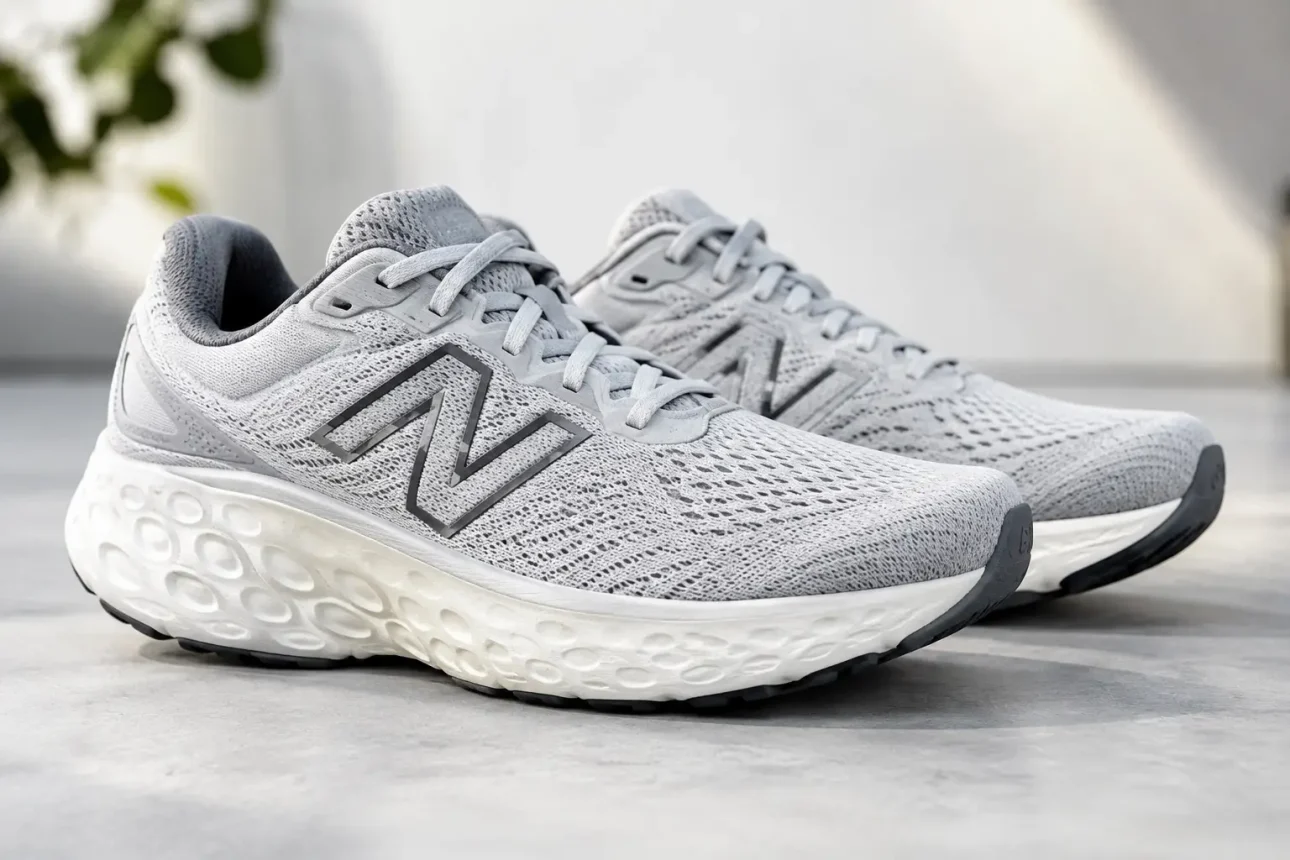
Your feet don’t care how many miles are on your training plan when you’re standing in a checkout line after work. They care whether your shoes feel soft, stable enough, and easy to wear. That’s where this New Balance 1080 review starts. The 1080 is built for comfort first. It does that job well. But soft doesn’t automatically mean right for everyone.
We’ve got a clear take: the Fresh Foam X 1080 is one of the better picks for easy runs, long walks, travel days, and people who spend hours on their feet. It feels cushioned without looking like a medical shoe. Still, if you want a fast, planted ride or a shoe that feels sharp around turns, skip it.
The New Balance 1080 is a soft daily trainer with a smooth rocker shape, a roomy feel compared with many running shoes, and enough cushioning for long days. It’s not a race shoe. It’s not a gym shoe. It’s the pair you grab when comfort matters more than feeling the ground.
The current Fresh Foam X 1080 versions lean into a softer, more rolling ride than older models. That makes them easier on tired legs. It also means the shoe can feel a little loose and wobbly if you land hard, make quick cuts, or prefer firm foam underfoot.
For most casual runners, walkers, and workers on their feet, that trade-off is worth it. For speed sessions or heavy lifting, it isn’t.
The first thing you notice is the cushion. The 1080 has a thick Fresh Foam X midsole that gives your foot a soft landing, especially at the heel. It doesn’t feel like you’re sinking into a pillow, but it is noticeably plusher than a traditional daily running shoe.
The rocker shape matters too. Instead of asking your foot to bend through every step, the sole helps roll you forward. On an easy jog, that feels smooth. On a long walk through an airport or a full shift on your feet, it keeps the shoe from feeling clunky despite the stack of foam.
We like the balance here. Some max-cushion shoes are so tall and soft that they feel disconnected from the ground. The 1080 still feels like a running shoe. Just a very forgiving one.
That said, the soft ride has a limit. If you’re a heavier runner, push the pace often, or tend to roll inward when you’re tired, the foam may feel less controlled than you want. The 1080 is neutral. It doesn’t have the firm guide rails or structured support of a stability shoe.
New Balance usually does width options better than most brands, and that’s a real reason to look at the 1080. Plenty of running shoes squeeze the forefoot, then call it a performance fit. The 1080 is more forgiving.
The standard width works for many average feet, while wide and extra-wide options make this a strong choice for people who are tired of sizing up just to get toe room. If your pinky toe always gets crushed in narrow Nike models or slim fashion runners, this is worth a look.
The upper is soft and stretchy, especially around the front of the foot. That’s good for comfort, but it can be a problem if you need a locked-in feel. Runners with narrow feet may need to cinch the laces more than usual. If the upper still feels too loose, don’t convince yourself it will magically become secure after 20 miles. Pick a firmer-fitting shoe instead.
Our advice is simple: start with your normal running size. Go wide if you already know you need more space. Don’t size up unless your toes are actually hitting the front.
This is a daily comfort shoe. That sounds broad, but it matters because a lot of shoes try to do everything and end up doing nothing well. The 1080 has a lane.
For easy runs, it’s solid. The cushion takes the edge off pavement, and the smooth transition helps when you’re not chasing a personal record. It’s also a good pick for long, slow runs if you like a softer feel and don’t need a stability shoe.
For walking, the 1080 is arguably even better. The foam stays comfortable over several hours, and the upper doesn’t feel stiff or overly sporty. It works with joggers, shorts, jeans, and travel clothes without looking ridiculous.
If you work retail, hospitality, healthcare, or any job where you’re moving all day, this shoe makes sense. We’re not saying it fixes foot pain. No shoe can promise that. We are saying the 1080 gives you more underfoot protection than flat casual sneakers, and you’ll notice that late in the day.
The 1080 isn’t a shoe for everything. Don’t make it your only pair if you run fast workouts, lift regularly, or play court sports.
The tall, soft midsole doesn’t feel great for squats, deadlifts, or any gym session where you want a stable base. You can wear it to the gym for a treadmill warm-up, but for serious lifting, pick something flatter and firmer.
It’s also not the best choice for speed. You can run fast in it, but the shoe doesn’t feel snappy in the way a lighter, firmer trainer does. The foam is built to protect your legs, not make you feel explosive. That’s not a flaw. It’s just the point of the shoe.
Grip is fine for normal roads and sidewalks. We wouldn’t choose it for wet trails, loose gravel, or rough terrain. The outsole is made for everyday mileage, not adventure running.
The 1080 has enough rubber in the high-wear areas to handle regular road miles, but it is still a soft-foam trainer. Expect the midsole to lose some of its fresh bounce over time. That’s normal. The question is whether it remains comfortable, and for most people, it does for a respectable stretch of daily use.
The upper is more of a mixed bag. It feels good right away and breathes well, but soft knit-style uppers are not known for being indestructible. If you drag your toes, work in rough conditions, or beat up your shoes, expect wear sooner than you would get from a tougher leather or reinforced mesh sneaker.
For normal running, walking, commuting, and standing, it holds up well enough. Just don’t buy a plush shoe and expect it to wear like a work boot.
Yes, especially if you spot an older pair on sale. The 1080v13 has a softer, more relaxed feel. Some people loved it for recovery runs and walking. Others thought it felt unstable because the platform was so plush.
The 1080v14 keeps the cushioned identity but gives the ride a more controlled shape. It feels smoother through the step and more secure for many runners. If prices are close, we’d pick the newer version.
But a discounted v13 can still be a smart buy if comfort is your main goal and you don’t need a highly stable shoe. That’s the kind of deal we like: a good shoe at a better price, not an old shoe nobody wanted for a reason.
Buy the 1080 if you want soft cushioning for easy miles, long walks, travel, or all-day standing. It’s especially worth a look if you need a wider fit or you’re tired of running shoes that feel narrow and stiff.
Skip it if you want firm ground feel, hard lateral support, fast turnover, or a stable lifting shoe. Also skip it if very soft foam makes your ankles feel unsure. Comfort is only useful when you feel confident in the shoe.
The 1080 earns its place because it makes ordinary miles and long days feel easier. Pick it when your priority is getting home with your feet still happy. That’s not flashy. It’s what actually matters.