Cart
No products in the cart.
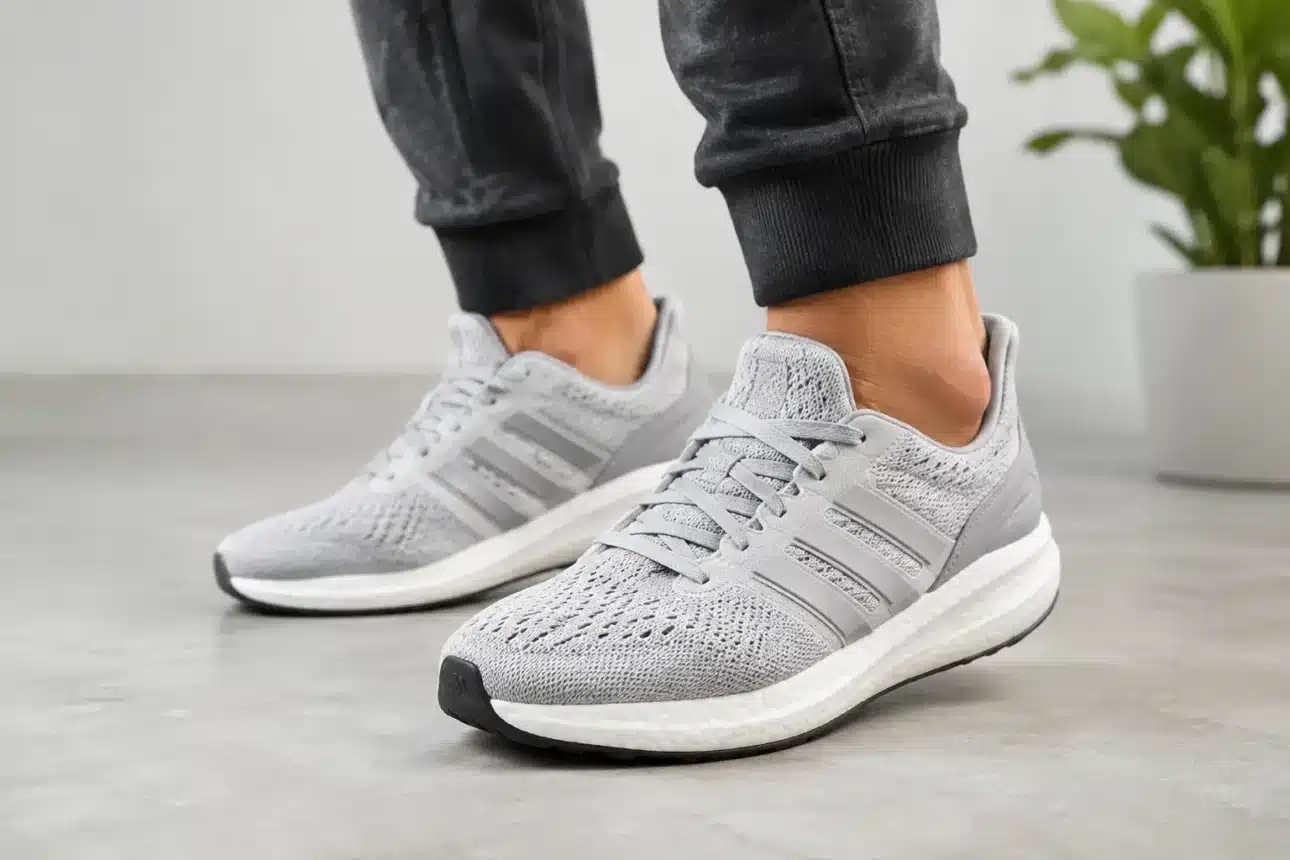
Your little toe rubbing the sidewall by noon is not a break-in problem. It is usually a bad fit. If you’re asking what shoes suit wide feet, start with this: pick a shoe with enough room through the forefoot, not just a longer size. Going up half a size can give you extra length, but it often leaves your heel sliding around. That is annoying at best and painful at worst.
Wide feet deserve shoes that fit without a fight. You should not need thinner socks, loose laces, or a week of suffering to make a sneaker wearable. Some shoes look sharp in the box and feel terrible by the end of the day. Skip them.
Width is not only about the label on the box. A shoe can technically come in a wide option and still feel cramped if its toe box narrows too fast. What matters is the shape of the upper and platform where your foot spreads when you stand and walk.
Look for a roomy, rounded forefoot. You want space for your big toe and little toe to sit naturally, without pressing into the sides. A flexible mesh upper can help, especially if your feet swell after a long shift, a walk, or a run. But mesh is not magic. If the sole beneath it is narrow, your foot still has nowhere to go.
We also look at the midfoot. Some wide-footed people have a broad forefoot but a normal heel. Others need more space across the whole shoe. A good fit holds the heel steady while giving the front of your foot room. If you can feel the shoe squeezing both sides of your foot when you are standing still, do not convince yourself it will improve.
Pick wide sizing when you can. It gives your foot more room across the shoe without adding useless length at the toe. That means better lockdown, less heel slip, and fewer creases where your foot is pushing the upper out of shape.
Going up half a size works only when the shoe is slightly short or the upper is soft and nearly fits. It is not the answer for a genuinely narrow sneaker. Go up too far and your toes may have room, but your foot will slide forward every time you stop. That can cause black toenails, heel rubbing, and that sloppy feeling nobody wants.
Here is a simple fit check: stand in both shoes with the socks you actually wear. Your longest toe needs about a thumb’s width of space at the front. Then walk around. Your heel should stay put, your toes should not touch the sides, and the upper should not bulge hard over the sole edge. If it does, the shoe is too narrow.
Feet also change through the day. Try on sneakers later in the afternoon if you can. That is when a shoe that felt fine at breakfast tells the truth.
For most wide feet, running shoes are the easy win. They are built for repeated impact, so the better ones tend to have more forgiving uppers, deeper interiors, and a wider base underfoot than slim fashion sneakers.
New Balance and Brooks are solid places to start because many of their running and walking models are offered in multiple widths. That matters. Hoka also makes shoes with plenty of cushioning and, in certain models, wide options that work well for walking or long days on your feet. They can look bulky, because some of them are bulky. But if you work retail, travel, or spend eight hours standing, we will take a slightly chunky sole over aching feet.
For casual running, choose a shoe that feels stable when you land. Super-soft foam can feel nice in a store, but an overly narrow or tall setup may feel wobbly if your foot spills over the edge. Cushioning is useful. A platform that cannot hold your foot is not.
If your day is mostly errands, commuting, travel, or work, look for walking-focused sneakers or easy daily trainers. A breathable mesh upper, padded tongue, and firm heel counter usually make more difference than flashy tech claims.
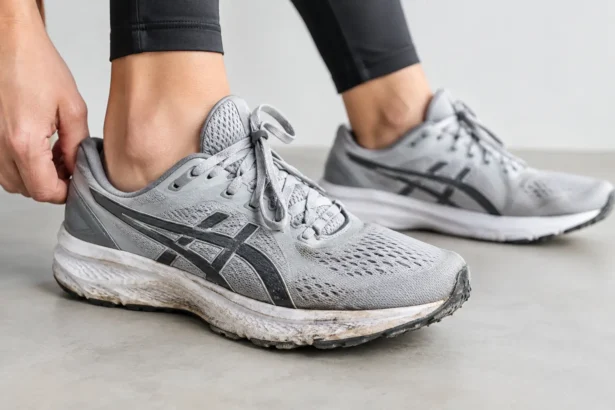
ASICS often does this well with practical daily trainers. The brand is not always the first choice for people building a fashion-heavy sneaker wall, but it earns respect when comfort is the job. For wide feet, that is a fair trade. A clean, neutral running-inspired shoe works with jeans, joggers, and most everyday outfits anyway.
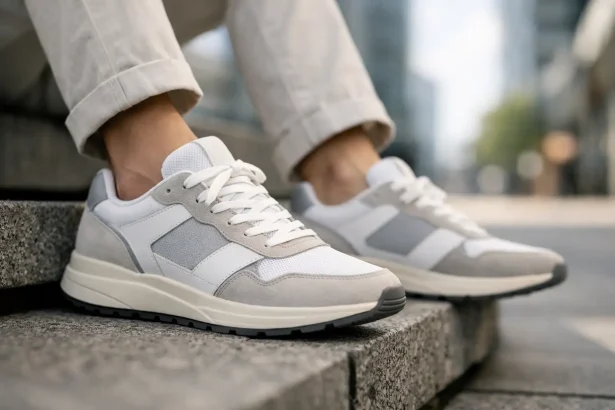
Some lifestyle shoes work for wide feet, but this category takes more caution. Retro basketball shapes often have a wider-looking sole, yet the actual upper can be stiff, low, and tight across the forefoot. Leather does loosen a little with wear. It does not turn a narrow shoe into a wide shoe.
We pick lifestyle pairs with a rounded toe area, adjustable lacing, and a little depth over the top of the foot. New Balance lifestyle models are often a safer bet than sleek, narrow court sneakers. Adidas and Puma both have comfortable casual options too, but fit changes a lot from model to model. Do not buy based on the logo alone.
Nike has plenty of great-looking shoes. It also has plenty of slim ones. If your feet are wide, be honest about that before buying a narrow retro runner or low-profile court shoe. A shoe can be iconic and still be wrong for your foot.
You do not need a degree in shoe materials. You need a few details that tell you whether a sneaker will feel good past 5 p.m.
A wide or extra-wide width option is the clearest sign. Next comes a toe box that stays broad rather than tapering into a point. Mesh, knit, and soft suede can be more forgiving than stiff synthetic overlays, though a supportive shoe still needs structure around the heel.
Laces matter more than people think. A shoe with traditional laces lets you loosen pressure over the widest part of your foot while keeping the heel locked in. Slip-ons are convenient, but if the upper is tight, there is nowhere to adjust. They either fit or they do not.
Removable insoles are useful too. If you wear orthotics or need a little more depth, taking out the stock insole may create room. Just do not use that trick to rescue a shoe that is clearly too narrow. If the platform is squeezing you, an insole swap will not save it.
Skip sharply pointed toe boxes. Skip narrow, flat canvas shoes if you are on your feet all day. They can look clean, but they rarely give wide feet enough room or support. Save them for short outings if you really like the look. Do not make them your only pair.
Be careful with slim retro runners, low-profile soccer-inspired sneakers, and shoes with heavy plastic overlays across the forefoot. They often feel restrictive before you have even left the house. Stiff leather court shoes can also be rough if the fit is close. Break-in is real, but it has limits.
Avoid buying a shoe because people online call it comfortable. Comfortable for a narrow foot is not automatically comfortable for yours. Reviews help when they mention fit details, but your foot shape gets the final vote.
If the shoe is close, start with lacing. Loosen the lower eyelets where your foot is widest, then tighten the top eyelets enough to secure the heel. This takes pressure off the forefoot without making the whole shoe feel loose.
Choose socks carefully. Thick socks add cushioning, but they also steal space. If a sneaker is already borderline, a lighter athletic sock may make it workable. If you need paper-thin socks to tolerate it, send the shoe back.
Shop both shoes, not just one. Most feet are not exactly the same size. Fit the larger foot, then adjust the other side with lacing or an insole if needed. That is smarter than forcing your larger foot into a cramped shoe for the sake of symmetry.
The best shoes for wide feet are not always the sleekest ones on the shelf. That is fine. A clean daily trainer with a proper toe box beats a stylish pair that leaves red marks on your feet every time.
At Sneaker Loft, we would start with wide-fit running or walking models if comfort is your priority, then add lifestyle sneakers that have proven room in the forefoot. Get the fit right first. Style is a lot easier to enjoy when you are not counting the minutes until you can take your shoes off.