Cart
No products in the cart.
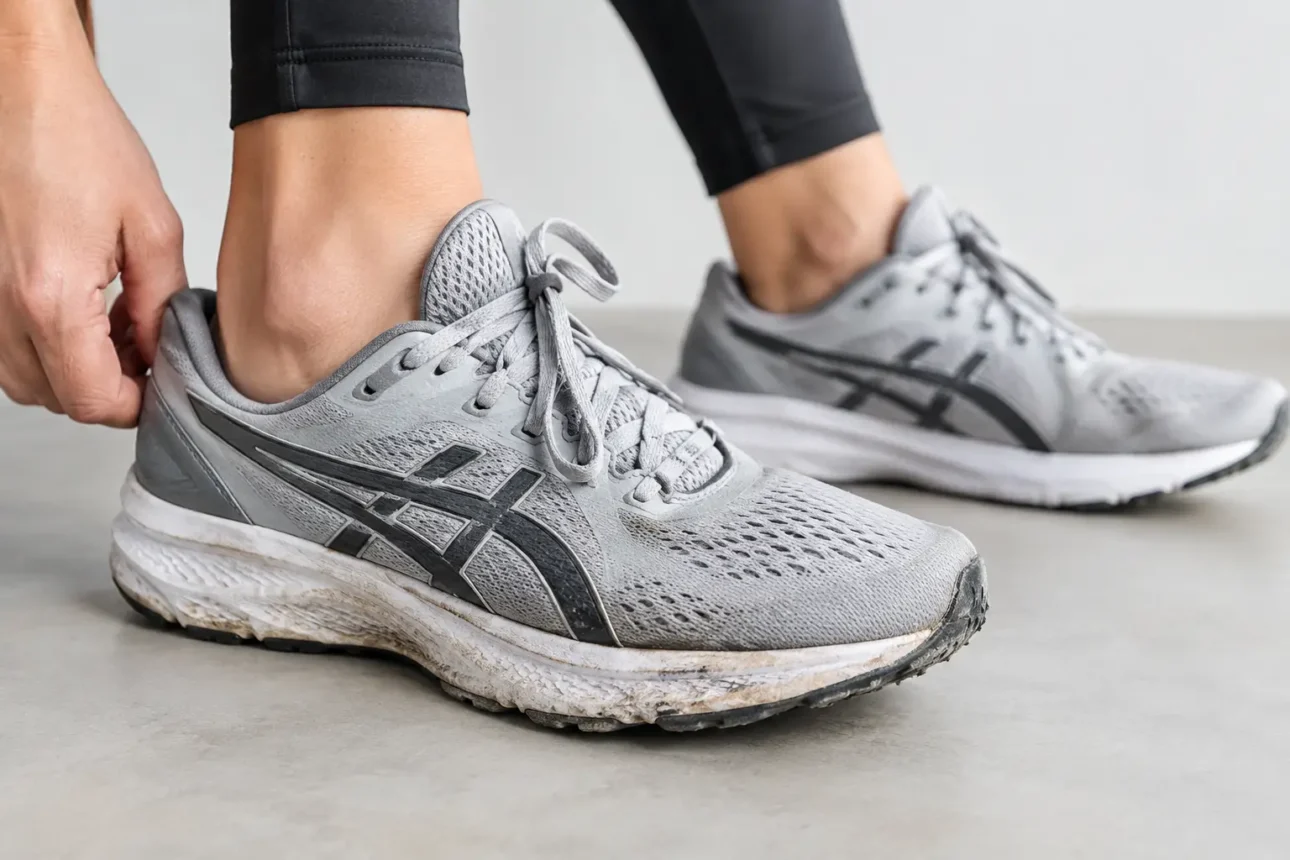
Your sneakers can still look clean and be completely cooked. That is the trap. The upper is holding together, the color still works, and you tell yourself they have plenty of life left. Meanwhile, the cushioning is flat, the sole is worn unevenly, and your feet are taking the hit.
So, when should you replace sneakers? Replace them when they stop doing their job. Not when a brand tells you to buy more. Not just because a new colorway showed up. When walking, standing, training, or running starts feeling worse than it should, check the shoes first.
Turn your sneakers over. This is the fastest honest test.
A little smoothing is normal. But if the tread is nearly gone, the outsole is worn down on one side, or you can see the midsole foam through the rubber, they are done. A worn sole gives you less grip on wet pavement, slick floors, and gym surfaces. It can also make the shoe lean, which is annoying when you are on your feet all day.
Look at both shoes, not just one. Most people wear down the outside heel first, then the forefoot. That does not automatically mean there is something wrong with how you walk. It means the shoe has been used. But if one side is clearly more worn than the other, the sneaker is no longer giving you an even platform.
For casual lifestyle pairs, a worn outsole can be mostly a traction issue. For running, walking, court, or training shoes, skip the gamble. Grip matters.
Put both sneakers on a flat table and look at them from behind. If one tilts hard inward or outward, the sole has likely compressed unevenly. You may also notice that the shoe rocks when you press on the heel. A solid sneaker should sit flat and stable.
Do not expect a new insole to fix a crooked outsole. Insoles can freshen up the feel. They cannot rebuild the bottom of a shoe.
Not every firm shoe is worn out. Some sneakers are built with a firmer ride on purpose. That can feel stable and responsive. Dead cushioning is different. It feels flat, packed down, and strangely harsh.
Think about how the pair felt in its first few weeks. Did it soften impact on your walk to work? Did your run feel controlled instead of slappy? If your feet feel beat up much sooner now, the midsole may be spent.
Press your thumb into the foam around the heel and forefoot. Deep creases, a permanently flattened spot, or foam that feels hard and lifeless are bad signs. Some creasing is cosmetic, especially on foam midsoles. What matters is whether the shoe still feels supportive under your actual body weight.
This is where looks can lie. A white midsole can look fresh long after its cushioning has faded. We would rather wear a scuffed pair that still feels good than a spotless pair that makes every sidewalk feel like concrete.
Runners hear the 300 to 500 mile rule all the time. It is useful as a rough check, not a commandment. A lighter runner on smooth roads may get more miles. A heavier runner, rough trails, hot weather, or daily use can wear a pair out faster.
For most running shoes, start checking them closely around 300 miles. If you run three miles, four times a week, that is roughly six months. If you use the same pair for running, errands, dog walks, and standing around all weekend, it will go faster.
Walking shoes and work sneakers are harder to judge by mileage because few people track every step. Use time and feel instead. A pair worn for long shifts five days a week may be ready in six to nine months. A casual pair worn twice a week can last much longer.
Do not make one pair your only pair if you are active or work on your feet. Rotating between two pairs gives the foam time to rebound and makes it easier to notice when one starts feeling off. It also means you are not forced into a rushed replacement when your daily shoe finally gives up.
A worn sneaker does not always announce itself with a hole. Sometimes the clue is that your usual route suddenly feels harder.
Pay attention if your feet feel unusually tired after normal use, if your shins or knees start feeling more beat up than usual, or if you notice new rubbing and hot spots. Those signals can come from plenty of things, including training changes and hard surfaces. But your shoes are the easy thing to check first.
If you get ongoing or sharp pain, do not just buy another pair and hope for magic. Talk with a qualified medical professional. Sneakers are equipment, not treatment.
Fit changes matter too. Feet can swell after long days, and your old favorite may start feeling tight across the toes or loose at the heel. Sometimes the shoe has stretched out. Sometimes your needs have changed. Either way, a pair that slips, pinches, or makes you adjust your stride is not worth forcing.
Holes in the toe box are obvious. Frayed lining around the heel is another clear sign. Once the inner heel fabric wears through, the stiff structure underneath can rub and chew up socks fast.
Check the laces and eyelets as well. A broken lace is cheap to replace. A torn eyelet or a separated upper is not always worth repairing, especially on a performance shoe. Glue can handle a small outsole edge that is lifting. It will not bring back compressed foam or restore the structure of a shoe that has broken down.
Here is the honest line: repair cosmetic problems if the sneaker still feels good and the sole is sound. Replace structural problems. A beat-up-looking shoe can still be wearable. A pretty shoe with dead foam is not.
Running shoes are the strictest category. Their cushioning and outsole are doing real work, mile after mile. Replace them sooner than your casual shoes, especially if they are your main training pair.
Walking and work sneakers need stable soles, enough room up front, and cushioning that does not quit halfway through a shift. If you stand on concrete for eight hours, skip flat fashion sneakers as your daily work shoe. They may look sharp, but looks do not help at 5 p.m.
Court shoes need reliable grip and side-to-side support. Once the outsole gets slick or the upper starts letting your foot slide around, retire them from the court. You can still wear them for errands if they are comfortable.
Fashion sneakers get more freedom. A classic pair with creases and worn leather can still look right. But cracked midsoles, smooth rubber, loose heel support, or exposed foam are not a vintage flex. They are a replacement signal.
The best time to replace sneakers is before the old pair becomes unbearable. If you run or walk a lot, buy the next pair while the current pair is still usable. Wear the new pair for shorter sessions first, then make the switch when the old one loses its feel.
That also gives you room to choose the right shoe instead of panic-buying whatever is in stock. Pick based on what you actually do. Need long-shift comfort? Choose a walking or running-inspired model with real cushioning. Want a clean everyday sneaker? Make sure it still has enough support for your routine. Style and comfort are not enemies. You just have to stop asking a flat, worn-out shoe to do both.
At Sneaker Loft, we keep it simple: if the sole is uneven, the cushioning feels dead, or your normal day suddenly feels tougher, replace the sneakers. Keep the old pair for messy chores if they still have grip. But for your commute, your run, or your shift, wear the pair that still has something left to give.