Cart
No products in the cart.
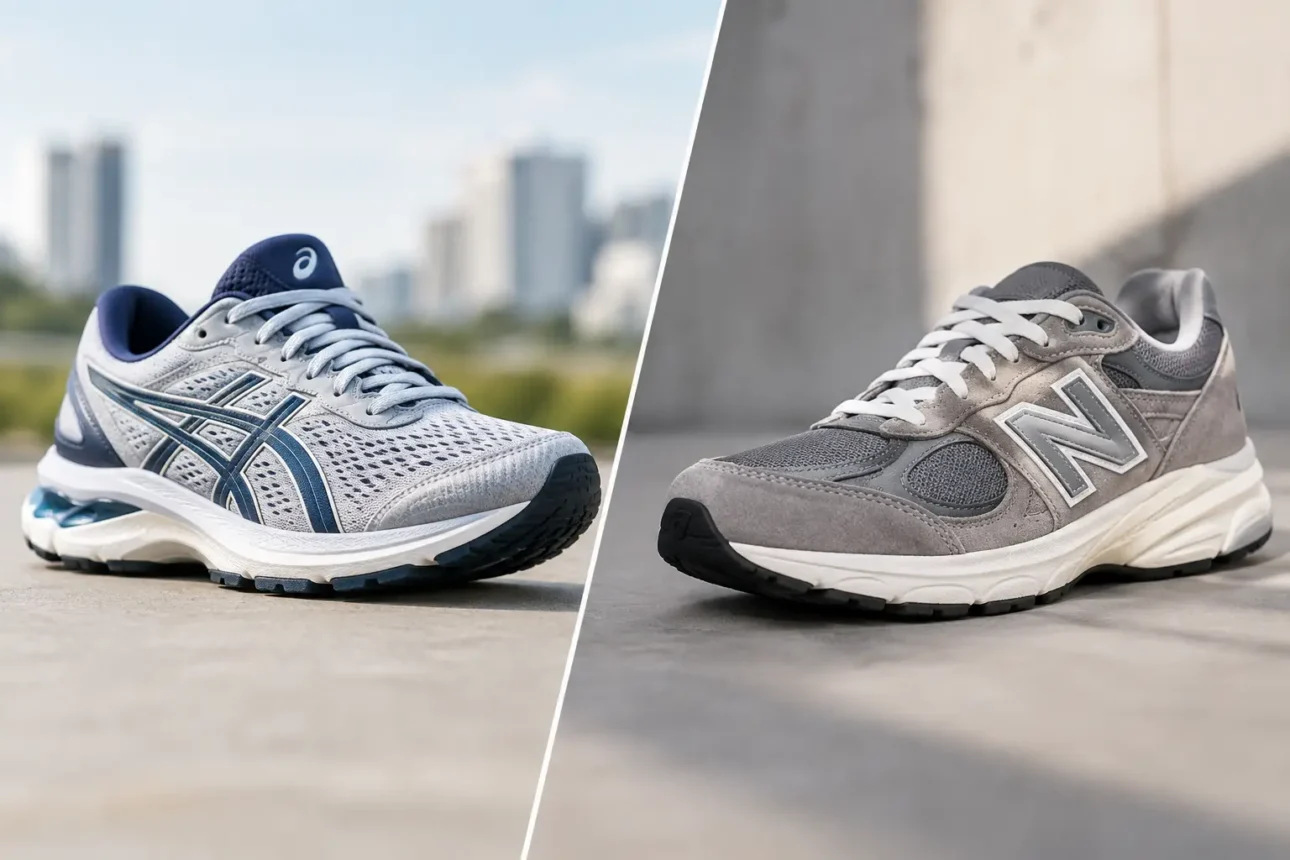
Your feet do not care which logo is cooler. They care about what happens three hours into a shift, halfway through a run, or after a full day in the city. That is where the Asics vs New Balance decision gets real.
Both brands make shoes people genuinely wear. Both have strong running lines, comfortable everyday pairs, and enough good-looking options to avoid the “gym shoe with jeans” problem. But they do not fit or feel the same. Pick the wrong one and a shoe that looked perfect online ends up sitting by the door.
Here is the straight answer: Asics is often the safer pick when you want a locked-in, run-focused feel. New Balance is usually stronger when comfort, room, and everyday wear matter just as much as mileage. The details matter, though.
We pick Asics for runners who want their shoe to feel stable, secure, and ready to move. Many Asics models have a more structured upper and a firmer sense of control through the heel and midfoot. That can feel great when you are running regularly or walking fast. It can feel restrictive if your feet need extra space.
We pick New Balance for people who want more fit options and a softer, easier ride for daily life. The brand is especially good at offering wide widths, which is not exciting until you have spent years squeezing into shoes that pinch your toes. New Balance also has a deeper bench of lifestyle classics that work with jeans, cargos, shorts, and actual outfits.
That does not mean every Asics shoe is narrow or every New Balance shoe is soft. It means the brands tend to lean in different directions.
Fit is where most people should make this choice. A shoe can have all the cushioning in the world, but it is useless if your heel slips or your forefoot feels crushed.
Asics often fits snugger through the midfoot and heel. The brand uses this secure shape well in running shoes, where you do not want your foot sliding around during turns or faster efforts. If you have a narrow to average foot, that close fit may feel dialed in right away. If you have a wide forefoot, do not assume you can just size up. Going longer can leave too much empty space at the toe while the width still feels wrong.
New Balance is the better bet if you struggle with narrow shoes. Many of its models come in multiple widths, including wide and extra-wide options. That is a practical advantage, not a minor spec on a product page. A proper-width shoe lets your toes spread naturally instead of rubbing the sides with every step.
Still, wide does not automatically mean loose. Some New Balance running models hold the heel very well while leaving more room up front. If you have a narrow heel and a broad forefoot, that is often exactly what you need.
Our call: average or narrow feet often get on well with Asics. Wider feet should check New Balance first. If you can, measure both feet at the end of the day, when they are at their largest. Buy for the bigger foot.
New Balance has built a reputation around soft, plush underfoot comfort, especially in its fresh-foam running shoes and walking-friendly pairs. That feel works for easy miles, commuting, standing at work, and casual wear. You put them on and your feet get a break from hard pavement.
But very soft shoes are not everyone’s favorite. Some people feel like they are sinking into them. If you like a more direct feel from the ground or need a shoe that responds quickly when you pick up the pace, overly plush foam can feel slow.
Asics generally gives you a more balanced setup. Plenty of its shoes are cushioned, but the ride often feels a little more controlled and a little less squishy. Its everyday running models tend to protect your legs without turning every step into a mattress. For runners who want comfort but still want to feel steady, that is a solid middle ground.
For standing and walking all day, we would not automatically crown the softest shoe. The right pair should feel good at 5 p.m., not just for five minutes on your bedroom floor. If your foot rolls around in deep foam, you may end the day more tired than expected. Try to find cushioning with a stable base under it.
If running is the main job, Asics has a strong case. The brand has spent decades making shoes for runners who care about fit, stability, and predictable movement. Its lineup makes it fairly easy to find something for easy runs, longer miles, speed days, or extra support.
The key word is predictable. Asics shoes often feel like they are guiding your foot through the stride instead of asking you to balance on a tall, soft platform. That makes them a smart choice for new runners who want less guesswork and experienced runners who know they prefer a secure ride.
New Balance is not behind in running. Far from it. Its best running shoes are comfortable, light, and capable, with options for daily training and faster sessions. But the lineup can feel broader and less obvious to a shopper who just wants one dependable pair. Some New Balance models are soft and relaxed. Others are quick and aggressive. You need to know what you are looking for.
If you run two or three times a week and want one pair that feels stable without being stiff, start with Asics. If you already know you love a roomy toe box or soft cushioning, New Balance may win.
Do not buy a race-focused shoe for dog walks, errands, and occasional jogging. That is how people spend too much money on a shoe that wears badly for their real life.
For walking, commuting, retail shifts, hospital floors, travel days, and long hours on your feet, New Balance is hard to ignore. The wider fit range alone puts it ahead for a lot of people. Add in cushioned daily trainers and classic walking styles, and it has plenty of options that make sense beyond the track.
This is where we get blunt: skip flat fashion sneakers if you stand all day. They may look clean in the mirror. They usually do not feel clean after eight hours on concrete.
New Balance gives you choices that can look understated while still offering enough foam and support for real use. Not every pair is stylish, and some lean heavily into dad-shoe territory. But if comfort is the job, we care more about how your feet feel than whether a sneaker looks like it belongs in a music video.
Asics can also work well for long shifts, especially its cushioned running-based models. But its sportier shape and snugger fit will not suit everyone. For pure all-day wear, New Balance gets our pick more often.
This one is simple. New Balance has the stronger lifestyle catalog.
Models like the 530, 574, 9060, 990-inspired styles, and classic court or trail-influenced pairs have become everyday staples because they work without trying too hard. They can be clean, chunky, retro, or understated depending on the model. You can wear them with relaxed denim, athletic gear, or a casual office outfit and not look like you forgot to change after a run.
Asics has caught up fast in the fashion lane. Its retro runners and technical-looking sneakers have real appeal, especially if you like mesh, silver details, layered panels, and that late-90s running look. Some of them look sharp. Some look like they were designed by a printer company in 2004. That is part of the charm, but it is not for everyone.
We pick New Balance if you want one sneaker for most outfits. We pick Asics if you like a more athletic, technical look and do not mind a shoe that makes more of a statement.
Neither brand gets a free pass here. Durability depends heavily on the model and how you use it. Running foam breaks down. Mesh uppers can tear if you drag your feet. Suede lifestyle pairs can look rough fast in bad weather.
That said, both brands generally make shoes that hold up when you buy the right pair for the right job. Do not use your soft daily runner as a work shoe, gym shoe, hiking shoe, and lawn-mowing shoe. It will not last like you hope.
New Balance can offer better value for shoppers who need specific widths or want a sneaker that handles walking and casual wear in one shot. Asics is often worth the money for runners because the fit and structured ride can save you from wasting miles in a shoe that feels off.
Price should not be the whole decision. A discounted shoe that rubs your heel is still a bad deal.
Choose Asics if you want a secure running shoe, a controlled feel underfoot, or a more performance-first fit. It is the brand we point to when someone says, “I want to start running, but I do not want to overthink it.”
Choose New Balance if you need wide sizes, spend long days on your feet, want softer everyday comfort, or care about styling your sneakers beyond workout clothes. It is the easier all-rounder for a lot of wardrobes and a lot of feet.
If you want the bluntest answer, start with New Balance for daily life and Asics for running. Then ignore that advice if the fit tells you otherwise. The best sneaker is the one you keep reaching for because it feels right every single time you lace it up.