Cart
No products in the cart.
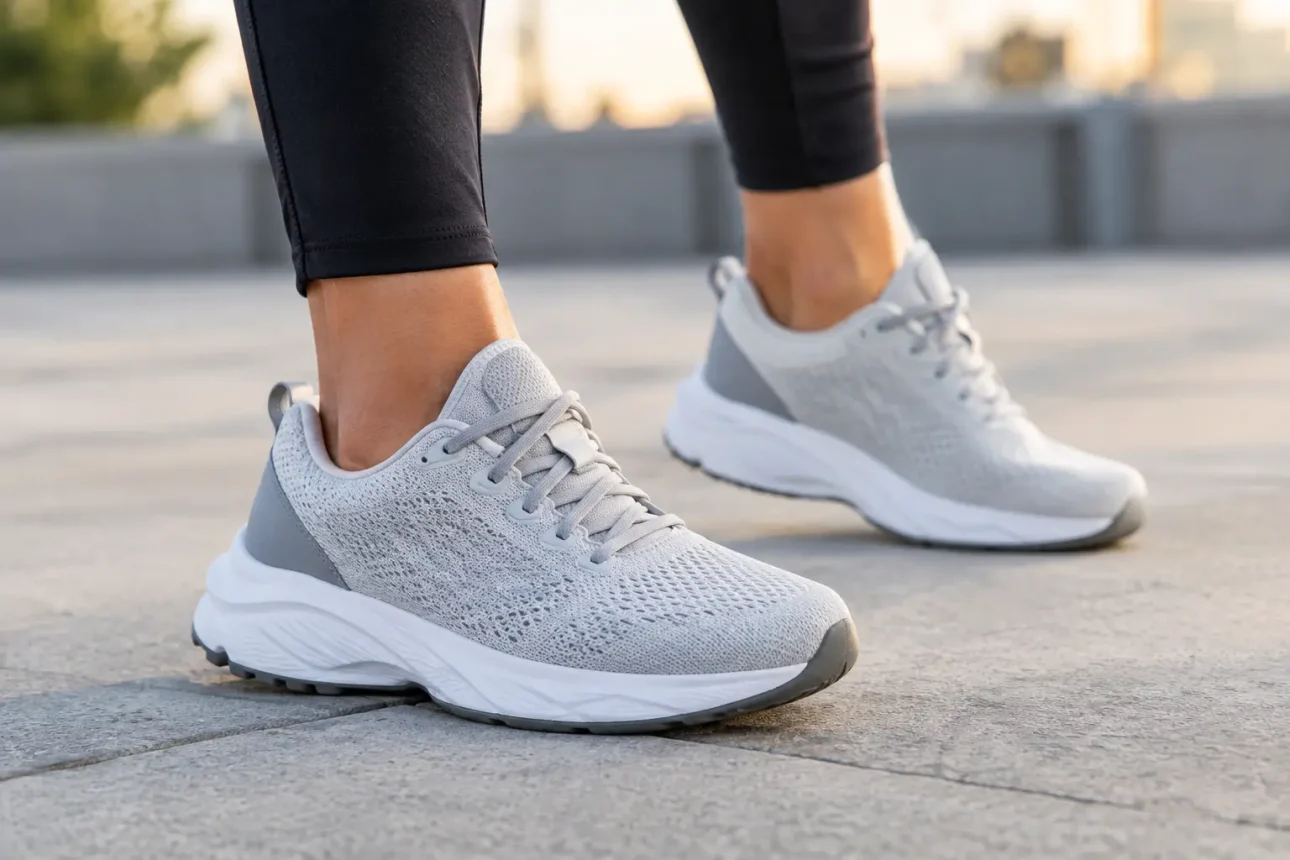
Walking sneakers are easy to judge at 5 PM. Not when you first lace them up in the morning. Not after five clean steps around the house. We mean after a commute, a grocery run, stairs, pavement, and a full day on your feet. If your feet are throbbing and you cannot wait to take them off, the shoe failed.
A good walking shoe does not need to look like medical equipment. It should feel stable, bend where your foot bends, and have enough cushioning that concrete does not beat you up. It should also work with the clothes you actually wear. That is the whole job.
Walking is not running at a slower pace. Your heel usually hits first, your foot rolls forward, and you spend more time with the sole on the ground. That means a shoe can feel soft in the store but still feel awkward after a few blocks if its shape fights your stride.
We look for three things first: a secure heel, room for your toes, and a sole that feels steady underfoot. Everything else comes after that. Wild colorways, oversized logos, and trendy shapes are fine. They do not matter if the shoe rubs your heel raw.
The best walking sneakers make long days less annoying. They are not supposed to make you think about your shoes every ten minutes. Put them on, walk, stand, get home. Simple.
The right pair depends on where and how you walk. Buying a shoe for an imaginary version of your life is how good sneakers end up sitting in a box.
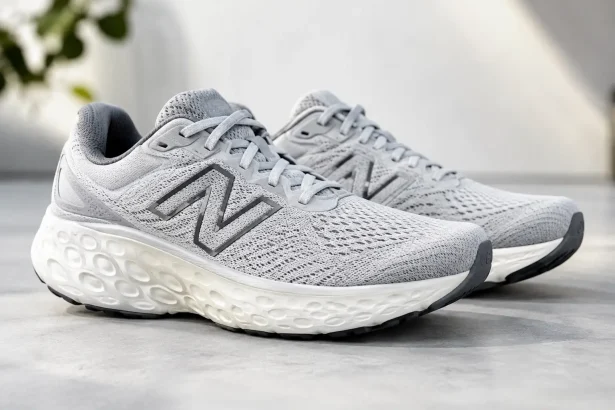
Pick a cushioned trainer with a broad base. A wider platform gives you a steadier landing when you are standing in line, turning corners, or carrying bags. This is where brands like Hoka, Brooks, and New Balance tend to make sense. Their comfort-focused models often have more underfoot protection without looking completely out of place with jeans or joggers.
Skip flat, thin-soled fashion sneakers if you work on your feet all day. They can look sharp. They can also leave your arches and heels feeling cooked by late afternoon. Save them for short walks, dinner, or days when you know you will mostly be sitting.
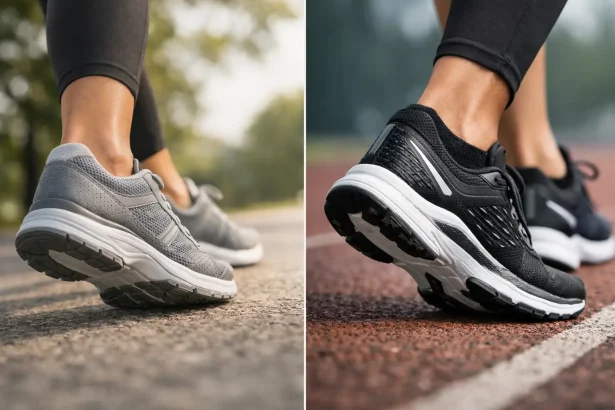
City walking is hard on shoes. Sidewalk cracks, wet crosswalks, subway stairs, and slick store floors ask more from the outsole than a smooth treadmill does. Look for visible rubber on the bottom, not just exposed foam. Rubber lasts longer and grips better when the pavement is wet.
You do not need a trail shoe for the block. In fact, aggressive trail lugs can feel clunky on pavement. A clean road-running or walking model with solid rubber coverage is the smarter pick.
If you walk for fitness but also want one pair for everyday wear, pick a neutral running shoe. Nike, Adidas, Asics, Puma, and New Balance all make models that can handle casual miles and still look right outside the gym.
There is a trade-off. A true running shoe can feel taller and softer than a classic lifestyle sneaker. Some people love that bounce. Others feel disconnected from the ground. Try not to buy based on the label alone. Buy based on how stable it feels when you walk.
A famous logo does not make a bad fit better. Different brands use different shapes, and even two models from the same brand can fit nothing alike. One may feel snug through the middle of the foot. Another may have a roomy toe box but a shallow heel.
Start with a thumb’s width of space in front of your longest toe. Your feet move forward slightly when you walk, especially downhill or after several hours. If your toes are already near the front when you are standing still, size up or skip that model.
Your heel should feel held, not crushed. A little movement is normal. Constant lifting is not. Heel slip often leads to rubbing, and no amount of breaking in will turn a poor heel fit into a good one.
Pay attention to width, too. If the sides of the upper press into your forefoot, do not tell yourself the material will magically stretch. Some mesh gives a little. Structured overlays and synthetic panels usually do not give much at all. If your feet feel crowded in the first five minutes, they will feel worse after five miles.
Try shoes later in the day when possible. Feet often swell after walking and standing. That is not a weird detail. It is exactly why a pair that felt fine at 9 AM can feel tight after lunch.
Soft cushioning has become the easy sell. More foam, taller soles, bigger claims. We like cushioning, but too much softness can make a shoe feel wobbly. If you feel like your foot is sinking or tipping sideways, that is not a comfortable ride. It is work.
For long pavement walks, medium-to-plush cushioning is usually the sweet spot. You want impact protection without losing control. A shoe with a wide midsole and a secure upper often feels more stable than a narrow shoe with even more foam.
Pay attention to flex as well. Walking sneakers should bend near the front of the foot. If the sole is stiff from heel to toe, your stride can feel forced. On the other hand, a shoe that folds too easily may not offer enough support for long days. Give the shoe a gentle bend in your hands, then walk in it. Your feet get the final vote.
If you use inserts, bring them into the decision. Some shoes have enough volume for an insole. Others become painfully tight once you add one. Remove the stock insole only if you need to, and make sure the heel still sits securely afterward.
We are not going to pretend looks do not matter. If you hate how a shoe looks, you will not wear it. The most comfortable sneaker in your closet is useless if it never leaves the shelf.
The cleanest choice for daily wear is often a low-profile neutral color with a performance sole. White, black, gray, cream, or a simple two-tone pair gives you more outfit options and hides less than you might think. Bright shoes are fun, but they can turn into a very specific purchase fast.
Lifestyle classics work when the walking is light. A retro Adidas, Nike, Puma, or New Balance pair can be a solid choice for coffee runs, travel days with breaks, and short city loops. Just be honest about the mileage. Do not make them your only pair if you regularly walk several miles or stand through long shifts.
At Sneaker Loft, we pick shoes that do both jobs when possible: feel good on pavement and look right off it. That does not mean every sneaker has to be subtle. It means the comfort cannot be an afterthought.
Do not wait for a hole before replacing walking shoes. Check the outsole. If the tread is worn smooth in key spots, grip is already dropping. Look at the midsole from behind, too. Deep creases, a lopsided lean, or cushioning that feels flat are all signs the pair has done its time.
There is no perfect mileage number because body weight, walking surface, and shoe construction all matter. But if a pair suddenly leaves you more tired than usual, compare it with a newer shoe. Your feet usually notice the decline before your eyes do.
Buy walking sneakers for the miles you really walk, not the version of you who only walks on clean sidewalks in perfect weather. Get the fit right. Choose enough cushion, keep the sole stable, and pick a color you will actually reach for. Your feet will tell you if you made the right call.