Cart
No products in the cart.
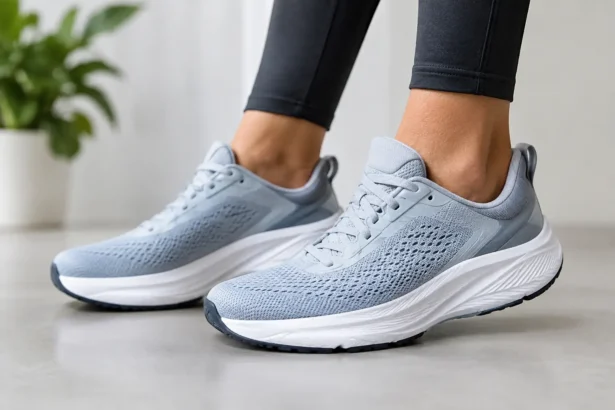
Your sneakers can be the right length and still feel terrible by lunch. That usually means the problem is width. A cramped toe box, pressure across the midfoot, or your pinky toe hanging off the edge are not things you need to “break in.” They are fit problems. Here’s how to measure sneaker width at home before you buy another pair that looks sharp but sits in the closet.
Sneaker width is the side-to-side space your foot gets, mostly across the widest part of the forefoot. Length is measured from heel to longest toe. Width is measured across the ball of your foot, where the big-toe and pinky-toe joints sit.
Most people shop by length only because that is what is printed on the box. Fair enough. But two people wearing a US men’s 10 can need very different fits. One may feel fine in a standard D width. Another may need a 2E wide. A shoe can also run narrow or roomy even when both pairs say “standard.” Brands are not perfectly consistent, and neither are their shoe shapes.
Width matters most if you stand all day, walk long distances, run, wear thicker socks, or have feet that swell as the day goes on. It also matters if you keep sizing up for room in the front. Going longer to solve a width issue gives you extra toe length, heel slip, and a shoe that bends in the wrong place. Skip that move.
You need a sheet of paper bigger than your foot, a pen or pencil, a ruler or tape measure, and the socks you normally wear with sneakers. Measure both feet. It takes five minutes and saves a lot of return labels.
Do this late in the afternoon or evening if you can. Feet often spread and swell after a day of walking, work, or training. Measuring first thing in the morning can make a close-fitting sneaker seem fine when it is not.
Put the paper on a hard floor, not carpet. Stand on it with your full weight on the foot you are measuring. Keep your body upright and your pen as vertical as possible. If you angle the pen inward, your tracing comes out smaller than your actual foot.
Have someone trace around your foot if possible. Doing it yourself works, but it is easy to shift your weight or twist around. Mark the back of your heel, the end of your longest toe, and the widest points on each side of the forefoot.
Your longest toe is not always your big toe. For plenty of people, it is the second toe. Measure what is there, not what you think should be there.
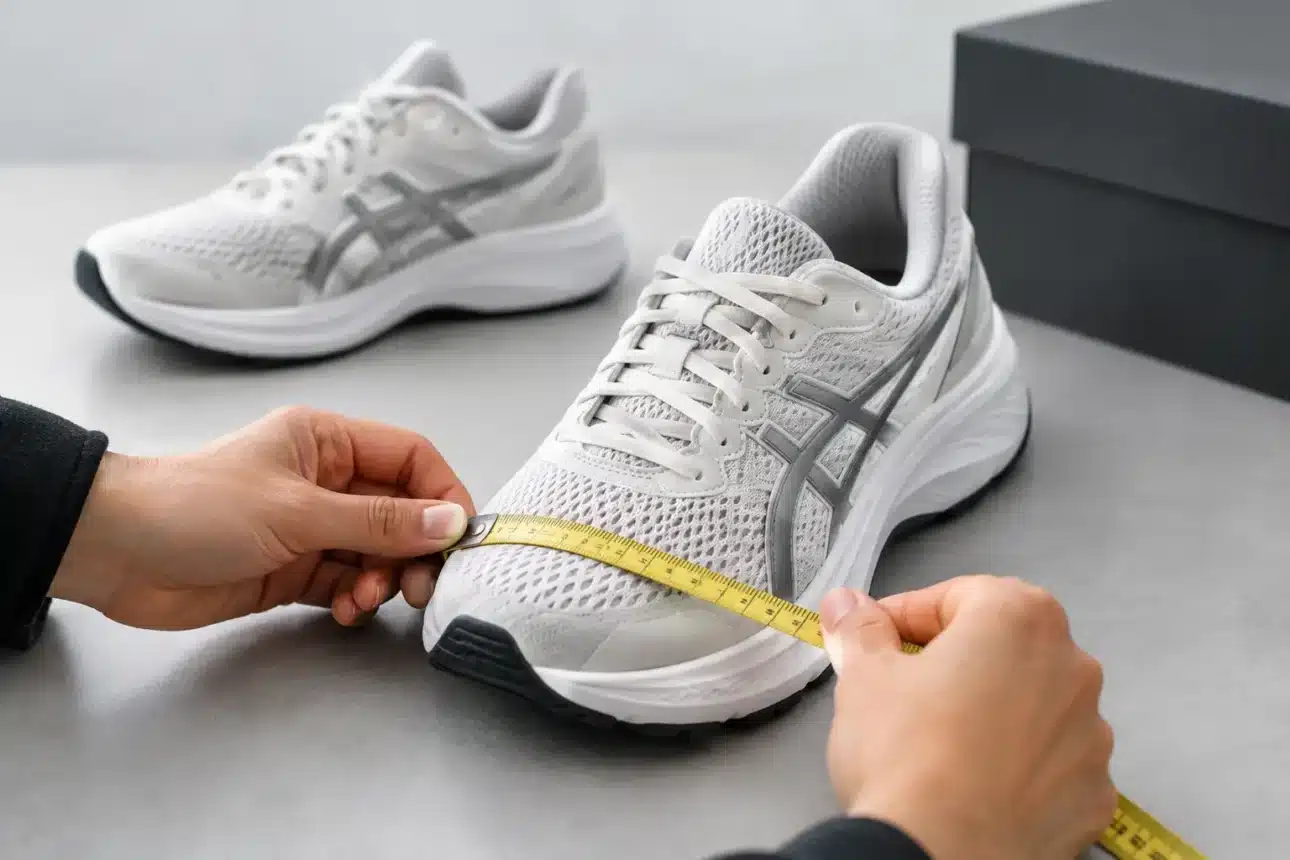
Use the ruler to measure straight across the widest part of each tracing. That number is your foot width. Write it down in inches or centimeters, then repeat on the other foot.
Also measure heel to longest toe while you have the tracing. Width is only useful when matched with length. Most brand width charts use both measurements and your usual US shoe size.
If one foot is wider, shop for the wider foot. That is the rule. Do not squeeze your larger foot to make the smaller one feel more locked in. You can adjust a little extra space with lacing, socks, or a thin insole. You cannot create more room inside a narrow upper.
Feet change. Weight changes, pregnancy, age, injury, long work shifts, and even a new training routine can change how much room you need. We have seen people wear the same listed size for years, then wonder why every new pair suddenly feels tight.
Use your measurements as a starting point, not a verdict. A foot tracing cannot tell you whether a sneaker has a pointed toe box, stiff overlays, or a narrow platform. The shoe still has a say.
In US sizing, standard men’s width is usually D. Standard women’s width is usually B. Narrower options are often labeled B for men and 2A for women. Wider options commonly include 2E, 4E, D, and 2E, depending on whether the shoe is listed in men’s or women’s sizing.
The labels get confusing fast, so do not memorize them blindly. Check the brand’s width chart for the specific size you plan to buy. A D in a men’s shoe is not the same category as a D in a women’s shoe. Some brands also use unisex sizing, which adds another layer of confusion.
Here is the honest part: plenty of lifestyle sneakers only come in one standard width. If the model runs narrow, a paper measurement will not magically make it fit. You may need a different model, a different brand, or a sneaker offered in wide sizing. That is not being difficult. That is buying the right shoe.
New Balance and Brooks are usually easier places to look when you need multiple width options. Hoka also offers wide versions in several running and walking models. Nike and Adidas can fit great, but many popular styles run more streamlined through the midfoot and toe box. If your feet are broad, read the shape of the shoe, not just the logo.
Your foot measurement gets you close. The fit test tells you if the shoe stays.
Put both sneakers on with your normal socks. Lace them fully, then stand and walk on a hard surface. Your toes should have room to spread without smashing into the sides. The upper can touch your foot. It should not pinch, burn, or leave deep pressure marks after a few minutes.
Pay attention to the forefoot first. If the sides of the shoe bulge outward around the ball of your foot, it is too narrow. If your pinky toe is pressed against the upper, it is too narrow. If your foot feels numb or tingly, it is definitely too narrow. Do not talk yourself into it because the color is good.
A wider shoe should not feel sloppy. Your heel should stay reasonably secure, and your foot should not slide side to side with every step. If the forefoot feels right but the heel is loose, try a runner’s loop lacing pattern before you ditch the pair. If the entire shoe feels loose, go back to the standard width or try another model.
Some performance sneakers are meant to feel more close-fitting than casual walking shoes. A race-day shoe, for example, may have a more locked-in upper. That can work for a short run if there is no pressure point and your toes still have room.
But a shoe for standing eight hours, walking the city, or daily easy miles needs more forgiveness. Your feet are not static. They expand. We pick the pair that feels good after twenty minutes, not the pair that feels impressive for thirty seconds in front of a mirror.
Measure and try on sneakers in the setup you will actually use. Thin no-show socks and padded running socks can change the feel more than people expect. Winter socks change it even more.
If you wear orthotics or supportive insoles, bring them into the equation from the start. They take up volume inside the shoe and can make a standard width feel narrower across the top and sides. Remove the stock insole only if the shoe still feels stable and the replacement sits flat. A curled-up insole or a heel that rides too high is a bad setup.
Lacing can help with pressure across the top of the foot, but it cannot make a narrow toe box wider. Loosen the lower laces or skip an eyelet over a sensitive spot if needed. If the sides are still squeezing you, return the shoes.
The biggest mistake is measuring while sitting down. Your foot spreads when you stand, so sitting gives you a smaller number. Measuring only one foot is another bad call. So is using a length chart and assuming the width will work itself out.
People also confuse a stiff new upper with a narrow shoe. Leather and some knit materials may soften a little. The midsole will also settle with wear. But the platform width does not grow, and hard overlays do not suddenly stop pressing into your foot. If the fit is painful out of the box, skip them.
Do not buy a half-size up just because your toes feel crowded from the sides. Check the width first. Extra length can make you grip with your toes and rub your heel. That turns a simple width problem into a shoe that is wrong everywhere.
A home tracing is solid for online shopping, especially when you compare it with a brand’s chart and know what shapes work for you. But if you have persistent pain, numbness, major swelling, or a big difference between your feet, get measured in person by a qualified footwear specialist or medical professional. Sneakers are not a diagnosis.
For everyone else, keep it simple. Measure standing up, use the wider foot, wear the socks you actually wear, and judge the fit after a few minutes on your feet. At Sneaker Loft, we would rather see you in a clean pair that fits than force a popular silhouette that makes every walk annoying. Your feet do not care what is trending. They care whether there is room to move.