Cart
No products in the cart.
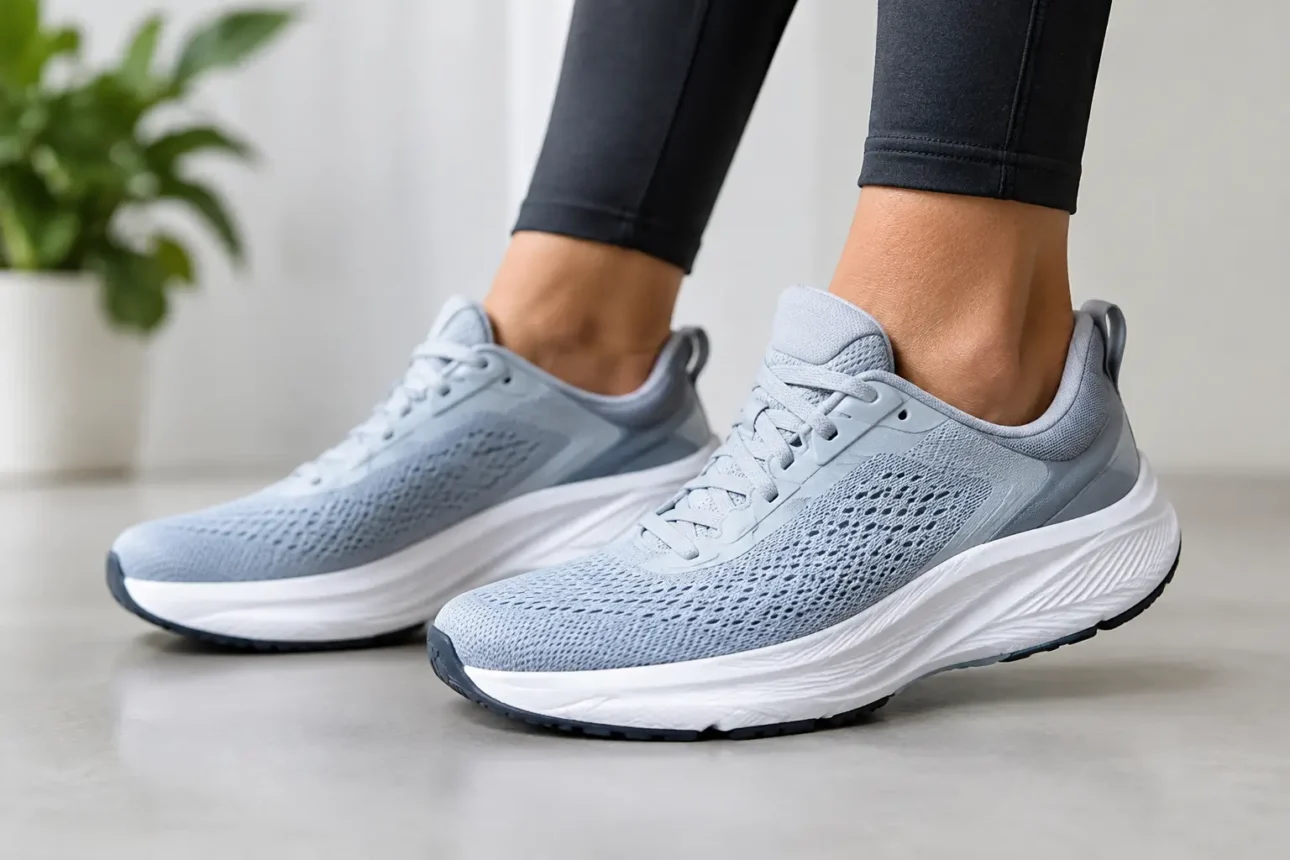
Your feet usually tell the truth before the rest of you catches up. That dull ache after a shift. The urge to kick your shoes off halfway through a walk. The feeling that your clean new sneakers somehow got old fast. Arch support sneakers can make a real difference here, but only if the shoe fits your foot and your day.
We see the same mistake all the time: people buy the softest-looking pair, wear them once around the house, then wonder why their feet are cooked by 5 p.m. Soft is nice. Support is different. You want both when you need a shoe for long days.
The arch is the curved area along the inside of your foot. A supportive sneaker helps spread pressure more evenly across the foot instead of letting everything collapse into the heel, ball of the foot, or inside edge. That can make standing, walking, commuting, and easy runs feel less draining.
But support does not mean a hard lump shoved under your foot. Bad arch support feels obvious. It digs in, pushes your foot into a position it hates, and makes you notice the shoe for all the wrong reasons. Good support feels steady. Your foot feels held up, not trapped.
This matters because flat, flimsy sneakers are not built for every job. They can look sharp with jeans, sure. But if you work retail, teach, travel, walk the dog twice a day, or spend hours on concrete, skip the flat ones as your main pair.
A sneaker with real structure usually gives you three things: a shaped insole, a midsole that does not flatten instantly, and a heel area that keeps your foot from sliding around. None of that needs to feel stiff or medical. It just needs to do its job.
Your friend might swear by a shoe that feels terrible on you. That is normal. Feet are different, and the word “supportive” gets thrown around too easily.
Some people need a firmer base because their feet roll inward a lot when they walk or run. Others hate firm shoes and do better with a neutral sneaker that has a contoured footbed and enough cushioning to take the edge off hard pavement. If you have a high arch, a shoe with a harsh raised arch can feel worse than a flatter, well-cushioned option.
We do not pick shoes by a single label. We look at what happens when you wear them. Does your heel stay planted? Does the middle of the shoe support your foot without poking it? Is there enough room up front for your toes to move? Those questions matter more than a tag that says “arch support.”
If you stand for hours, stability beats a super-squishy ride. Look for a broad base under the heel and forefoot, a secure heel counter, and cushioning that has some backbone. A shoe that feels like a pillow for ten minutes can feel sloppy after six hours if your foot is sinking into it.
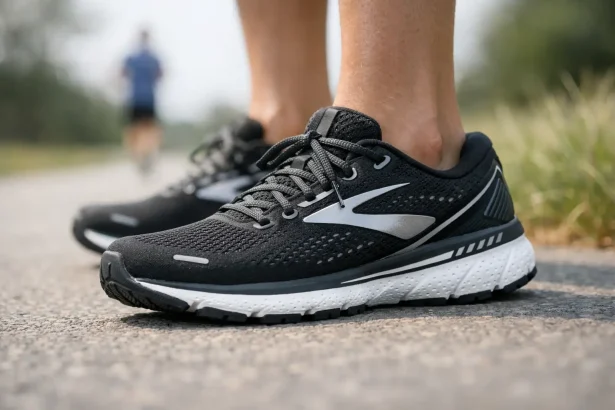
Walking and running brands often do this well because they build shoes around repeated impact. Brooks, Hoka, ASICS, and New Balance all make styles worth considering, but the logo is not the answer. Each brand has soft options, firm options, narrow fits, and roomy fits. Start with the shape and feel, then pick the brand you like.
You do not always need a bulky stability shoe. For daily walking, a clean lifestyle sneaker with a supportive insole and a solid midsole can be enough. The key is not to confuse a thick sole with support. Plenty of chunky shoes are heavy, stiff, and weirdly flat underfoot.
Try to find a pair that bends near the ball of your foot, not through the middle. It should flex when you step, but it should not fold like a towel. That simple check rules out a lot of shoes that look good online and wear badly in real life.
Runners need to be more specific. A supportive walking shoe may be fine for errands and still feel wrong at a running pace. If you run a few times a week, look for a running sneaker with enough stability for your stride and enough cushion for your usual distance.
Do not buy a heavy support shoe because someone told you pronation is bad. Some inward roll is normal. If you have recurring pain, injuries, or major changes in how you walk, talk with a qualified health professional instead of trying to diagnose yourself from a product page. A sneaker can support your routine. It cannot solve every foot problem.
Fit is where good shoes get ruined. The right model in the wrong size is still the wrong shoe.
Start with heel hold. Your heel should stay put without crushing the back of your ankle. Then check the toe box. You want roughly a thumb’s width between your longest toe and the end of the shoe, especially if you walk or run enough for your feet to swell later in the day.
Next, pay attention to the arch. It should line up with your arch. Sounds obvious, but it is why a shoe can feel great for one person and awful for another. If the support hits too far forward or too far back, do not wait for a break-in period to save it. It probably will not.
Finally, walk on a hard floor. Notice whether your foot tips inward, whether your toes feel squeezed, and whether the shoe makes you change your stride. A little new-shoe stiffness is normal. Numbness, rubbing, or pressure points are not.
A removable insole is a bigger deal than it sounds. It gives you options. If the sneaker fits well through the heel and toe box but needs more support, you can replace the stock insole with one that works better for you.
That said, do not use an insert to rescue a bad fit. An insole takes up space. Put one inside a sneaker that is already narrow or shallow, and you may create new problems. Buy the shoe that fits first. Treat an insert as fine-tuning, not a miracle fix.
We also would not throw an expensive insert into every pair you own. If a shoe is dead, crooked, or worn through under the heel, retire it. Support starts with a shoe that still has a stable base.
Comfort does not get a free pass for looking terrible. You should be able to wear supportive sneakers with cargos, jeans, joggers, shorts, or work basics without feeling like you borrowed shoes from a clinic waiting room.
The easy move is a low-key running-inspired silhouette in white, gray, black, navy, or a neutral mix. These work with almost anything and do not scream “performance shoe” when you are grabbing coffee or heading out at night. If you want more color, keep the outfit simple and let the sneakers do the work.
Some retro court sneakers look great, but many are flat and thin underfoot. We are not saying never wear them. Just do not make them your only pair if your day involves lots of walking or standing. Save them for shorter days, dinners, and situations where you care more about the look than the mileage.
Do not wait until there is a hole in the upper. Check the outsole and midsole. If the tread is worn smooth in one spot, the sole feels tilted, or the cushioning feels packed down, the shoe is done. You may not notice the change because it happens slowly, but your feet usually do.
How long a pair lasts depends on your body weight, walking surface, how often you wear it, and the shoe itself. Someone wearing the same sneakers on concrete five days a week will burn through them faster than someone using them for weekend errands. Rotate pairs if you can. It gives the foam time to rebound and keeps one shoe from taking every hit.
At Sneaker Loft, we pick the shoes that make sense beyond the product photo. The best pair is not always the flashiest pair, and it is rarely the cheapest one on the page. Pick arch support sneakers that hold your foot steady, leave room for your toes, and still look like something you want to wear tomorrow.