Cart
No products in the cart.
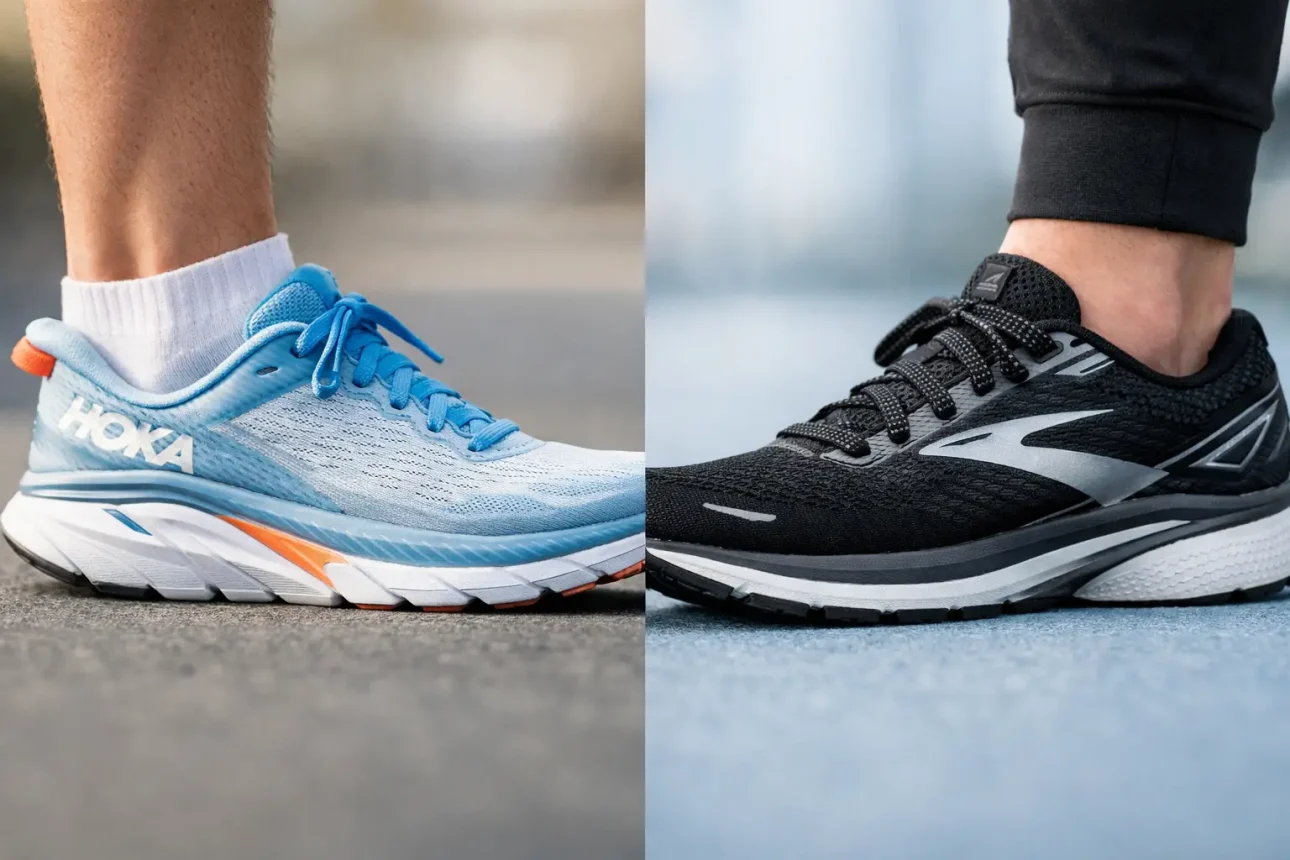
Your feet usually tell you the answer before a shoe review does. Put on a soft Hoka, walk across a hard floor, and you may feel like you gained an inch of foam. Put on a Brooks, and the ride often feels more planted and controlled. That is the real story behind Hoka versus Brooks cushioning.
Both brands make comfortable shoes. Both make solid options for running, walking, long shifts, and people who are simply done with thin, flat sneakers. But they chase comfort in different ways. Hoka goes big, soft, and rockered. Brooks leans balanced, stable, and familiar. Neither is automatically better. One may feel amazing on your first walk and annoying by lunchtime. The other may feel less exciting at first, then become the pair you keep reaching for.
Pick Hoka if you want a soft, high-stack feel that takes the edge off pavement. Their shoes often feel protective right away, especially when your legs are tired or you spend hours on concrete. The rocker shape also helps move you forward as you walk or run.
Pick Brooks if you want cushioning without feeling disconnected from the ground. Brooks shoes tend to feel more conventional underfoot, with a steadier platform and less of that tall, rolling sensation. For many people, that means they are easier to wear all day.
We would not call Hoka automatically softer across every model, because model matters. A Hoka Clifton and a Hoka Bondi do not feel the same. A Brooks Ghost and a Brooks Glycerin do not feel the same either. Still, the brand personalities are clear: Hoka feels more max-cushioned; Brooks feels more controlled.
Hoka built its name on thick midsoles. The shoes often look oversized, and yes, some people think they look a little strange. But the extra foam has a purpose. It puts more material between your foot and the pavement, which can make hard surfaces feel less punishing.
The Hoka Bondi is the obvious example. It is soft, tall, and made for people who want lots of protection on walks, easy runs, and long days on their feet. If you work retail, healthcare, hospitality, or anywhere that involves concrete floors, this kind of ride can feel like a relief. It is not a cure for sore feet. It is simply less harsh than a flat casual sneaker.
The Clifton is lighter and less bulky than the Bondi. It still has that soft Hoka character, but it feels quicker and more versatile for easy running. Then there are firmer, more responsive Hoka models that do not feel marshmallow-soft at all. Do not buy a Hoka just because you assume every pair is pillowy.
What separates Hoka is not only the foam. It is the geometry. Many models use a curved sole, often called a rocker, that helps your foot roll from heel to toe. Some people love it immediately. Others feel like the shoe is telling their foot where to go. If you prefer a natural, flat-feeling stride, that rocker can get old fast.
Hoka also tends to sit high off the ground. That brings more cushioning, but it can make some shoes feel less stable on sharp turns, uneven sidewalks, or quick side-to-side movement. For straight-ahead walking and running, it works well. For gym classes, court sports, or anyone who hates a tall platform, skip the max-stack pairs.
Brooks cushioning is usually less dramatic. That is not a knock. It is why so many runners and walkers keep buying the same Brooks model for years. You put them on, and they make sense.
The Brooks Ghost is the cleanest example. It offers enough soft foam for daily miles, but it does not feel squishy or overly tall. The ride is smooth, predictable, and easy to trust. It is a strong pick if you want one pair for walking, easy running, travel, and everyday wear.
Want more softness? The Brooks Glycerin gives you a plusher ride. It is Brooks’ answer for runners and walkers who want more underfoot protection without going full Hoka Bondi. It still feels grounded compared with many max-cushioned shoes. You get padding, but you do not feel like you are standing on a platform.
Brooks also has a stronger reputation for stability-focused options. Shoes such as the Adrenaline GTS add support features designed to guide the foot rather than forcing it into a stiff correction. That can feel useful if your shoes often collapse inward, or if you simply like a secure, steady base. But do not buy a support shoe because somebody online said everyone needs one. If a neutral shoe feels good and stable to you, stay with it.
The downside of Brooks cushioning is simple: people who want that instant wow factor may find it boring. A Ghost will not usually give you the plush, sink-in feeling of a Bondi. We are fine with that. Boring is good when the shoe still feels comfortable six hours later.
This is where shoppers get tripped up. The softest shoe is not always the most comfortable shoe.
Very soft foam can feel excellent during a quick try-on. Then your feet may work harder to balance on it during a long shift. A tall, soft shoe can also feel awkward if your ankles prefer a lower, steadier base. On the other side, a firmer shoe can feel dull for the first five minutes but become the better choice when you are walking through an airport or standing at a concert.
Pay attention to three things: how secure your heel feels, whether the forefoot has enough room, and whether the shoe makes your stride feel natural. Cushioning matters, but fit wins. Always.
Hoka often works well for people who want to reduce the beat-up feeling from hard pavement. Brooks often works well for people who want cushioning that does not change how they move. If you are between sizes, heel slip, arch pressure, or toe squeeze will matter more than the foam marketing on the box.
For long walks and hard floors, we pick based on the kind of comfort you like. If your current shoes feel thin and every step hits hard, try Hoka first. The Bondi is especially worth a look if plush cushioning is your main goal. It is not the sharpest-looking sneaker in the room, but it does its job.
If you want a shoe that feels secure from morning to night, Brooks is the safer bet. The Ghost is an easy daily choice, while the Glycerin brings more softness without turning the shoe into a foam tower. If you need extra guidance underfoot, Brooks has more clear support options too.
For casual style, neither brand is trying to be a sleek low-profile fashion sneaker. Hoka has a bolder, more modern runner look. Brooks is more classic and low-key. We would choose Hoka when comfort and a sporty silhouette are the point. We would choose Brooks when you want a shoe that blends in and gets the job done.
Easy runners who want soft landings often enjoy Hoka. The rocker can make steady miles feel smooth, and the high stack helps on long pavement-heavy routes. But do not assume more cushion means faster or better. Some runners feel sluggish in a big Hoka, especially if they like a firmer toe-off.
Brooks is the easier recommendation for runners who want a dependable daily trainer with a more traditional feel. The Ghost is a workhorse. The Glycerin is the plush upgrade. The Adrenaline GTS is a smart pick when stable landings matter more than chasing a lightweight feel.
Serious runners should not make any shoe their only pair if they run often. Rotate a softer option with something lighter or firmer. Foam compresses, your legs get used to the same feel, and no shoe stays fresh forever.
Hoka wins if you want maximum softness and a rolling, protected ride. Brooks wins if you want cushioning that feels steady, familiar, and easier to wear for everything.
Do not shop by logo. Try the feel you actually want at 5 p.m., not the feel that seems impressive for thirty seconds in front of a mirror. If pavement is beating you up, start with Hoka. If you want comfort without the wobble, start with Brooks. Your feet will make the final call.