Cart
No products in the cart.

A shoe can look right on the shelf and feel completely wrong by lunchtime. That is the real difference in the running shoes versus trainers question. Both are sneakers. Both can look clean with jeans. But they are built for different movement, and your feet notice fast when you pick the wrong one.
If you run a few times a week, wear running shoes. If your workout jumps between weights, short bursts of cardio, classes, and side-to-side movement, trainers make more sense. If you mostly walk, commute, stand at work, or wear sneakers for everyday life, either can work – but one may feel better depending on how you move.
We are not here to make this complicated. Buy for what you actually do, not for the version of you who might start training six days a week next month.
Running shoes are made to move you forward, again and again. They usually have more cushioning under the heel and forefoot, a curved shape that helps your stride roll forward, and a lighter upper that keeps the shoe from feeling heavy over distance.
Trainers, often called cross-training shoes, are made for varied workouts. Think squats, lunges, strength work, HIIT, gym sessions, and short treadmill intervals. They sit lower to the ground, feel more stable under load, and have a wider, flatter base than most running shoes.
That does not mean trainers are bad shoes for running or that running shoes cannot handle a gym session. It means there is a point where the mismatch becomes obvious. Run three miles in a stiff, flat trainer and your legs may feel beat up. Try heavy squats in a tall, soft running shoe and you may feel like you are balancing on a mattress.
A good running shoe manages repetition. Every stride sends force through your feet, ankles, knees, and legs. The shoe cannot do all the work, and no shoe can promise injury prevention. But the right amount of cushioning and a smooth ride can make regular runs feel less punishing.
Most running shoes have a noticeable heel-to-toe drop. That means the heel sits higher than the forefoot. Some runners like a higher drop because it can take pressure off the calves. Others prefer a lower, more natural-feeling platform. Neither is automatically better. If you are changing from a high-drop shoe to a low-drop one, do not suddenly double your mileage. Your calves will have an opinion.
Running shoes also tend to flex in the forefoot and use breathable mesh. That is useful when you are covering miles, especially in warm weather. Brands such as Brooks, Hoka, Asics, New Balance, Nike, and Adidas all make running models with different feels, from soft and cushioned to firmer and faster.
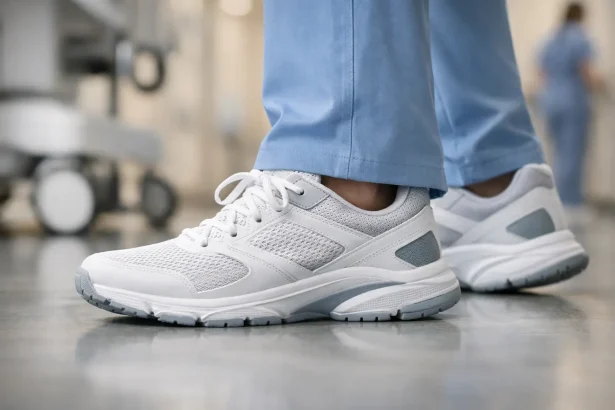
Pick running shoes if your main goal is road running, jogging, longer treadmill sessions, or walking long distances at a steady pace. They also make sense for people who spend most of the day on their feet and want cushioning instead of a hard, flat sole.
For a casual runner, comfort beats a race-day setup every time. You do not need the lightest shoe in the store. You need one that fits your heel without rubbing, leaves a little room in front of your toes, and still feels good after 30 minutes.
Do not buy a running shoe just because it is soft, though. Some super-cushioned pairs feel great standing still but can feel wobbly when you turn corners or walk quickly. If you need stability more than cloud-like softness, look for a broader base and a secure upper.
Trainers are the better call when your workout is not a straight line. They are designed to keep your foot planted during lateral movement, quick direction changes, and weight training. A flatter sole gives you a more stable connection to the floor, which matters when you are lifting or doing bodyweight work.
They are usually tougher around the sides, too. That helps when you are moving across the gym floor, doing burpees, or using a sled. A running shoe’s soft foam and narrow shape can feel unstable during these movements. It is not a flaw. It is just the wrong tool.
The trade-off is simple: trainers rarely feel as forgiving over longer runs. They are often firmer, heavier, and less flexible through the front. Fine for a warm-up mile. Not our pick for a regular five-mile run.
Buy trainers if you lift weights, take fitness classes, play recreational court sports, or mix short cardio bursts with strength work. They are also a solid option if you want one shoe for the gym and everyday errands, especially if you prefer a grounded, stable feel.
For people who work on their feet, trainers can work well if the job involves lots of turning, lifting, and moving around rather than long, straight walks. Still, if you finish a shift with sore feet from hours of walking on concrete, a supportive running shoe is usually the smarter bet.
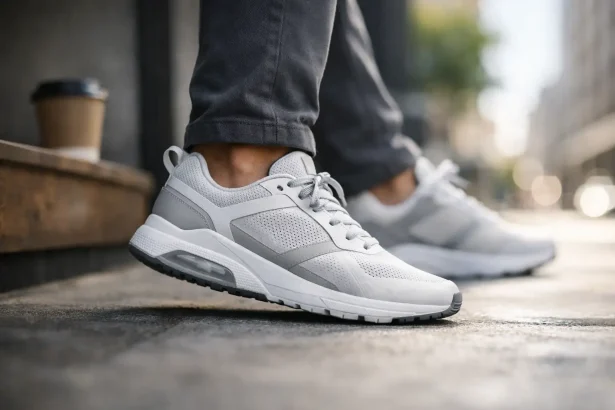
And if you are talking about “trainers” as a casual name for fashion sneakers, separate those from actual training shoes. A clean lifestyle sneaker may look sharp, but a flat fashion sole is not automatically good for the gym, a run, or an eight-hour shift. Style is part of the decision. It should not be the whole decision.
We have seen people overthink foam, plates, and brand names while wearing shoes half a size too small. Skip that. Fit comes first.
Your toes need room to spread and move. Your heel should feel secure without being squeezed. The middle of the shoe should hold your foot in place, not crush it. Try shoes later in the day if you can, when feet are naturally a little bigger. Wear the socks you normally train or run in.
Do not assume your size is identical across every brand. Nike can feel narrower than New Balance in some models. Hoka may feel roomy in one shoe and more locked-in in another. Even two shoes from the same brand can fit differently because their purpose is different.
A quick test helps. Walk around. Do a few gentle hops in trainers. If you are buying running shoes, jog in place and pay attention to heel slip, toe pressure, and any rubbing. A shoe should not need a painful break-in period to become wearable. A little stiffness is normal. Numb toes and heel blisters are not.
Yes. Most people do, and that is fine. The best one-pair choice depends on your week.
If you run or walk more than you lift, choose a versatile daily running shoe. It will handle errands and casual gym use better than a trainer will handle regular mileage. Keep your lifting sessions reasonable, and avoid using a tall, soft pair for serious heavy work.
If you mostly lift, take classes, or do short workouts with a little cardio, choose a trainer. It will be more stable and usually tougher. Just do not make it your only pair if you are building toward longer runs.
If you do both regularly, two pairs are worth it. This is not a sales pitch for a bigger shoe rack. It is the honest answer. A running shoe lasts longer when it is not dragged through every gym session, and a trainer works better when it is not asked to absorb miles it was never built for.
We get it. You want a shoe that works with your clothes. You should. The best pair is not much use if you hate wearing it.
But a good-looking shoe that pinches your toes is still a bad buy. The same goes for a bulky running shoe that feels perfect on a test walk but does not suit your actual training. Start with use, narrow it down by fit, then pick the color and shape you want.
At Sneaker Loft, we think shoes should earn their place. Choose running shoes for miles. Choose trainers for mixed workouts and lifting. And if your day is mostly walking, standing, and getting things done, pick the pair that still feels good when the day is nearly over.