Cart
No products in the cart.

Your feet can feel fine at 8 a.m. and completely cooked by 5 p.m. That is warehouse work. Concrete floors, hard turns, loaded carts, ladders, and miles of walking punish weak shoes fast. The best sneakers for warehouse work are not the flashiest pair in the break room. They are the pairs that keep feeling decent after a full shift.
First, the obvious warning: if your job requires steel toes, composite toes, electrical-hazard protection, or a certified slip-resistant work shoe, wear that. A running sneaker is not a loophole around workplace rules. But if your warehouse allows athletic shoes, these are the pairs we would look at first.
Soft foam matters, but it is not the whole story. A shoe that feels like a pillow for ten minutes can feel unstable when you are moving boxes around a corner. We want cushioning underfoot, a stable base, a secure heel, and an outsole that does not feel sketchy on a dusty concrete floor.
Fit matters just as much. Your feet tend to swell through a long shift. If your toes are pressed against the front at lunch, skip that pair. A little room up front and a locked-in heel beat a tight, narrow shoe every time.
There is also durability. Warehouse work is harder on shoes than walking from the car to an office. Very soft exposed foam can get chewed up. Lightweight mesh can tear if you catch it on pallets or equipment. That does not make running shoes bad. It just means you should not buy a super-light race shoe and expect it to survive daily warehouse duty.
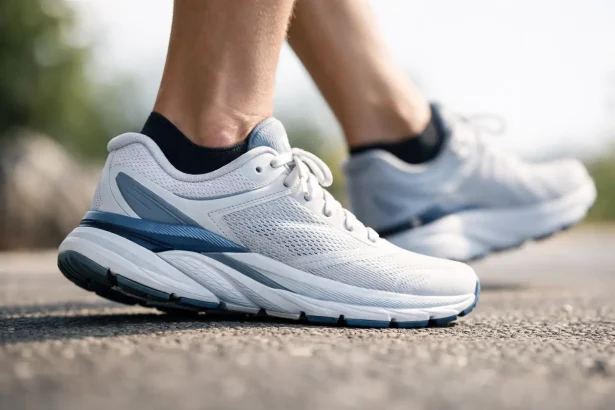
The Hoka Bondi 9 is our pick for people whose main problem is hard concrete. It has a thick, soft platform that takes the edge off long hours standing and walking. If your shift is mostly miles of picking, packing, or pushing carts, this is a strong move.
The trade-off is bulk. The Bondi is not a quick, low-to-the-ground shoe, and some people will find it too tall for constant tight turns or climbing ladders. It also looks like a comfort-first running shoe because it is one. We would take that over sore feet.
The Brooks Ghost 17 is the safe pick. Not boring in a bad way. Safe in the way a dependable truck is safe. It has balanced cushioning, a stable ride, and a fit that works for a lot of feet without feeling overly narrow or overly loose.
We like the Ghost for warehouse workers who walk a lot but do not want a huge max-cushion shoe. It handles a full shift without making you feel disconnected from the floor. If you have bought random sneakers before and regretted it, start here.
If your feet want softness but you do not love the look of an oversized shoe, the New Balance Fresh Foam X 1080v14 is worth a look. The foam is plush, and the upper has enough stretch for feet that get wider later in the day.
This is a good choice for workers who stand in one zone for long stretches, then walk a lot when things get busy. The soft upper is comfortable, but it is not the toughest material on this list. If you drag your toe against pallets or bang your shoes into equipment all day, expect more wear than you would get from a tougher work shoe.
The ASICS Gel-Nimbus 27 is for the person who gets home and does not want to think about their feet again. It is deeply cushioned, protective, and built for long steady miles. That translates well to warehouse shifts with a lot of walking.
It is not our first pick for someone who needs a very firm, planted feel. The Nimbus has a soft ride, and that can feel like too much shoe for fast directional changes. For straight-up comfort on concrete, though, it earns its spot.
The Nike Pegasus 41 is a solid all-rounder. It is lighter and less bulky than the max-cushion options, with enough padding for a long day and enough flexibility to move naturally. It also looks clean enough to wear after work without changing shoes.
Here is the honest part: the Pegasus is not the softest option. If your feet are already aching by mid-shift, go with the Bondi, Nimbus, or 1080 instead. But for workers who want one athletic sneaker for warehouse shifts, errands, and casual workouts, the Pegasus makes sense.
The Adidas Supernova Rise is a good middle-ground shoe. It has a cushioned, steady feel without trying too hard to be a high-stack marathon shoe. The base feels controlled, which matters when you are carrying something heavier than a water bottle.
We would pick it for a worker who wants comfort but hates shoes that feel squishy. It is also a clean option if you want something more understated than a loud running model. Just check the fit carefully if you have a very wide forefoot.
The New Balance 860v14 is a better choice when you want more structure. Some workers do not feel good in soft, flexible shoes. Their feet roll around, their ankles feel tired, and the whole shift gets annoying. The 860 gives you a more guided, stable ride.
It is not the shoe we would buy solely for a soft feeling. The 1080 wins that fight. But if you want a firm platform and a more secure hold through the midfoot, the 860 is the smarter purchase. New Balance also tends to be a better place to start for wide sizes.
The Hoka Clifton 10 gives you much of the soft, rolling Hoka feel in a lighter package than the Bondi. It is a strong pick for workers who cover serious distance and do not want a heavy shoe on their feet all day.
The lighter build comes with a trade-off. It is less planted than the Bondi and less tough than a true work shoe. If your job involves mostly walking and light lifting, it works well. If you are constantly planting, twisting, and hauling, we would choose a more stable option.
The ASICS GT-2000 13 is another smart stability pick, but it does not feel like a brick. It has enough cushioning for concrete and enough support to keep the ride controlled during a long shift.
This is the pair for someone who has tried soft neutral shoes and felt like their feet were working too hard to stay balanced. It will not give you the cloud-like feel of the Nimbus. It gives you a steadier base. For many warehouse workers, that is more useful.
The Puma Velocity Nitro 3 is the value-minded pick. It is light, cushioned, and more versatile than its price point might suggest. The outsole grip is a plus for everyday movement, though it is not a replacement for certified slip-resistant footwear where that is required.
We like this one for workers who want a capable sneaker without spending top dollar. It is not as plush as the Hoka Bondi or ASICS Nimbus, and it does not have the same wide-size reputation as New Balance. Still, it is a clean, practical choice that can handle long days.
If you spend most of your day standing on concrete, pick the Hoka Bondi 9, ASICS Gel-Nimbus 27, or New Balance 1080v14. They put comfort first.
If you walk fast, turn often, and move around crowded aisles, pick the Brooks Ghost 17, Nike Pegasus 41, or Adidas Supernova Rise. They are less bulky and feel more natural on the move.
If you need a firmer, more stable ride, pick the New Balance 860v14 or ASICS GT-2000 13. Do not force yourself into a super-soft shoe because someone online called it comfortable. If it feels wobbly, it is wrong for your shift.
For wide feet, start with New Balance. Look for a wide option rather than sizing up a narrow shoe. Sizing up gives you extra length, not extra room where your toes actually need it.
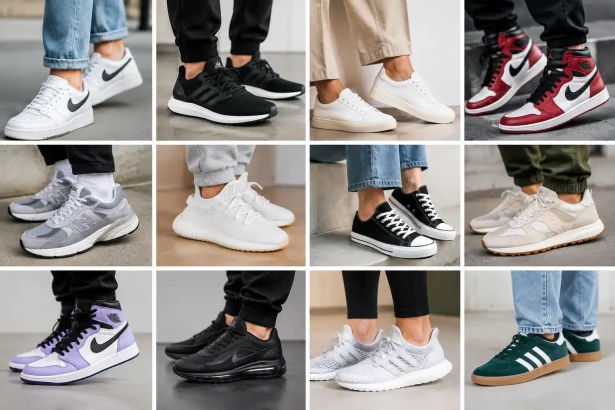
Do not wear flat fashion sneakers for an eight-hour warehouse shift. They can look sharp, but thin soles and little support catch up with you. Save them for short days.
Do not buy shoes half a size too small because they feel snug and secure in the store. Your feet need room once the shift gets rolling. And do not run one pair into the ground. When the midsole feels flat, the outsole is worn smooth, or the heel is leaning to one side, replace them.
The right warehouse sneaker is not about chasing the softest foam or the biggest logo. It is about getting through your shift without counting down the walk back to your car. Pick the pair that matches how you move, give your toes some room, and skip anything that only looks good on a shelf.