
Cart
No products in the cart.
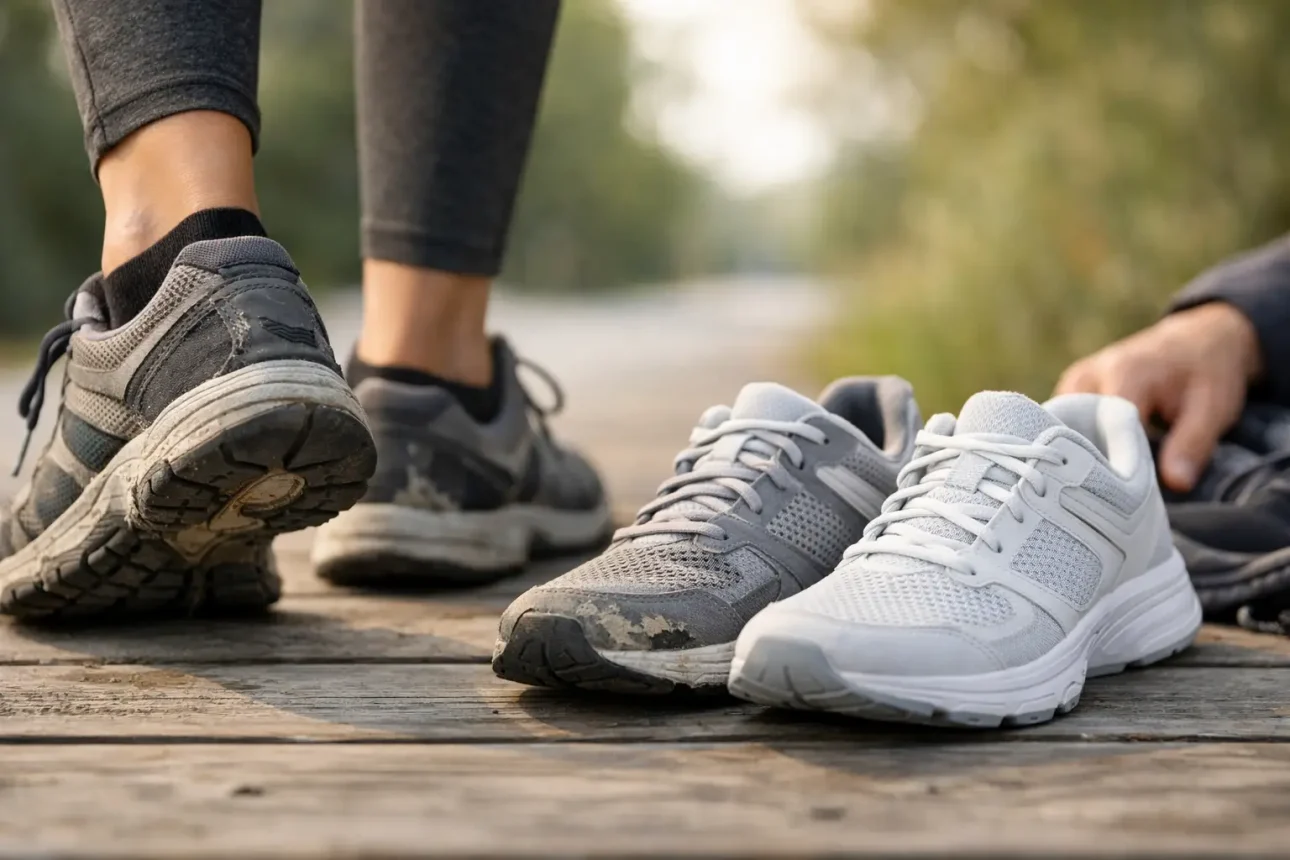
That pair you wear for morning walks, errands, work, and everything in between can look fine long after it has stopped doing its job. Knowing when to replace walking shoes is less about a magic date and more about what happens after an hour on your feet. If your heels ache, your knees feel beat up, or every sidewalk crack suddenly feels personal, your shoes may be done.
Walking shoes do not need to be shredded before you replace them. In fact, waiting for holes is how people end up wearing dead foam for months. The upper can still look clean. The logo can still look sharp. But if the support underneath has packed down, the shoe is worn out where it counts.
Most walking shoes last around 300 to 500 miles. That is a useful starting point, not a law. A person who walks two miles a day can hit 500 miles in about eight months. Someone who wears the same pair on a warehouse floor, during commutes, and for weekend walks can wear them out much faster.
Your body weight, walking surface, stride, and the shoe itself all matter. Soft, highly cushioned shoes often feel amazing out of the box, but some compress sooner than firmer models. Rough pavement and concrete are harder on foam than a treadmill or packed trail. If you drag one foot or strike harder on one side, you may chew through a shoe unevenly.
We would not obsess over logging every mile unless walking is your main workout. Instead, check in at the six-month mark if you wear the pair often. At nine to 12 months of regular use, inspect them honestly. If they are your only pair, do it sooner.
Mileage helps, but your shoes leave clearer clues. Here is what we look for before telling someone to retire a pair.
Flip the shoe over. The rubber on the bottom should have visible pattern and texture, especially under the heel and forefoot. If those areas are smooth, thin, or worn at an angle, grip is gone.
This matters most on wet sidewalks, polished floors, and stairs. A bald patch does not make a shoe look dramatic. It does make a slip more likely. Skip the idea of getting “one more season” out of shoes with worn-down tread.
The midsole is the foam between your foot and the ground. It is where most of the comfort lives, and it breaks down before the outer fabric does. Press your thumb into the foam on both shoes. If it feels hard, deeply creased, or compressed like a dented mattress, it has likely lost some of its bounce.
You may notice it more during a long day than during a quick walk around the block. A shoe that used to feel easy can start feeling thin and harsh by late afternoon. That is not you getting picky. That is tired foam.
A new ache does not automatically mean your shoes are the problem. You may have increased your walking, changed jobs, or spent a weekend on concrete. But if the same soreness keeps showing up after normal walks, look at your footwear.
Heel soreness, tired arches, tender shins, and aching knees can all show up when a shoe no longer absorbs impact or keeps your foot stable. We are not saying sneakers diagnose anything. If pain is sharp, severe, or sticks around, talk to a medical professional. But worn shoes are an easy thing to rule out first.
Set both shoes on a flat table and look at them from behind. If one heel leans inward or outward, the shoe is no longer holding its shape well. The same goes for a shoe that twists too easily when you hold the heel and toe.
A little flexibility at the front is normal. Walking shoes need to bend where your toes bend. But they should not fold in half through the middle or feel like a dish towel when you twist them. If they do, they are not giving your foot much structure anymore.
Check the lining around the heel collar. If it is worn smooth, torn, or exposing stiff material underneath, the shoe can start rubbing your ankle or letting your heel slide around. That turns a decent walk into a blister situation fast.
You can sometimes patch a small worn spot, especially if the rest of the shoe is still fresh. But if the outsole is worn and the foam is flat too, do not repair a shoe that is already finished.
Walking shoes should feel secure without squeezing your toes. If you are suddenly tying the laces tighter to stop heel slip, or your foot feels like it is rolling around inside, the upper may have stretched out. A stretched upper and tired midsole are a bad combo. You lose both the hold around your foot and the support under it.
On the other hand, if your toes feel cramped in a pair that used to fit, your feet may have changed. Feet can swell, arches can settle, and sizing is not permanent for everyone. Do not force yourself back into an old size because that is what the label says.
This is the simplest sign. You reach for another pair when you know you will be on your feet all day. Trust that instinct.
If your walking shoes only work for a quick coffee run but feel rough during a full day out, they are no longer walking shoes. They are beaters. Keep them for messy chores if the sole still has grip, or let them go.
Not always. Running puts more force through a shoe with every stride, so runners can burn through foam quickly. But walking shoes get worn down by repetition and daily use. The person who wears one pair from breakfast to bedtime can put more real-world stress on it than a runner who uses their shoes only for three workouts a week.
Work matters too. If you stand on concrete all day, do not make a flat fashion sneaker your work shoe. It might look clean, but thin soles and soft, unsupportive uppers are not built for eight-hour shifts. Pick a walking or running-inspired model with enough cushioning and a stable base. Style still counts. Your feet just get a vote.
You cannot make foam new again, but you can stop wearing out a good pair early. Do not use your walking shoes for yard work, gym lifting, rainy-day chores, and daily walking if you have another option. That is how one pair gets destroyed in a few months.
A second pair helps more than people think. Alternate them every other day or save one pair for longer walks. This gives the foam time to rebound and keeps you from relying on one worn-out shoe because it is all you have.
Let shoes air out after a sweaty day. Take out the insoles if they are damp. Do not dry them on a radiator or blast them with high heat, which can damage glue and warp materials. And wash them gently when needed. A washing machine is rough on shoes, even when they survive it.
Do not buy the same shoe again just because it is familiar. Buy it again if it still fits your life. If you loved the width, heel hold, and cushion level, sticking with it makes sense. If you kept getting sore feet or the upper broke down too quickly, change it up.
For daily walks and standing, we pick shoes with a stable heel, enough room in the toe box, and cushioning that feels good without making you feel wobbly. Try them indoors first. Walk around your home. Your heel should stay put, your toes should not hit the front, and there should be no rubbing point you hope will disappear later.
Do not wait until your old pair is completely cooked. Start looking when the first signs show up, then keep the old shoes for short errands while you break in the new pair. Your next walk should feel easy. If it does not, the shoes are not the right ones.


