Cart
No products in the cart.

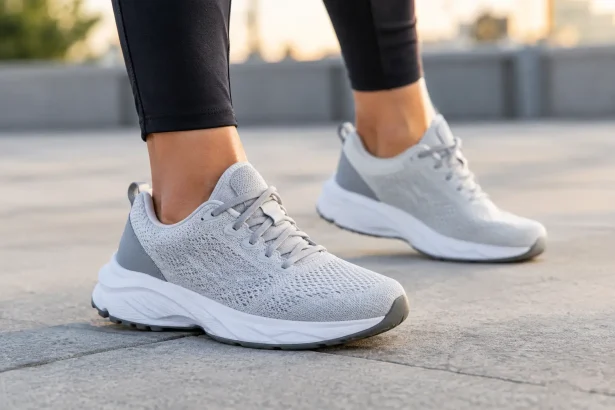
Your old running shoes tell on themselves. Your feet feel beaten up after an easy run. The midsole looks creased and flat. Your knees are not the problem every time, but a dead shoe definitely does not help. This guide to cushioned running shoes cuts through the foam talk and gets to what matters: what feels good on your feet, what fits your runs, and what is not worth your money.
Cushioned shoes are not just for marathon runners. They make sense for casual jogs, recovery days, long walks, travel, and anyone who spends half the day standing. But more cushioning is not automatically better. Some max-cushion shoes feel soft for five minutes, then sloppy. Others look huge but land smooth and stable. We pick the ones that do the job.
A cushioned running shoe puts more foam between your foot and the ground. That foam takes the edge off repetitive impact and helps your legs feel less hammered over longer outings. It does not make you invincible. It will not correct a bad fit, replace sensible training, or solve an injury.
What it can do is make running feel less harsh. That matters when you are building mileage, returning after time off, or simply trying to finish a few miles without dreading the last one. For people who walk to work, stand on concrete, or spend weekends on their feet, the same softer ride can make a real difference by late afternoon.
The catch is that cushioning changes how a shoe moves. A tall, soft sole can feel protective but less connected to the ground. A firmer foam can feel more controlled but may not give you the plush feeling you came for. There is no winner for everyone. There is only the shoe that matches how you move.
Nike, HOKA, Brooks, ASICS, New Balance, Adidas, and Puma all make cushioned options. That is useful, but the logo should not make the decision. Start with the ride you want.
Soft shoes compress easily when you land. They are the pick for easy runs, walking, recovery days, and people who want a noticeably padded feel. Think of the kind of shoe you put on when your legs are tired and you still need to get out the door.
The downside is control. Very soft foam can feel unstable on sharp corners, uneven sidewalks, or fast efforts. If your ankles roll inward or outward in a super-soft shoe, do not convince yourself you will get used to it. Skip it.
This is where most people should start. A balanced shoe gives you enough foam for comfort without feeling like you are standing on a mattress. It works for easy miles, errands, treadmill runs, and regular walking.
We like this category for runners who want one dependable pair. It is less exciting than the giant foam models, but it is usually the smarter buy. Shoes like the Brooks Ghost, ASICS Gel-Cumulus, and New Balance Fresh Foam 880 style of daily trainer have stayed popular for a reason. They are built to be worn, not just admired in a mirror.
Some cushioned shoes feel springy rather than soft. The foam has more structure, so it returns energy quickly and feels sharper when you pick up the pace. This can be a good middle ground if plush shoes feel slow or unstable under you.
Do not buy a firmer shoe expecting it to feel like a sofa. It will not. The payoff is a more planted ride and better confidence when you run a little faster.
Ignore the idea that more stack height equals more comfort. A thick sole can be excellent for long, slow miles. It can also feel awkward if you prefer a lower, more natural ride. Your body notices the whole package – foam softness, shoe weight, shape, fit, and stability.
For runs under three or four miles, moderate cushioning is usually plenty. If you are training for longer distances, run mostly on pavement, or finish runs with sore feet, more cushioning is worth a look. The same goes for walkers and workers on hard floors. Flat lifestyle sneakers look clean, but they can wear terribly when you are standing all day. If comfort is the job, do not make a flat casual shoe your only pair.
Max-cushion shoes have a place. Models such as the HOKA Bondi or ASICS Gel-Nimbus are made for people who want a protective, padded ride. They are solid choices for easy days and lots of time on your feet. Just do not expect them to be your best option for track workouts, quick turns, or every type of run. Big foam can be great. Big foam can also be overkill.
A soft midsole cannot rescue a cramped toe box. Before you get pulled in by colors or a sale price, check the fit.
Your toes need room to spread and move, especially on longer runs when feet swell. Your heel should stay put without rubbing or slipping. The upper should hold your midfoot without squeezing it. If you feel pressure across the top of your foot while standing still, it will not get better three miles in.
Try shoes later in the day if you can. Wear the socks you actually run in. Leave about a thumb’s width between your longest toe and the front of the shoe. It sounds basic because it is basic. People still get it wrong all the time.
Width is not an afterthought, either. A shoe can be the right length and still be wrong for your foot. If your little toe hangs over the edge of the insole or the upper bulges at the sides, find a wider version or a different model. Do not size up just to gain width. That creates heel slip and a clumsy fit.
You do not need to be told you “overpronate” before caring about stability. Everyone benefits from a shoe that lands predictably. In cushioned models, look for a broad base, a heel that does not wobble, and foam that does not collapse sideways when you walk.
If you want extra guidance, a stability daily trainer can be a smart pick. The Brooks Adrenaline GTS and ASICS Gel-Kayano are well-known examples. They are not just for serious runners. They can work well for walkers and runners who feel better in a more supported platform.
But do not buy support because someone online said everybody needs it. If a neutral shoe feels stable, comfortable, and natural, that is enough. Too much structure can feel stiff and annoying. Your feet get the vote.
Be honest about where the shoes will go. If you run twice a week and walk everywhere, choose a daily trainer that can handle both. If you already own a reliable easy-run shoe and want something for faster sessions, then a lighter, more responsive model makes sense. Do not buy a race-focused shoe for grocery runs because it looks fast.
For long shifts, travel, and daily walking, we lean toward cushioned shoes with durable outsoles and stable platforms. You want comfort after six hours, not just a nice first step in the hallway. For runners focused on easy mileage, a soft or balanced trainer is the move. For mixed workouts, pick balanced or responsive cushioning so the shoe does not fight you when the pace changes.
Style counts too. You are more likely to wear a shoe you actually like. Black, white, gray, and neutral colors work with almost anything. Brighter pairs make sense if you want your running gear to look like running gear. Just do not let a clean colorway talk you into a bad fit. Looks sharp is a bonus. Feeling right is the point.
Most running shoes last roughly 300 to 500 miles, but mileage is only a guide. Heavier runners, rough pavement, and frequent use can wear them down faster. A shoe used mostly for walking may last longer, though the foam still ages.
Watch for a ride that suddenly feels flat, new aches after normal runs, worn-down outsole rubber, or a midsole that looks badly compressed on one side. You do not need to toss a shoe because it has a few creases. Foam creases. That is normal. Replace it when it no longer feels supportive or comfortable.
If you run regularly, do not wait until your current pair is completely cooked before buying another. Keeping a fresh pair ready saves you from panic-buying whatever is available in your size.
A cushioned shoe should make you want to lace up, not make you think about your feet every few blocks. Start with the fit. Pick the amount of softness you will actually use. Then wear the pair that feels good at mile one and still feels good when the day runs long.