Cart
No products in the cart.
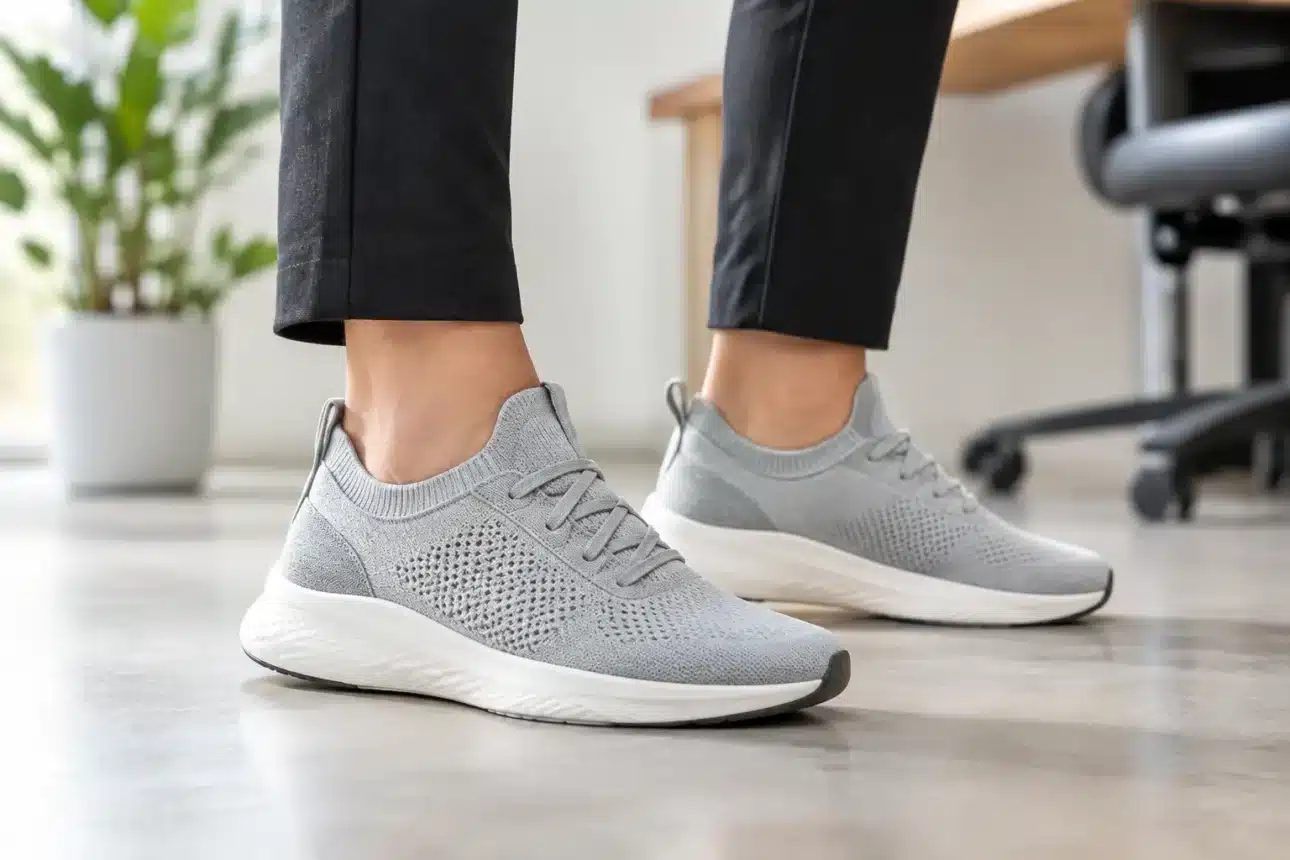
Your standing desk looked like a smart move at 9 a.m. By 3 p.m., your heels, arches, and lower back may have other opinions. That is where standing desk sneakers matter. The right pair will not make eight hours on your feet feel like a vacation, but it can stop your workday shoes from becoming the problem.
We keep it simple: skip flat, stiff sneakers with thin soles. Pick a pair with enough cushion for hard floors, a stable base, and a fit that does not squeeze your toes after lunch. You do not need a shoe built for a marathon. You need one that still feels good when you have been answering emails, pacing through calls, and walking to refill your coffee all day.
Standing is different from running. When you run, your foot moves through a stride. At a desk, you are mostly loading the same spots over and over. Your heel, forefoot, and arches take the hit, especially on concrete, tile, or thin office carpet over a hard floor.
That is why we do not chase the softest possible shoe. Super-soft foam can feel amazing for ten minutes, then leave your feet working to stay balanced. For standing desk sneakers, we want cushioning with a stable platform under it. The shoe should absorb some impact without feeling like you are standing on a mattress.
A roomy toe box also matters more than people think. Feet often swell during a long day. A sneaker that feels locked in during a quick try-on can feel cramped after six hours. Your toes need room to spread naturally, not slam into a narrow front every time you shift your weight.
Then there is grip. You are probably not sprinting across the office, but a slippery outsole is still a bad call. A solid rubber outsole helps when floors are polished, wet near an entrance, or covered in the random stuff that ends up in a break room.
Big foam midsoles sell shoes. We get it. They look comfortable, and sometimes they are. But high-stack running shoes are not automatically the best pick for a standing desk. If the shoe is tall and wobbly, your ankles can feel tired even when the foam feels soft.
We pick shoes with a broad base, especially through the heel. A heel counter that holds your foot in place is useful too. You should not feel your heel sliding side to side when you shift around at your desk.
This is also why worn-out running shoes are not always a clever work shoe. The upper may still look fine, but compressed foam and a tilted outsole can make standing feel worse. If the heel is uneven or the tread is smooth in one spot, retire them from desk duty.
If you stand for short stretches and sit most of the day, moderate cushioning is enough. A dependable daily trainer or walking sneaker usually does the job. You want comfort, but you also want to feel planted.
If your job has you standing for most of the day, go softer. Look at max-cushioned walking and running models from brands like Hoka, Brooks, ASICS, and New Balance. These are often built to handle repetitive impact, and that carries over well to hard office or retail floors.
There is a trade-off. More cushion usually means a bulkier look. If you want a clean sneaker that works with chinos or jeans, a moderate-cushion model may be the better call. Do not buy a huge foam shoe just because someone online said it saved their feet. Your workday, floor type, and fit matter more than a viral recommendation.
Walking shoes are the easy answer if comfort is your only goal. They tend to have stable bases, durable outsoles, and uppers that do not fight your foot. Some are not the sharpest-looking sneakers in the room. That is the honest trade-off. But ugly and comfortable beats stylish and miserable when your shift runs long.
Daily running shoes are often the sweet spot. Models in the ASICS Gel-Nimbus, Brooks Ghost, New Balance Fresh Foam, and Hoka Clifton lane can give you enough cushion without looking like medical equipment. They also work if you walk before work, take a lunch break outside, or commute on foot.
Max-cushion shoes make sense for people on concrete all day or anyone who finishes work with tired feet. Hoka Bondi-style shoes and similar high-cushion options from Brooks, ASICS, and New Balance are worth a look. Just make sure the platform feels stable to you. A tall shoe that feels sketchy in the store will not get better after eight hours.
Lifestyle sneakers can work, but choose carefully. A clean Adidas, Nike, Puma, or New Balance style may look right with your office fit, yet many classic court shoes are flat and firm. They are fine for a few hours. They are a rough choice for a full standing day. If the midsole is thin and the insole feels like cardboard, skip it.
The wrong size turns a good sneaker into a bad one. Try shoes later in the day if you can, when your feet are closer to their workday size. Wear the socks you actually use at work. Thick athletic socks can make a close-fitting shoe feel much tighter than it did in a thin try-on sock.
You want roughly a thumb’s width in front of your longest toe. Your heel should stay put, and the middle of the shoe should feel secure without squeezing. Do not expect a narrow shoe to stretch into a comfortable all-day shoe. Some materials loosen a little. Most do not change enough to save a bad fit.
If one foot is slightly bigger, fit that foot. Almost everyone has a foot like that. It is not a big deal until you spend all day standing in shoes that are too short on one side.
Maybe. Not automatically.
Some people want a noticeable arch underfoot. Others hate it because it presses in the wrong place. A sneaker with a supportive shape can feel good, but a huge arch bump is not proof that a shoe is better. What matters is whether your foot feels supported after several hours, not whether the insole looks technical.
If you already wear orthotics, take them seriously when choosing a sneaker. You need enough internal room, a removable insole, and a stable heel. Do not jam an orthotic into a tight fashion sneaker and hope for the best. That setup usually creates pressure points fast.
Even the best sneakers cannot do all the work if you stand frozen in one position for hours. Shift your stance. Take short walks. Change the height of your desk so you are not hunching forward. A standing mat can help on unforgiving floors, especially if your workplace lets you use one.
Rotate your shoes, too. Do not make one pair your only pair if you stand every day. Foam needs time to rebound, and your feet benefit from slightly different shapes and pressure points. Two solid pairs beat one expensive pair that gets crushed into the ground seven days a week.
At Sneaker Loft, we would start with a stable daily trainer if you want one answer for work, walks, and regular life. Pick a max-cushion model if hard floors leave your feet cooked. Pick a cleaner lifestyle sneaker only when your desk time is limited.
Your standing desk is supposed to help you move more, not punish you for it. Put on sneakers that can handle the shift, leave a little room for your feet, and stop pretending those flat old court shoes are built for eight-hour days.