Cart
No products in the cart.
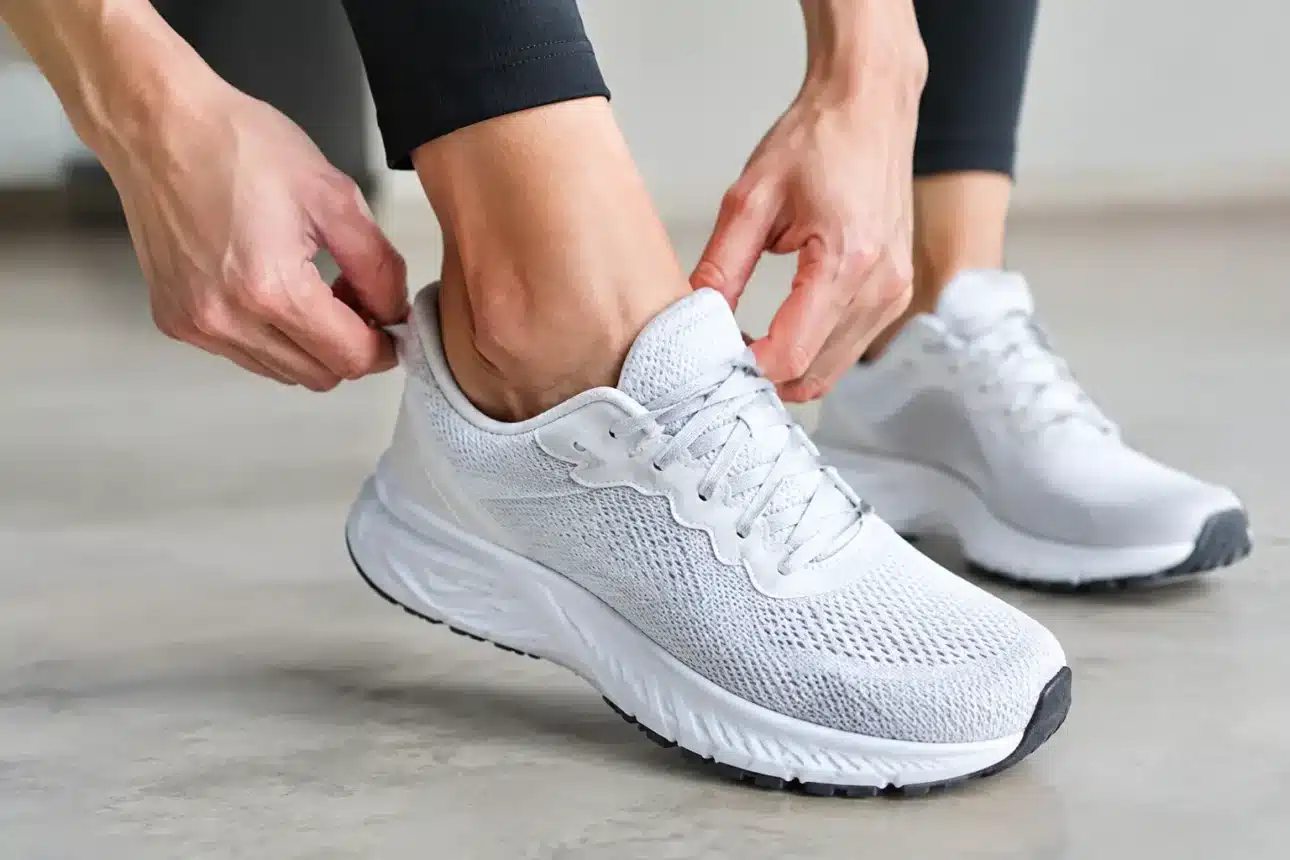
Your heel should not be popping up every time you walk. A little movement can happen in a new pair, especially in soft running shoes. But if your heel lifts enough to rub, slide, or make you grip with your toes, the fit is off somewhere. If you searched how to lace heel slipping, start with a heel lock. It takes about 30 seconds and can make a loose-feeling collar hold your foot far better.
This trick works because it locks the ankle area without forcing you to crank the whole shoe down. That matters. Over-tightening every eyelet is how you end up with numb toes, a sore instep, and shoes you cannot wait to take off.
The heel lock is also called a runner’s loop. Ignore the fancy name. It is just a small loop at the top of each side of the shoe that gives the laces something to pull against.
First, lace the shoe normally from the bottom up until you reach the second-to-last eyelet. Do not pull the lower laces super tight. You want the front half of the shoe snug enough that your foot is not swimming around, but your toes still need room to spread and bend.
Now take the lace on each side and feed it straight up into the top eyelet on that same side. Do not cross the laces yet. Leave a small loop, about the width of your finger, on each side.
Cross the left lace over the tongue and thread it through the loop on the right. Cross the right lace through the loop on the left. Pull both lace ends outward and slightly back toward your heel. You should feel the shoe cup around your ankle. Then tie your usual bow.
The key is where you feel the tension. A good heel lock makes the collar secure around the back of your foot. It should not crush the top of your foot. If it does, loosen the laces below the ankle, then retie the lock.
Walk around for five minutes. Go up and down stairs if you can. Your heel should stay planted while the shoe still bends naturally at the forefoot. If you feel tingling, pressure across the tongue, or your toes going numb, you pulled too hard.
We see people make one mistake all the time: they cinch the heel lock until it feels like a ski boot. Skip that. Secure is good. Painfully tight is not proof that the shoe fits better.
Lacing can solve a lot, but it cannot make every shoe fit. Before blaming the laces, look at what is actually happening.
A shoe may be too long. This is common when you size up for toe room and end up with extra space behind the heel. The heel lock can help if the extra room is minor. If you can slide a finger behind your heel while standing, the shoe is probably too big. Do not try to lace a full size of extra length into submission.
The heel shape can also be wrong for your foot. Some sneakers have a wide, padded collar that feels plush in the store but does not hold a narrow heel well. Others have a stiff heel counter that grips better but may feel rough during break-in. Neither is automatically better. You need the shape that keeps your heel centered without rubbing it raw.
Socks matter more than people think. Thin, slippery dress socks inside a roomy running shoe are asking for movement. A medium-weight athletic sock adds grip and fills a little volume. That can be enough to stop a small amount of slipping. Do not pile on thick socks just to force a bad fit, though. Your toes will pay for it.
Then there is the shoe itself. Lightweight knit uppers often feel great right away, but some do not offer much structure around the heel. A firmer running or walking shoe may hold you better, especially if you spend all day on your feet. Style-first sneakers can also run wide in the heel. They might look sharp. That does not mean they are the pair for long walks.
If the heel lock helps but your heel still moves, check the lacing through the middle of the shoe. Your midfoot needs to stay in place before the ankle lock can do its job.
Start by tightening the laces from the bottom upward, one section at a time. Pull out slack near the toes, then work toward the ankle. Do not yank the top lace and expect the tension to travel down evenly. It will not. You will just get a tight ankle and a loose forefoot.
If the top of your foot is sensitive, skip one crossing over the sore spot. Run each lace straight up to the next eyelet on the same side, then continue crossing above it. This creates a little space where you need it while keeping the heel lock at the top. It is a useful adjustment, but do not use it to rescue a shoe that is plainly too narrow.
For people with narrow heels and average-width forefeet, this combination usually works well: normal lacing through the front, a firm but comfortable midfoot, then a heel lock at the top. Simple. No new insoles, no weird gadgets, no overthinking.
We like the heel lock because it is free and it works. But it has limits. If a shoe slips badly from the first try-on, the size or shape is wrong. Return it if you can. A lacing trick should refine a decent fit, not turn a bad one into a daily shoe.
Watch for these signs: your heel keeps lifting even with the heel lock, your foot slides forward and jams your toes, the collar rubs one spot at the back of your heel, or you have to tie the shoe painfully tight to feel stable. Those are not break-in issues worth gambling on.
A thin heel grip can take up a tiny bit of room in a shoe that is otherwise right. It can also create more friction if it is bulky or poorly placed. We would try better lacing and the right socks first. Add-ons are fine for a small adjustment. They are not a fix for a shoe that does not match your foot.
Also, do not assume every sneaker should fit the same way. A casual leather sneaker may feel secure with a little room at the heel because it is not built for running. A running shoe needs less movement if you are logging miles, taking corners, or walking fast on hills. Match the fit to what you actually do in the shoe, not what the product photos suggest.
Try new sneakers on later in the day, when your feet are a little fuller. Wear the socks you plan to use. Lace both shoes completely, stand up, and walk on a hard floor. The right pair should hold your heel without making your toes work overtime.
If you are between sizes, do not automatically go bigger. Check width and heel hold first. Sometimes the wider version gives your toes room without adding useless length behind the heel. Sometimes a different model is the honest answer. We would rather switch the shoe than pretend every foot works in every silhouette.
Use the heel lock on a pair that already feels close. That is where it earns its place. Your shoes should stay with your feet, not make you fight for every step.