Cart
No products in the cart.
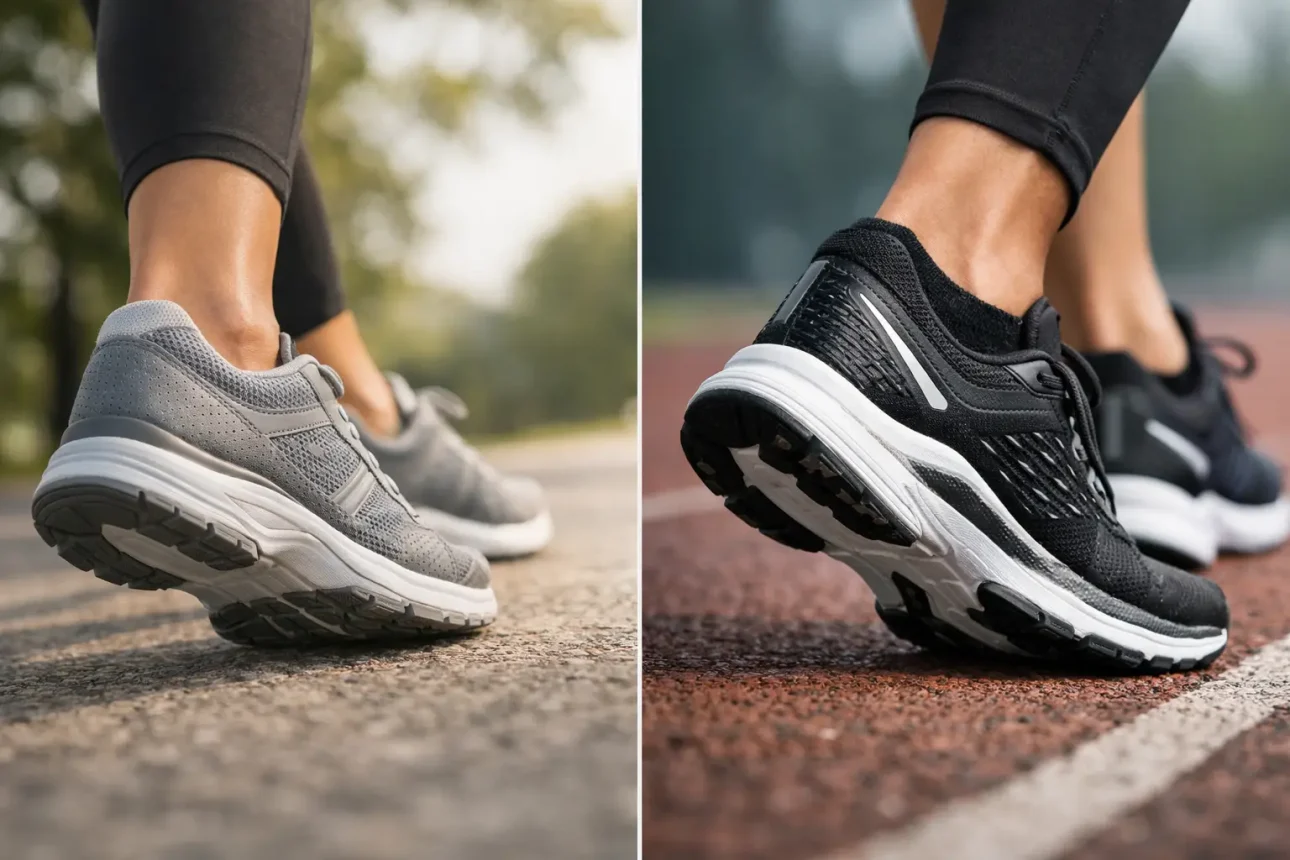
You feel it fast when you pick the wrong pair. A shoe that seems fine in the store can feel flat, stiff, or weirdly sloppy after a mile. That is why walking shoes versus running shoes is not just a nerdy gear debate. It changes how your feet feel by lunch, by mile three, and by the end of the week.
A lot of people assume a sneaker is a sneaker. Not true. Some running shoes are great for walking. Some are terrible for it. Some walking shoes are steady and comfortable for long shifts, but feel dead if you try to jog in them. The right pick depends on what you actually do in your shoes, not what the box says.
The biggest difference is how each shoe handles movement. Walking and running are not the same motion, so the shoe should not respond the same way.
When you walk, one foot is usually on the ground. The impact is lower, and the motion rolls from heel to toe in a smoother way. A walking shoe is usually built for that steady forward roll. It tends to be a bit firmer, a bit more flexible through the forefoot, and a bit more stable side to side.
When you run, impact goes up. A lot. Your foot hits harder, your stride is quicker, and the shoe has to absorb more force. Running shoes usually have more cushioning, a more curved shape, and a lighter build so they do not feel like bricks once you pick up the pace.
That does not mean running shoes are always better. It means they solve a different problem.
A good walking shoe feels stable from the first step. Not mushy. Not wobbly. Just planted.
We like walking shoes for people who are on their feet all day, take long daily walks, or want something dependable for travel and errands. In those cases, a softer, bouncier running shoe can actually be too much. It can feel unstable on corners, awkward on stairs, or overly high off the ground.
Walking shoes also tend to have a more practical fit for daily wear. Less dramatic rocker. Less aggressive stack height. More control. If you spend hours standing, that control matters.
The downside is simple. A lot of walking shoes are boring. Some look dated. Some feel solid for work but dead for anything faster. If you want one pair for movement and style, you have to choose carefully.
Running shoes are built to keep impact from beating up your legs. That is the job.
A good one feels lighter than it looks and smoother than you expect. It helps you move forward. If you jog even a couple times a week, we would not tell you to do it in a basic walking shoe. Skip that. Running puts more stress on the shoe and on you.
Running shoes also work well for a lot of walkers, especially people who want more cushion. If you walk for fitness, cover a lot of ground, or just like a softer ride, a running shoe can be the better buy. This is especially true now that many daily trainers are stable enough for casual all-day use.
But there is a catch. Some running shoes are overbuilt for walking. Super soft midsoles can feel unstable. Tall foam can make you feel disconnected from the ground. And some race-inspired models look sharp but wear terribly for normal daily use. They are made for speed, not standing in line, commuting, or getting through an eight-hour shift.
People shop by softness way too often. We get it. Soft feels impressive for about 30 seconds.
What actually matters is how the shoe feels after an hour. Too soft and your foot can sink, tilt, and work harder to stay steady. Too firm and every step starts to feel slappy. The sweet spot depends on what you do most.
For walking, we usually pick moderate cushioning with decent flexibility. For running, we pick cushioning that protects without turning the shoe into a marshmallow. A balanced daily trainer often beats an ultra-plush model for most people.
If you only remember one thing, remember this: more foam does not always mean more comfort.
You can buy a great running shoe and still hate it if the fit is off. Same with walking shoes.
Heel hold matters. If your heel slips, the shoe will annoy you fast. Toe room matters too. Your toes should not be jammed into the front, especially in running shoes where your feet can swell on longer efforts. Midfoot fit is where a lot of shoes win or lose. Too tight and you feel pressure. Too loose and the shoe feels sloppy.
Brand to brand, fit changes a lot. Some run narrow. Some are generous through the toe box. That is why we do not trust labels alone. We trust how the shoe fits on your foot.
If you are between walking shoes and running shoes, a well-fitting running shoe often beats a badly fitting walking shoe. Not even close.
Yes. A lot of people should.
If you walk for exercise, hit 8,000 to 15,000 steps a day, travel a lot, or want one pair that can handle walks and light jogs, running shoes are usually the smarter choice. A daily running shoe from brands like Brooks, Asics, New Balance, Hoka, Nike, or Adidas can do that job well.
We would only tell you to skip running shoes for walking if the model feels too soft, too tall, or too unstable for your stride. Some max-cushion pairs feel amazing in a straight line and awkward everywhere else.
You can. We would not recommend it.
For a short jog to catch the train, sure. For regular runs, no. Walking shoes usually do not give you the cushioning, transition, or upper support that running demands. You may get away with it for a bit, but the shoe is not built for repeated impact.
If running is part of your week, buy running shoes. Do not force a walking shoe into a job it was not built to do.
This is where people want a clean rule. Here it is.
If you mostly stand, stroll, commute, travel, or work on your feet, buy walking shoes or stable everyday sneakers with a walking-friendly feel. You want comfort, grip, and a stable base.
If you run, even casually, buy running shoes. Not fashion runners. Real running shoes. Your body will know the difference.
If you want one pair for everything, we pick a versatile daily running shoe over a dedicated walking shoe most of the time. It gives you more range. You can walk in it daily, use it at the gym, and jog without feeling under-equipped. Just do not pick the softest or flashiest model and call it done.
The first mistake is buying by looks only. Some shoes look clean and feel awful after an hour. We like style too, but if the midsole feels dead, the shoe is dead.
The second mistake is assuming expensive means better. It does not. Plenty of pricey running shoes are too specialized for normal wear. You do not need a speed shoe for grocery runs.
The third mistake is making one pair do everything for too long. Even a solid sneaker breaks down. If the cushioning feels flat or the outsole is cooked, replace them. Do not wait until your feet start complaining.
Walking shoes versus running shoes comes down to one honest question: what are you really doing in them?
If your day is all about steady comfort, go with a shoe that feels stable and easy from the first step to the last. If you run, buy a running shoe and stop trying to cheat the category. If you need one pair to cover the most ground, pick a balanced daily runner and skip the overhyped stuff.
At Sneaker Loft, we like shoes that do the job without drama. That is the whole point. Your feet do not care about marketing. They care about how the shoe feels at 5 p.m. Buy for that.