Cart
No products in the cart.
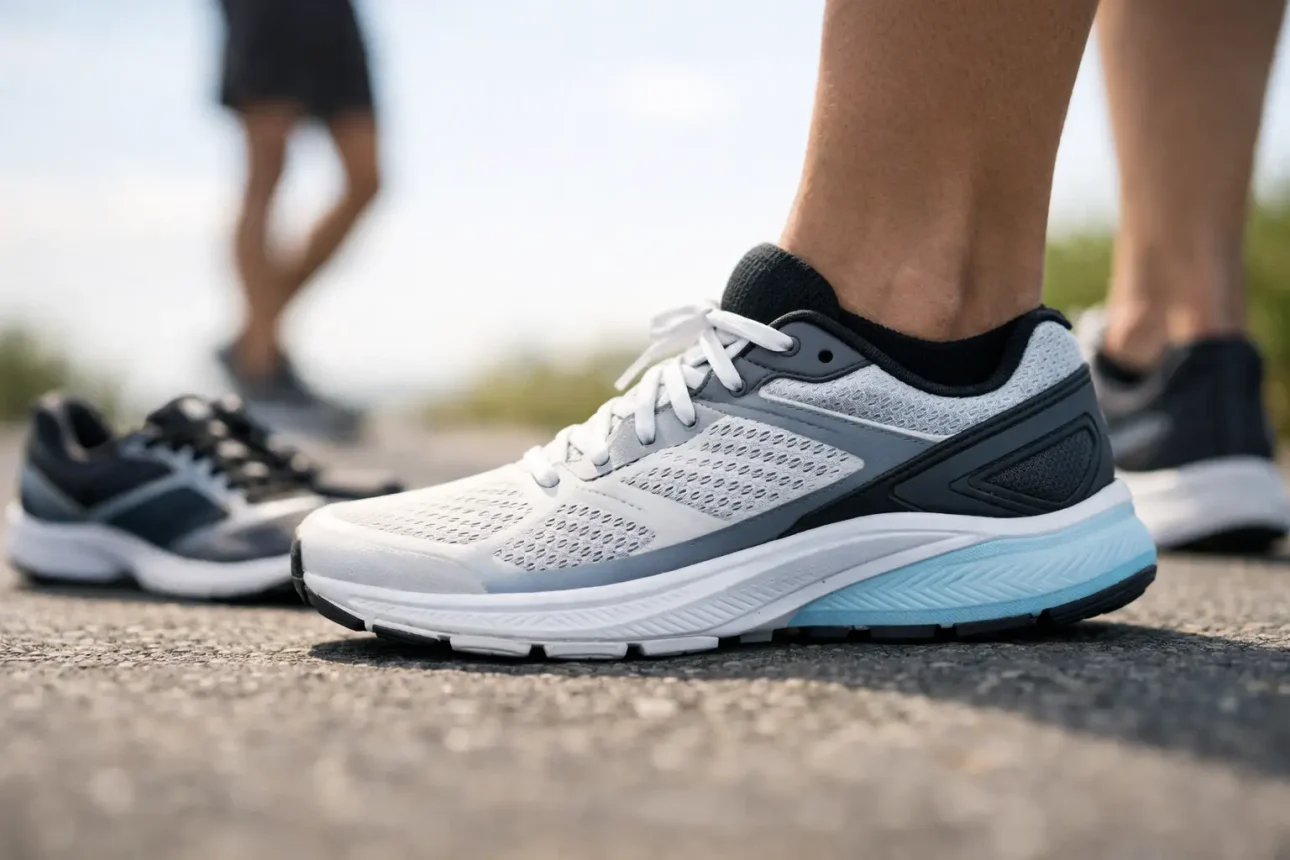
You do not need a lab report to buy your first running shoes. You need a pair that feels good at mile one, still feels good when your legs get tired, and does not make you regret the run halfway through. That is what this beginner guide to running shoes is really about.
A lot of first-time runners get stuck before they start. They read too much, compare too many models, and end up thinking there is one perfect shoe out there waiting to be found. Usually there is not. There are just a few solid options that match how you run, where you run, and what your feet can actually tolerate.
Start with one simple rule. Comfort beats specs. Every time.
Brands love talking about foam, plates, geometry, stability systems, and whatever else they can stamp on the box. Some of that stuff matters. Most of it matters less than whether the shoe feels natural on your foot. If a pair feels stiff, cramped, slappy, or weird when you walk around in it, do not talk yourself into it. Running will not magically fix that.
For beginners, the best running shoe is usually a daily trainer. That means a shoe built for regular miles, not race day. It should have enough cushioning to take the edge off, enough structure to keep you feeling steady, and enough durability that you are not shopping again in two months.
This is where people mess up. They buy the flashy speed shoe because it looks fast. Or they buy the cheapest pair they can find and wonder why every run feels harsh. We would skip both. Your first pair should be boring in the best way. Reliable. Comfortable. Easy.
There are three things we tell beginners to focus on: fit, feel, and use.
Fit means the shoe is secure without squeezing you. You want a little room in the toe box so your toes are not jammed into the front, especially once your feet warm up. Your heel should stay put. If it slips a little in the store, it will annoy you more on the run.
Feel is even simpler. The shoe should feel stable and smooth. Not mushy. Not brick-hard. Some runners love a soft underfoot feel. Others want something a little firmer and more controlled. There is no prize for picking the most cushioned shoe if it makes you feel wobbly.
Use means being honest about what you are actually doing. If you are running two or three times a week for short distances, you do not need an expensive super shoe. If you mostly walk, jog, and spend time on your feet all day, a versatile running shoe can still make sense. But pick for real life, not your fantasy training plan.
A lot of beginner advice starts with foot type. Neutral, overpronation, underpronation. That can help a little. It should not run the whole show.
Yes, some runners feel better in a stability shoe. If your ankles roll in hard, or neutral shoes leave you feeling sloppy and unsupported, a mild stability model is worth a look. Brands like Brooks, Asics, and New Balance usually do this well. But plenty of people are told they need stability and end up in a heavy shoe that feels forced.
We pick comfort first, support second. If a neutral shoe feels balanced and your stride feels natural, that is a good sign. If your foot collapses inward and the shoe feels like it is fighting you, try some support. Keep it practical.
The same goes for heel-to-toe drop, stack height, and all the technical stuff. These details are real, but beginners do not need to build a spreadsheet around them. You need a shoe that helps you run consistently without beating up your feet.
Not all running shoes do the same job. Once you know the main categories, it gets easier to ignore the noise.
Daily trainers are the safe pick for most beginners. They are built to handle regular runs and usually give you the best mix of comfort, durability, and value. Think Nike Pegasus, Brooks Ghost, Asics Gel-Cumulus, New Balance 880, or Adidas Supernova. These are not always the most exciting shoes on the wall. They are the pairs people keep going back to because they work.
Max-cushion shoes are softer, taller, and often better if you want a plush ride. Hoka does this well, and so do some models from Asics and New Balance. The trade-off is that some of them can feel bulky or unstable if you are new to running. If you want soft, fine. Just do not confuse soft with better.
Stability shoes are for runners who want extra guidance. Brooks Adrenaline, Asics GT-2000, and similar models exist for a reason. For some people they feel locked in and supportive. For others they feel clunky. Try them if neutral shoes leave you feeling loose.
Speed shoes and race shoes are fun, but most beginners should leave them alone for now. They cost more, wear out faster, and often feel less forgiving at easy paces. They are not a smart first buy unless you already know exactly why you want one.
This part matters more than brand loyalty.
Your running shoes should usually fit a little bigger than your casual sneakers. Not clown-shoe big. Just enough space that your longest toe is not hitting the front. A thumb’s width of room is the old rule, and it still works.
Width matters too. A lot of people think they hate running shoes when they really just hate narrow toe boxes. If the sides of your forefoot feel pinched, skip the pair. Do not hope it stretches. Some shoes break in a little. Most do not change enough to save a bad fit.
Also, try shoes later in the day if you can. Feet swell. That matters when you run. What feels snug in the morning can feel cramped after work or after a few miles.
Wear the socks you actually run in. Walk around. Jog if you can. Trust the feel, not the mirror. Some shoes look sharp and run terribly. Some are a little awkward-looking and feel great. We know which one we would buy.
Most major brands have at least one solid beginner-friendly running shoe. The trick is knowing what they usually do well.
Brooks is one of the easiest brands to recommend if you want a no-drama daily trainer. They are not always the coolest-looking shoes, but they are dependable and usually fit a lot of people well.
Asics is strong if you want a stable, well-cushioned feel without going too soft. Their lineup can be confusing, but the good models are very good.
Nike often wins on style and versatility. Some runners love the ride. Others find certain models too narrow or too firm. Try them on. Do not buy them just because they are Nike.
Adidas can be hit or miss for beginners. Some pairs feel smooth and lively. Others feel better on the shelf than on the run.
Hoka works for a lot of people who want more cushioning, especially if pavement beats them up. But not every runner likes the high-stack feel. If you feel unstable, move on.
New Balance is one of the safest bets across the board. Good range of widths. Usually solid comfort. Less nonsense.
At Sneaker Loft, this is how we think about it: start with the model that fits your foot, not the logo you wanted to post.
Skip the bargain-bin running shoe that feels dead underfoot. Cheap shoes are not always bad, but if the foam feels flat when you try it on, it is not getting better outside.
Skip carbon-plated race shoes. They are expensive, often less stable, and wasted on easy beginner miles.
Skip lifestyle sneakers pretending to be running shoes. If the outsole is flat, the upper is stiff, and the cushioning feels like a fashion shoe, it probably is one.
And skip the idea that one shoe has to do everything forever. If you stick with running, your taste will change. That is normal. Your first pair just needs to get you started without pain, irritation, or buyer’s remorse.
Most running shoes last somewhere around 300 to 500 miles. That range is wide because runners are different. So are roads, body weights, and shoe builds.
Do not obsess over the number. Pay attention to feel. If the midsole feels flat, the outsole is worn smooth, or your legs feel more beat up than usual after normal runs, the shoe may be done. If the upper is still clean but the ride feels dead, that counts. Looks can fool you.
A worn-out shoe does not always scream for attention. Sometimes it just gets less comfortable week by week until you realize your good runs have started feeling rough for no clear reason.
That is the real answer.
The best beginner running shoe is not the most expensive, the most technical, or the one with the loudest fan club. It is the one that fits right, feels steady, and makes it easier to head out the door again tomorrow. If a shoe does that, it is worth it.
Start simple. Pick comfort. Ignore the hype. Your feet usually know before the internet does.