Cart
No products in the cart.
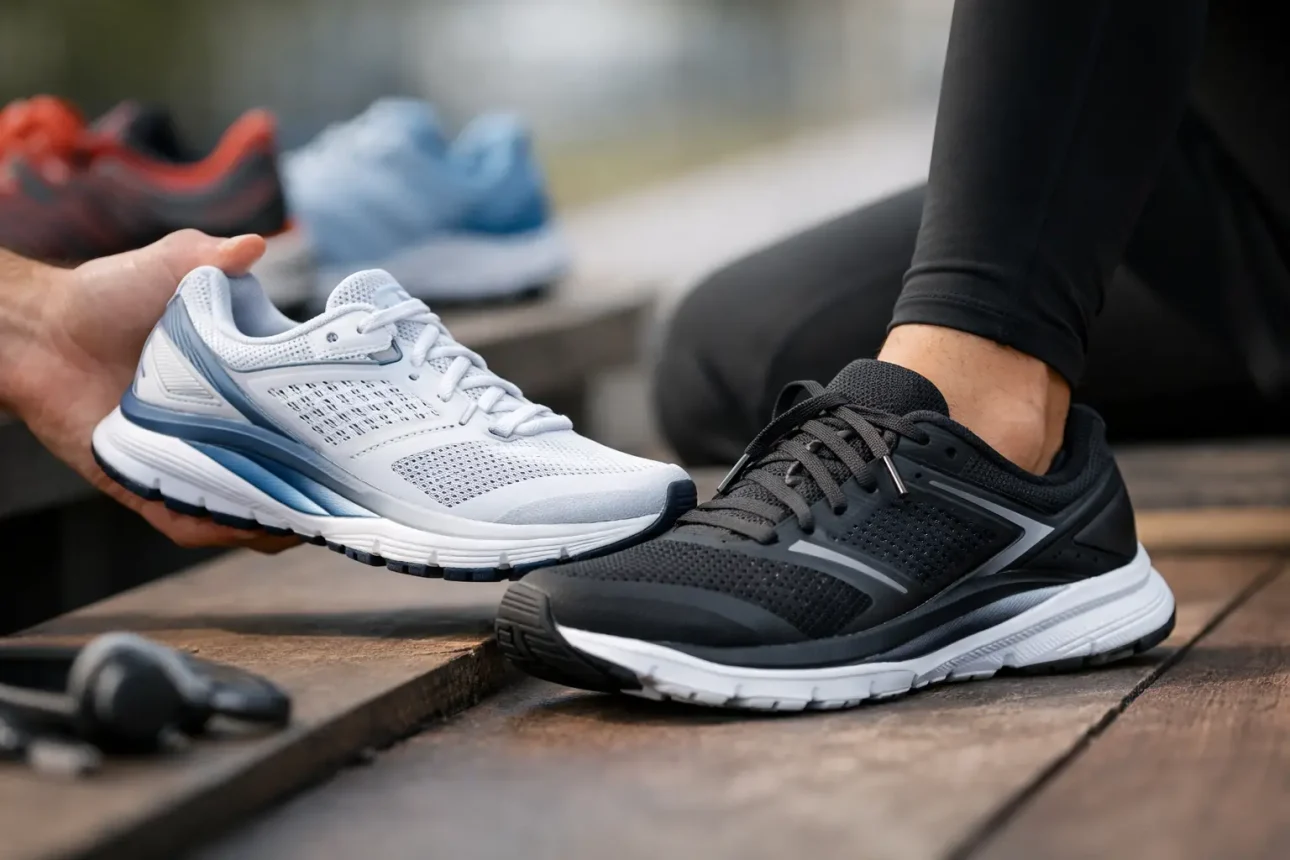
That first bad run in the wrong shoes tells you everything. Hot spots by mile two. Heavy legs by mile three. Maybe your toes start arguing with the front of the shoe before you even hit your pace. If you’re wondering how to choose running sneakers, start there. A good pair should disappear under you. A bad pair makes itself known fast.
We keep this simple because it should be simple. You do not need a lab report. You need a shoe that fits your foot, matches how you run, and works for the miles you actually do. Not the fantasy version of you that suddenly runs six days a week.
Most people mess this up in one of two ways. They buy whatever looks fast, or they buy whatever a stranger online called the best. Both are bad bets. The right running sneaker depends on your foot shape, your pace, where you run, and how much cushion you actually like underfoot.
Start with fit. Always fit. If a shoe looks clean but squeezes your toes, skip it. If the heel slips, skip it. If the arch feels weird standing still, it usually feels worse after a few miles.
A running shoe should feel secure through the middle of your foot, snug at the heel, and roomy enough in the toe box that your toes can spread a bit. Not swim around. Not get crushed. You also want a little extra space in front of your longest toe, especially if you run longer distances. Feet swell. Shoes do not.
Nike, Brooks, Hoka, Asics, New Balance, Adidas – they all make solid running shoes. They also all make pairs that won’t work for you. Brand helps narrow the field. It doesn’t make the decision.
Some brands run narrow. Some feel more accommodating through the forefoot. Some give you a soft, sink-in feel. Others feel firmer and more stable. None of that matters if the shape is wrong for your foot.
This is where people waste money. They force a fit because they like the logo or the color. Bad move. A shoe can be popular and still feel terrible on your foot. We say this all the time because it’s true – overhyped shoes are still bad shoes if they don’t fit.
You should not need a break-in period that feels like a punishment. A solid running shoe feels right early. Maybe not perfect on the first step, but clearly right. Your heel stays put. Your toes are not jammed. The upper doesn’t rub in obvious spots. The midfoot feels held, not strangled.
If you’re deciding between two sizes, the better running fit is often the one with a bit more length, not the one that feels tighter and cleaner in the box. Tight in the store turns cramped on the run.
Cushioning gets talked about like more is always better. It isn’t. Some runners love a soft, pillowy feel. Others feel slower and less stable in shoes that compress too much. The right answer depends on what feels good to you and what kind of runs you’re doing.
For easy miles, walking breaks, and casual daily runs, more cushion can feel great. It takes the edge off pavement and makes the ride more forgiving. That’s why max-cushion models have a real place. But they are not magic. Some of them feel bulky. Some look bulky too. If you want a cleaner, lower-profile shoe that still works, a moderate cushion daily trainer is usually the safer pick.
If you’re newer to running, don’t chase the lightest, fastest shoe on the wall. A stripped-down shoe can feel exciting for five minutes and harsh for five miles. We pick comfort and consistency over fake speed every time.
Soft isn’t always comfortable for everyone. Some soft foams feel unstable when you corner, pick up pace, or just get tired. Firmer shoes can feel more planted and predictable. That’s a big deal if you want one pair that handles short runs, errands, and everyday wear too.
If you try on a soft shoe and your foot feels wobbly, trust that feeling. Don’t talk yourself into it.
Road shoes are for pavement, sidewalks, treadmills, and most daily miles. Trail shoes are for dirt, rocks, mud, and uneven ground. Sounds obvious, but people still buy trail shoes for road use because they like the aggressive look. They usually regret it.
Trail outsoles can feel stiff and clunky on pavement. Road shoes can feel sketchy on loose dirt or wet terrain. If you mostly run roads, get road shoes. If you run mixed surfaces once in a while, a versatile road shoe with decent grip is usually enough. You do not need a mountain-ready setup for a park path.
This one saves people money. Super-light, ultra-responsive race shoes are fun. They are also expensive, less durable, and often less comfortable for everyday miles. If you’re training for your first 5K, you do not need the shoe built for chasing a PR on race day.
A daily trainer is the better call for most people. It’s the pair you’ll actually wear. It handles easy runs, short faster efforts, and normal life without feeling precious. If you run a lot and want a second pair later, then think about a speed shoe. Not before.
Your best shoe depends on what your week looks like, not what sounds impressive.
If you run two or three times a week for a couple miles, get a dependable daily trainer with enough cushion to stay comfortable. If you run longer distances, you may want more underfoot protection and a fit that gives your toes room later in the run. If you use the same pair for walking, commuting, and gym sessions, avoid shoes that are too soft or too tall. They can feel great in motion and weird when you’re standing around.
This is the trade-off nobody talks about enough. Some running shoes are excellent for running and annoying for everything else. If you want one pair to do more, pick balance over extremes.
Foot shape matters more than labels like neutral or stability for a lot of shoppers. Wide forefoot? Skip shoes with a tapered toe box. Narrow heel? Look for shoes known for secure heel lockdown. High instep? Be careful with uppers that feel tight across the top of the foot.
People love to obsess over pronation, and sure, support matters for some runners. But a support shoe that fits badly is still a bad shoe. Start with shape, then worry about extras.
Neutral shoes work for a lot of runners. They feel simpler, lighter, and less intrusive underfoot. Stability shoes add guidance features for people who want more support or feel better in a more structured ride.
If your current neutral shoes leave you feeling sloppy and tired through the arch or ankle, trying a stability option makes sense. If support features feel stiff and bossy underfoot, stick with neutral. This is not a moral choice. It’s just what feels better on your run.
Cheap running shoes can cost you more if they wear out fast or make every run annoying. At the same time, the most expensive pair is not automatically the best one. A lot of runners do just fine in mid-priced daily trainers from trusted brands.
What you’re paying for should be easy to feel. Better foam. Better fit. Better outsole durability. If the extra money only buys hype or weird design, keep your wallet closed.
We’d rather see you in one solid pair that gets worn than a pricey pair you stop using after two runs.
Don’t buy based on looks alone. Running shoes can look sharp, but if the fit is off, none of that matters after mile one.
Don’t size too small because you want them to feel sleek. Running shoes are not dress shoes.
Don’t assume your casual sneaker size is your running shoe size. It often isn’t.
Don’t expect one pair to crush road runs, technical trails, lifting sessions, and all-day standing. Some shoes can do a lot. None do everything well.
And don’t keep a pair that feels wrong because you want to convince yourself it was a good buy. That’s the worst kind of loyalty.
Be honest about what you need. Not what runners on social media need. Not what the fastest person at your local run club wears. You need a pair that fits your foot, suits your miles, and feels good enough that you’ll actually want to put it on again tomorrow.
That usually means a daily trainer from a brand with a shape and ride that work for you. Clean fit. Enough cushion. No weird pressure points. No drama.
If you’re shopping at Sneaker Loft, that’s exactly how we think about it. We don’t care if a shoe is trendy if it wears terribly. We care if it feels right, lasts, and makes your run easier to enjoy.
A good running shoe should make your run feel simpler. If you’re still thinking about the shoe the whole time, it’s probably the wrong one.