Cart
No products in the cart.
A bad running shoe will tell on itself fast. Not in a lab. On mile two, when your calves feel cooked, your arches start complaining, or your toes keep slamming the front. So, does shoes affect running? Yes. More than most casual runners think, and not always in the way brands try to sell it.
The truth is simple. Shoes can make running feel smoother, harsher, lighter, clunky, stable, sloppy, or just plain annoying. They do not turn a weak training plan into a good one. They do not magically make you fast. But they absolutely change how your body handles the miles.
Yes, but the effect depends on what kind of runner you are and what kind of shoe you put on.
If you run a few times a week and just want your legs to feel decent after, comfort and fatigue matter more than flashy tech talk. A shoe with the right amount of cushioning can take some sting out of pavement. A shoe that fits your foot shape can stop hot spots and black toenails. A shoe that feels stable can help when your form gets messy late in a run.
Speed is trickier. Some shoes feel quick because they are lighter and have a snappier ride. Others feel dead even if they look fast. If a shoe fights your stride, it does not matter what the box says. You will feel slower, not faster.
That is why we do not buy the idea that there is one best running shoe for everyone. There isn’t. Some people want soft landings. Some hate that mushy feel and want something firmer. Some need more room up front. Some need a locked-in heel or they slip around. The best running shoe is the one that disappears when you run. If you keep thinking about the shoe, something is off.
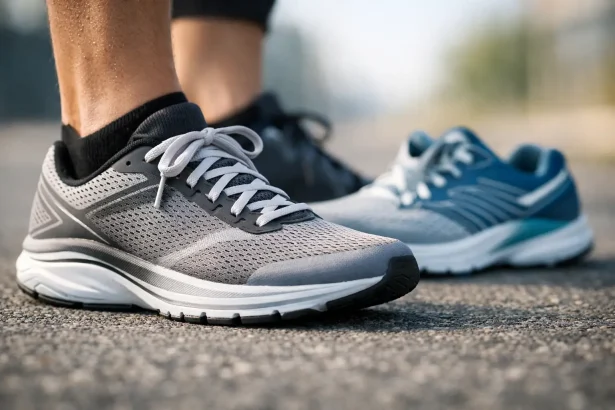
Most runners notice three things first – cushioning, fit, and weight.
Cushioning changes how the ground feels. More cushion usually means less harsh impact, especially on roads. That can be a relief if you run on concrete or spend long days on your feet before or after workouts. But too much softness can also feel unstable or slow. Some max-cushion shoes are great for easy miles and terrible if you want sharper turnover.
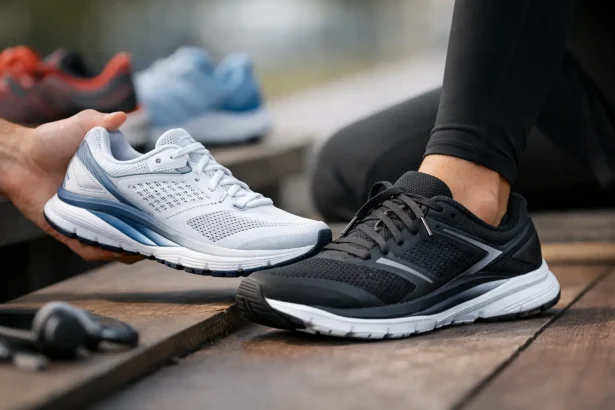
Fit matters even more. A shoe can have all the foam in the world and still be wrong if it pinches your toes or lets your foot slide around. Narrow toe box? You’ll know. Heel rubbing? You’ll know faster. Bad fit turns short runs into chore runs.
Weight is the part people obsess over, and fair enough, lighter shoes usually feel more lively. But light does not always mean better. Some lightweight shoes feel thin and harsh. Some slightly heavier shoes roll through miles better and leave your legs less beat up. We’d take a smooth, stable ride over shaving off a few grams every time.
Then there is geometry. That sounds technical, but it just means how the shoe is shaped under your foot. Some shoes push you forward. Some sit flat and make you do all the work. A rocker shape can make a run feel easier, especially if your ankles or calves get tired. A flatter shoe can feel more natural for runners who hate being tipped forward. This part is personal. No ad can decide it for you.
This is where people get fooled. You can buy a pair, jog around the block, and think they’re fine. Then a week later your feet feel cooked.
That happens because bad shoes are not always painful on the first wear. Sometimes they just make running less efficient. Your stride feels a little awkward. Your lower legs work harder than they should. Your toes grip. Your foot lands weird. None of that sounds dramatic, but stack it over a few runs and it adds up.
We see this a lot with people buying shoes based on looks first. Fair enough. Style matters. Nobody wants to wear a shoe that looks terrible. But if it looks sharp and runs badly, skip it. A good running shoe can still look clean. It just needs to do its job first.
Yes, but not in a magic way.
A shoe can influence your form by changing how you land and move through each step. A higher stack might make you feel more protected, but it can also feel tippy if the platform is narrow. A firmer shoe can make you feel more connected to the ground. A rocker can help keep things moving when your stride starts dragging.
That said, shoes do not fix sloppy mechanics on their own. If your training is inconsistent, your legs are weak, or you ramp mileage too fast, the shoe is not the whole story. Still, the wrong pair can make those problems louder.
Think of shoes like tires on a car. They do not drive the car for you. But bad ones change everything.
This needs to be said because running shoes get overpriced fast.
The most expensive pair in the wall is not automatically the best one for your runs. Sometimes you are paying for race-day features you do not need. Sometimes you are paying for hype. And sometimes the shoe really is good, but only for a narrow kind of runner.
If you are training for a marathon and chasing a time goal, maybe it makes sense to spend more on a faster shoe for workouts or race day. If you jog three miles a few times a week, you probably need a reliable daily trainer, not a carbon-plated flex about it.
We pick shoes based on use, not price tag. Daily miles, long walks, standing all day, weekend jogs, faster sessions – those are different jobs. One pair rarely nails all of them.
If you are not trying to break records, keep it simple.
First, make sure the fit is right. Your toes need room. Your heel should stay put. The upper should feel secure without squeezing. Second, pay attention to ride. If it feels awkward walking around, it usually will not get better when you run. Third, think about where you run. Road shoes for roads. Trail shoes for trails. Wearing aggressive trail shoes on pavement feels clunky and unnecessary.
Also, be honest about your habits. If this shoe will be your only pair for runs, errands, and long days out, don’t buy something too stripped down. You might like the look of a low, minimal shoe, but if your feet are tired by lunch, that clean profile stops being worth it.
For most people, a solid daily trainer is the smart pick. Not too soft. Not too firm. Enough cushion for regular miles. Enough structure that your legs do not feel trashed after. Brands like Brooks, Asics, New Balance, Hoka, Nike, and Adidas all make good options, but every lineup has hits and misses. We do not care about the logo if the shoe runs badly.
You do not need a gait lab to spot a bad match. Usually the signs are obvious once you stop ignoring them.
If your toes hit the front on downhills, the shoe may be too short or the lockdown is weak. If your arch feels rubbed raw, the shape is wrong for your foot. If the shoe feels fine for one mile and terrible for four, the cushioning or platform may not suit your stride. If you feel unstable on corners or uneven pavement, the base may be too narrow or too soft.
And if you keep taking them off the second you get home, that is your answer right there.
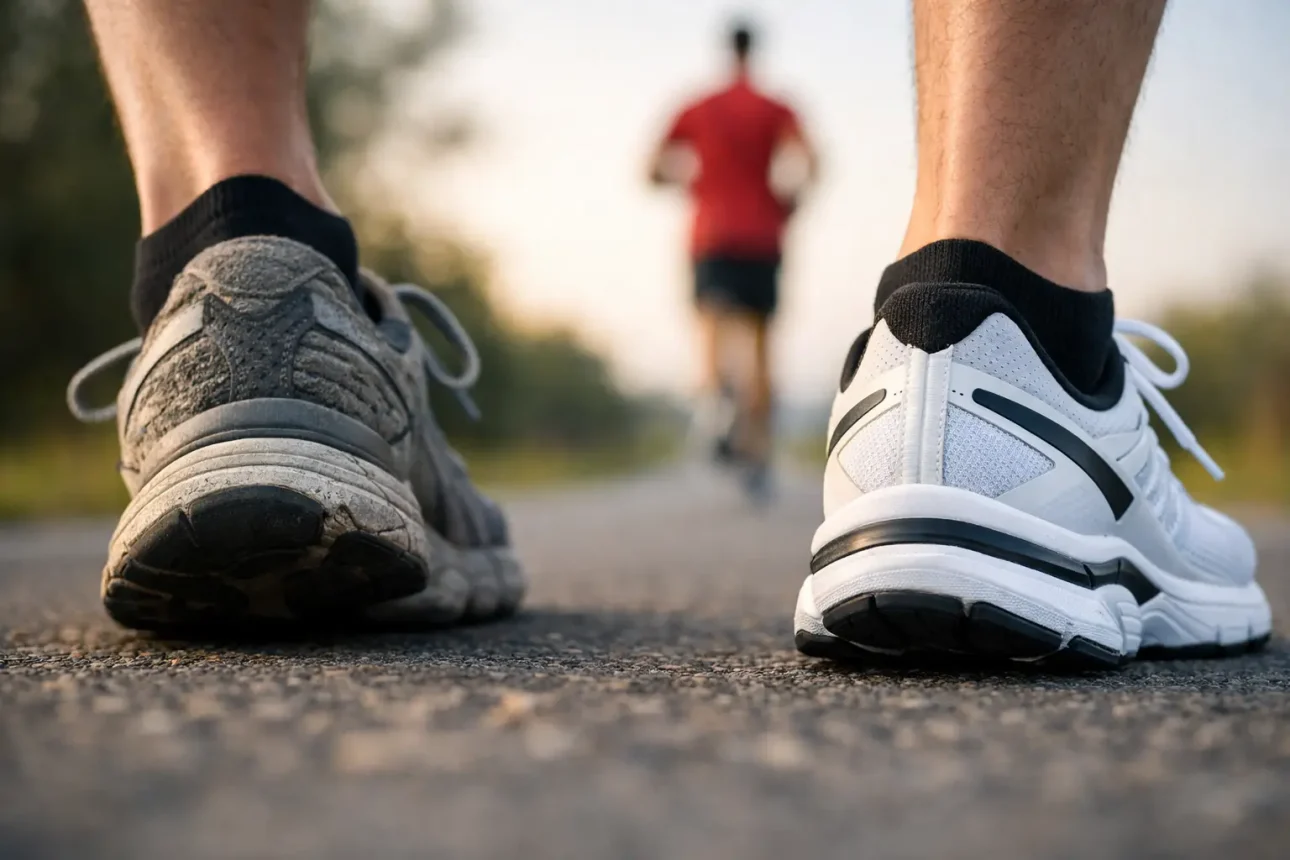
Wear also matters. Even a good running shoe goes bad when it is beat. Midsole foam gets dull. Grip wears down. The ride loses its pop. You do not need to replace shoes on a strict calendar, but if they suddenly feel flat, harsh, or uneven, pay attention.
Absolutely. Just not for the reasons marketing likes to scream about.
The right shoe helps you run longer without thinking about your feet. It can cut down on that beat-up feeling after a run. It can make easy miles feel easier and help you enjoy runs you would have skipped in the wrong pair. That matters.
But chasing trends is where people waste money. Not every runner needs max cushion. Not every runner needs a super shoe. Not every runner needs the pair everybody on social media keeps posting.
What you need is a shoe that fits, feels right, and matches how you actually run. That is less exciting than the hype pitch. It is also what works.
If you’re buying your next pair, trust your feet before the marketing. If the shoe feels off, it is off. Skip it and move on. Your run will tell you the truth faster than any product page will.