Cart
No products in the cart.
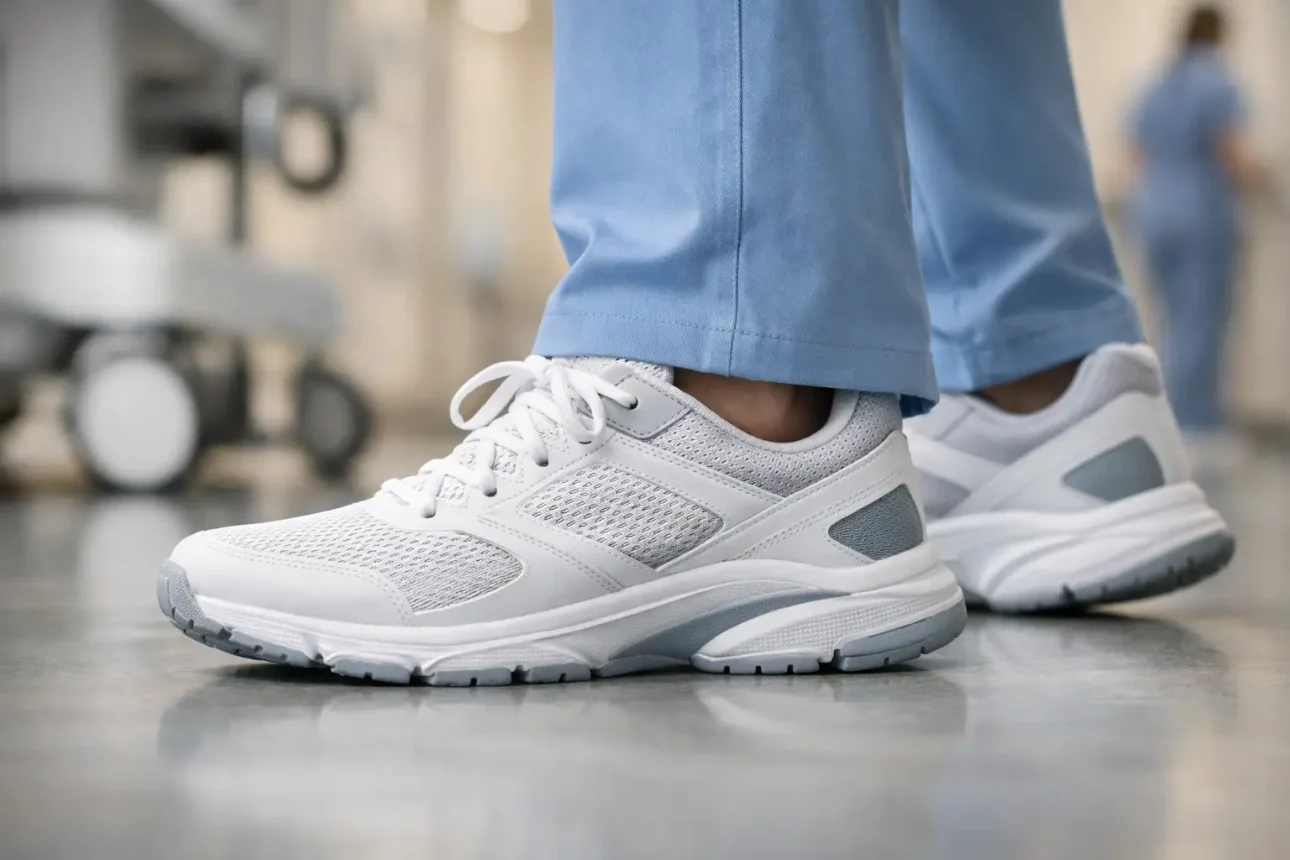
Your shoes can feel fine at 7 a.m. and completely wrong by the end of a 12-hour shift. That is why finding the best sneakers for nurses is less about the logo and more about what happens after hours of walking halls, standing at bedsides, and moving fast when things get busy.
We would skip flat lifestyle sneakers for full-time hospital work. They may look clean with scrubs, but thin soles and loose support get old fast. The right pair should cushion hard floors, hold your heel in place, give your toes room, and grip well on smooth surfaces. It also has to fit your workplace rules. No shoe is worth a conversation with your manager because the color is wrong.
Cushioning matters, but more is not always better. A super-soft shoe can feel amazing for the first hour, then get wobbly when you are turning quickly or pushing a cart. We look for cushioning that takes the edge off concrete and tile without feeling like you are walking on a mattress.
A stable base matters just as much. Your foot should sit inside the shoe, not balance on top of a tall pile of foam. A firm heel counter, a wide platform, and a secure midfoot are the details that make a sneaker feel dependable late in a shift.
Then there is grip. Most running shoes have decent rubber, but they are not automatically certified slip-resistant work shoes. If you work around frequent spills, check your employer’s requirements before buying. Also look for a mostly rubber outsole instead of a shoe with large exposed foam sections. Foam feels soft. It does not grip like rubber when the floor is wet.
Finally, buy for your actual foot. If your toes go numb by lunch, you may need a wider size or a roomier toe box, not a softer shoe. If your heel slides, do not hope it will break in. Skip it.
The Hoka Bondi is the obvious pick for nurses who want serious cushioning, and for once, the obvious pick makes sense. Its thick midsole takes the sting out of tile floors and gives tired legs some relief during long standing blocks. The wide base also keeps it more planted than many max-cushion shoes.
The trade-off is the look. It is a big shoe. Some people love the chunky shape; some think it looks like a running shoe that swallowed another running shoe. We do not care if it keeps your feet happier at 5 p.m. Choose it if your priority is softness and you do not need a low-profile sneaker.
The Brooks Ghost is the pair we would recommend to the nurse who wants one easy answer. It has enough cushioning for long shifts, a stable and predictable ride, and a fit that works for a lot of feet. It is not trying to be flashy. Good. Your work shoe does not need to be interesting. It needs to show up.
The Ghost is a smart choice if you walk a lot between units and want a sneaker that still feels natural when you pick up the pace. It is less plush than the Bondi, but it feels quicker and less bulky. If you are between sizes or need more toe room, look for Brooks wide options instead of squeezing into a standard width.
The New Balance 1080v14 works well for nurses who hate stiff shoes. It has a soft, smooth underfoot feel and enough flex to make walking all day feel less clunky. The upper is comfortable, and New Balance does widths better than most brands. That alone makes it worth a look.
This is not our first choice for someone who needs a lot of structure around the heel or ankle. The ride is softer and less locked-in than a stability shoe. But if you have a neutral stride, prefer a forgiving fit, and want your shoes to feel good straight out of the box, the 1080 is solid.
The ASICS Gel-Nimbus 27 is cushioned, but it does not feel as loose as some soft shoes. That is the reason we like it for long hospital shifts. The foam absorbs impact, while the broad base gives you a more secure platform for turning, stopping, and moving through crowded spaces.
It is not the lightest option here, and it can feel warm if you run hot. Still, for nurses who finish a shift with sore heels and aching forefeet, the Nimbus is worth trying. It is one of those shoes that does not look particularly exciting until you wear it for eight hours. Then you get it.
The Hoka Clifton gives you Hoka’s soft, rolling feel in a lighter package than the Bondi. It is a strong middle ground for nurses who spend a lot of time walking but do not want a huge stack underfoot. The rocker shape helps the shoe roll forward, which can make repetitive hallway miles feel easier.
It does not have the same deep cushion as the Bondi, so pick the Bondi if standing in one spot is the hardest part of your day. Pick the Clifton if you are constantly moving and want a shoe that feels lighter on the foot.
The Brooks Glycerin is plush without turning into a squishy mess. It has a comfortable upper, a smooth ride, and a stable shape that works well for long days on hard surfaces. It is a better fit than the Ghost for people who want more cushion but still need a shoe that feels controlled.
It is also a good option if you wear orthotics. The fit is deep enough for many inserts, though you should always try them together. Do not assume an expensive sneaker and a custom insert will automatically get along. Sometimes the combination crowds your foot and makes things worse.
If your feet tend to roll inward or you simply feel better in a more guided shoe, the New Balance 860 is a smart pick. It is not as soft or casual-feeling as the 1080, but it offers more structure through the midfoot and heel. That can be useful when fatigue starts changing how you stand and walk near the end of a shift.
We would not put everyone in a stability shoe just because they work in healthcare. If neutral shoes feel good, stay with them. But if you regularly wear supportive running shoes or your current pair feels unstable, the 860 is worth your attention.
The Nike Vomero 18 brings a soft, protective ride for nurses who want a familiar Nike fit and a modern look. It is built for easy mileage, which translates well to long workdays full of walking. The cushioning is generous, and the upper feels more polished than a lot of pure work shoes.
The fit can feel narrower than New Balance or Brooks, especially through the forefoot. Wide-footed nurses should not force it. Nike makes sharp-looking sneakers, but good looks do not make up for pinched toes.
If you stand in one place for long stretches, start with the Hoka Bondi, ASICS Gel-Nimbus, or Brooks Glycerin. If you walk fast and cover a lot of ground, the Brooks Ghost or Hoka Clifton may feel better because they are less bulky. If you need more support, put the New Balance 860 near the top of your list.
Color matters more than sneaker people like to admit. White looks clean on day one and shows every scuff by day three. Black or mostly dark colorways hide wear better, especially if your workplace allows them. If your unit requires white shoes, choose a pair with a washable mesh upper and accept that it will need regular cleaning.
Do not save your new shoes for your first double shift. Wear them around the house, on errands, or for a shorter shift first. Check for heel rubbing, toe pressure, and any hot spots. A shoe that only feels good while you are sitting on the edge of the bed is not a work shoe.
Most nurses wait too long. If the midsole feels flat, the outsole is worn smooth in key spots, or your feet suddenly hurt more than usual, inspect your shoes. Running-style sneakers often lose their best cushioning before they look destroyed.
A simple move helps: do not make one pair your only pair. Rotate two work shoes if you can. It gives the foam time to recover and means you are not stuck wearing wet shoes after a rough shift.
The best pair is not necessarily the softest or the most expensive. It is the one that fits your foot, matches your floor, and still feels good when the shift runs late. Start there. Your feet will tell you the rest.