Cart
No products in the cart.

You’ve probably done this before. You need shoes for daily walks, errands, maybe work, and you’re staring at a pair of running shoes thinking, are running shoes good walking, or is that just a shortcut that ends with sore feet?
Here’s our straight answer: sometimes yes, sometimes no. A good running shoe can be great for walking. A bad one for your gait, your pace, or your day-to-day use can feel awkward fast. The label on the box matters less than how the shoe behaves after a few miles and a few hours on your feet.
If you want the short version, running shoes are often better for walking than flat casual sneakers. They usually give you more cushioning, better shock absorption, and a smoother ride underfoot. If you spend a lot of time on concrete, that matters.
But not every running shoe makes sense for walking. Some are built for speed, not all-day comfort. Some have a rocker shape that feels amazing on a run and weird on a slow stroll. Some are so soft that they stop feeling stable the second you start turning corners, standing still, or carrying a bag.
That’s the real split. Walking shoes and running shoes overlap a lot, but they are not the same thing.
Walking puts less force through the foot than running, but you do it for longer. That changes what feels good. You’re not pounding the ground as hard, but you are spending a lot of time loading the heel, rolling through the midfoot, and pushing off the forefoot.
A solid running shoe helps with that because it usually has decent cushioning, a breathable upper, and a shape that supports forward movement. For a lot of people, that’s enough. If your current shoes feel flat, stiff, or dead by mid-afternoon, a running shoe will probably feel better right away.
We also like running shoes for people who want one pair that can handle more than one job. If you walk a lot, mix in light workouts, or jog once in a while, buying a solid everyday running shoe makes more sense than overthinking categories.
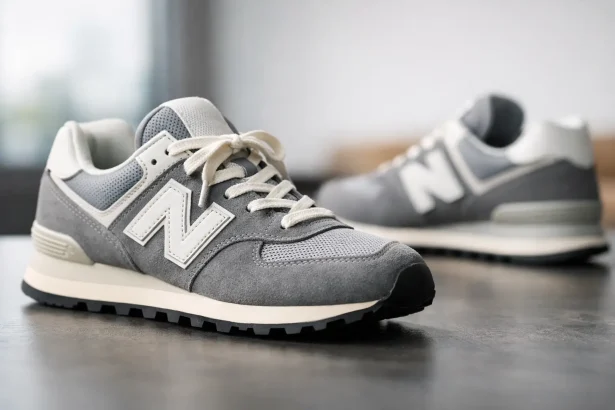
This is why so many people end up walking in brands like Brooks, Hoka, New Balance, Asics, and Nike. Not because they all make magical shoes. They don’t. But they make enough daily trainers that can handle walking without making your feet hate you.
This is where people get burned. They buy a running shoe because it looks good or gets hyped up, then wear it for eight-hour shifts or city walking and wonder why it feels off.
The first problem is too much shoe. Some max-cushion running shoes are soft and tall, which sounds good until the platform starts feeling unstable. If you’re walking at an easy pace, stopping often, or standing a lot, that mushy ride can get annoying. Soft does not always mean comfortable.
The second problem is aggressive geometry. Some running shoes are built to tip you forward and keep you moving. Great for runs. Less great when you’re walking the dog, waiting in line, or moving at normal human speed.
The third problem is durability in the wrong places. Running shoes are made for repeated forward motion. Walking, commuting, and everyday wear can stress them differently. Heel counters break down. Outsoles wear weird. Uppers crease and rub. If you need a shoe mostly for standing or long workdays, skip the stripped-down speed models.
We’d rather put you in the right running shoe than the wrong walking shoe. That’s the truth.
The stuff that matters is simple. You want cushioning that feels supportive, not swampy. You want enough flexibility through the front so the shoe moves with your foot. You want a stable base, especially if you’re on uneven sidewalks or standing a lot. And you want an upper that doesn’t squeeze your toes by lunchtime.
Fit is the big one. If the shoe is too narrow, too long, or sloppy in the heel, the walking vs. running label won’t save it. A bad fit is a bad fit.
That’s also why some people swear by a certain model while others hate it. One person wants a plush ride. Another wants ground feel. One person walks fast and likes a rocker. Another wants a flatter, more planted feel. Both can be right.
Sometimes. But this is where you need to be pickier.
If you’re on your feet all day, we don’t just want soft foam. We want a shoe that still feels stable at 5 p.m. That usually means a dependable daily trainer, not a race shoe and not some ultra-soft marshmallow that feels great for twenty minutes then starts wobbling.
For work, especially on hard floors, we pick shoes with a balanced midsole, decent structure around the heel, and an outsole that can handle daily wear. A clean, simple running shoe often beats a lot of so-called comfort sneakers because it is actually designed to take repeated impact.
What we don’t pick is anything too minimal, too flat, or too trendy if your job keeps you moving. If it looks sharp but feels dead underfoot after an hour, skip it.
Walking shoes usually have a firmer, more stable feel. They may flex more at the forefoot and sit a little lower to the ground. That can make them feel more natural for steady walking and standing.
Running shoes usually have thicker midsoles, more shock absorption, and a shape built for longer stride transitions. That can feel smoother and softer, especially outdoors on pavement.
Neither category wins every time. Walking shoes can feel dull and stiff. Running shoes can feel overbuilt. We’ve seen plenty of people do better in a running shoe because their old walking shoes were basically just casual sneakers with better branding.
If you walk for exercise, travel, commute on foot, or just want comfort for everyday use, a good running shoe is often the better buy. If you mostly stand, move slowly, or want a firmer ride, a true walking shoe might make more sense.
Not all running shoes are equal here. We’d steer most walkers toward daily trainers. That’s the sweet spot.
Daily trainers tend to have the right mix of cushion, structure, and durability. They’re made for regular miles, not race-day drama. That makes them easier to live with.
We’d be more careful with max-cushion shoes. Some are excellent for walking, especially if you like a plush ride. Others feel too high and too soft. Try them, but don’t assume more foam equals a better day.
We’d skip most carbon-plated or speed-focused models for walking. They’re expensive, less stable, and built for pace. You don’t need that to get groceries.
Trail running shoes can work if your walks are on dirt, gravel, or rough paths. For normal sidewalks and indoor wear, they’re often too stiff and clunky.
Your heel slips when you walk slowly. Your toes feel jammed on downhills or longer walks. The arch hits in a weird spot. The forefoot feels too stiff to roll naturally. Or the foam feels good at first, then starts feeling sloppy after an hour.
Trust those signs. Don’t keep forcing it because the shoe has good reviews or a famous logo on it. Hype doesn’t help your feet.
This is also why trying on shoes late in the day makes sense. Feet swell. Real life happens in the afternoon, not in a perfect five-minute try-on first thing in the morning.
Yes, if the shoe is stable enough, comfortable at walking pace, and built for regular use. No, if it’s too soft, too narrow, too stiff in the wrong places, or clearly made for speed over comfort.
That’s our real take. Running shoes are not automatically good for walking, but a lot of them are better than what people are wearing now. If your current pair leaves your feet tired, your knees annoyed, or your legs feeling beat up by the end of the day, there’s a good chance you need a better shoe, not a more complicated answer.
We’d take a solid daily running shoe over a flat lifestyle sneaker almost every time for long walks. For all-day standing, we still want that balance of cushion and stability. Not too hard. Not too soft. Just dependable.
If you’re shopping, keep it simple. Pick the pair that feels natural when you walk, not just the one that sounds good on paper. Your feet usually know faster than the internet does.
And if a shoe looks great but feels wrong after ten minutes, don’t talk yourself into it. Skip them.