Cart
No products in the cart.
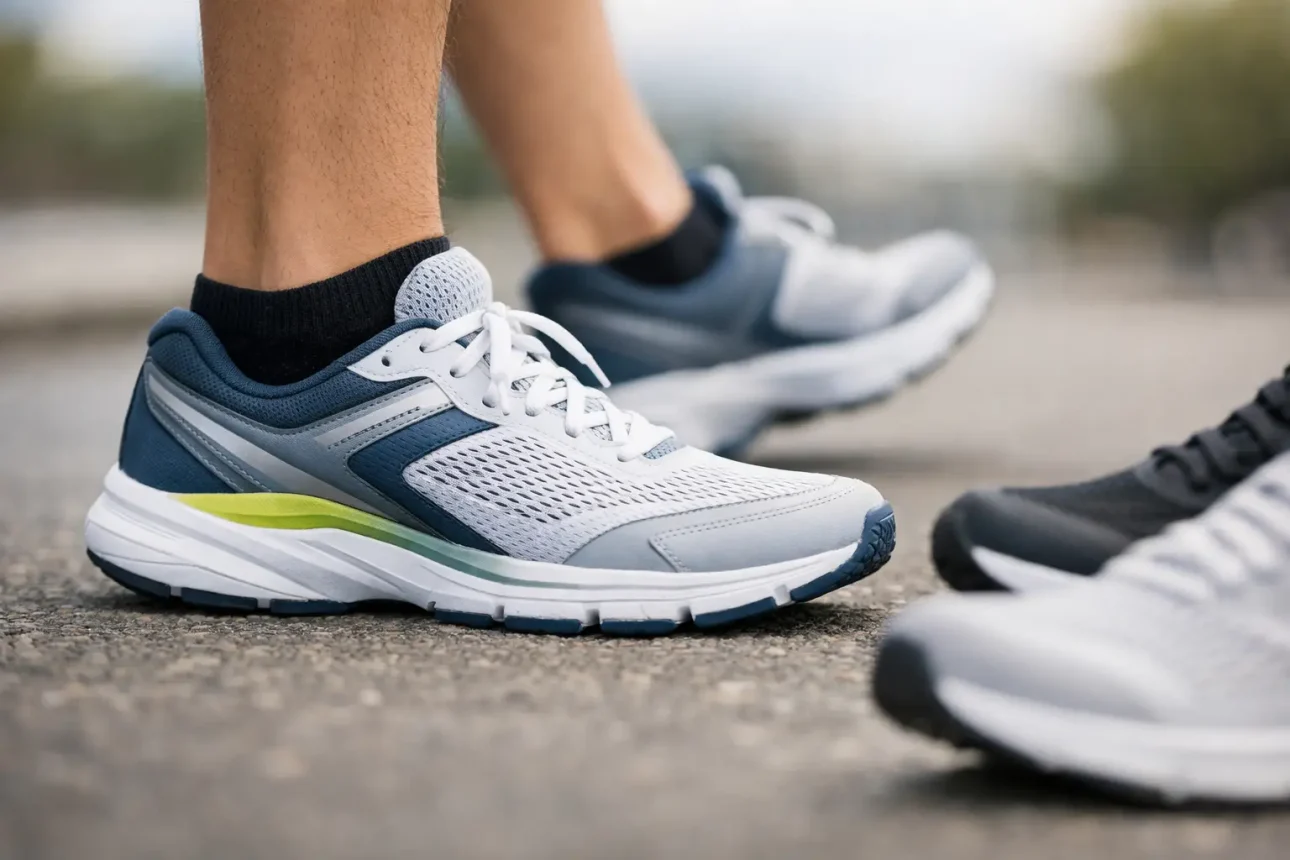
Flat feet can make a bad running shoe feel awful fast. You notice it in the arch, the ankle, the knee, or just that tired, beaten-up feeling halfway through a run. That’s why finding the best running shoes flat feet runners can actually rely on matters so much. Not every “support” shoe is worth your money, and some are way too stiff, way too heavy, or just plain overhyped.
We’re not here to sell you a science class. We’re here to help you skip the bad pairs and get into something that feels stable, comfortable, and usable from day one. If you have flat feet, what usually matters is a secure platform, some guidance through your stride, and enough cushioning to keep your legs from feeling cooked after a few miles.
A lot of people with flat feet get told to buy the firmest shoe they can find. We don’t buy that. Too much rigidity can feel harsh, especially if you’re running on pavement or spending long hours on your feet before or after a workout.
What we look for instead is balance. A good shoe for flat feet usually has a stable base, a midsole that doesn’t wobble around, and an upper that keeps your foot centered. Some runners want classic stability features. Others do better in a neutral shoe that just has a wide platform and a grounded ride. It depends on how your feet move, how far you run, and whether you want a daily trainer or something faster.
If your current shoes feel sloppy in corners, collapse inward, or leave your arches and ankles feeling worked, that’s your sign. Skip soft, unstable foam bricks. Go for shoes that hold their shape and don’t make your stride feel messy.
This is one of the safest picks in the category. Not exciting. Not flashy. Just dependable. The Adrenaline works because it gives you guidance without making every step feel forced. If you want a daily shoe for easy miles, walking, or all-day wear, this one is easy to recommend.
The downside is simple. It’s not a fast shoe, and it won’t wow anyone on looks. But if your priority is comfort and control, that trade-off is worth it.
The Kayano has been around forever because it does the job. It feels stable, padded, and secure, especially through the heel and midfoot. For flat-footed runners who want more structure, this is still one of the strongest options.
That said, not everyone wants this much shoe. Some versions can feel bulky, and if you like a light, flexible ride, it may feel like too much. We like it most for longer easy runs and for people who want that locked-in feeling.
If you like Hoka cushioning but don’t want a shoe that feels sloppy underneath you, the Arahi is a strong pick. It has that classic cushioned feel, but the platform stays more controlled than a lot of max-stack options.
This is a good example of a stability shoe that doesn’t feel old-school. It’s smoother than many firmer support models. If you want cushion without the side-to-side wobble, the Arahi makes sense.
The 860 is for runners who want support and don’t need their shoes to be trendy. It’s solid, consistent, and built for people who care more about how they feel at mile four than how they look in photos.
We like the fit on this one, especially if you need a little more room through the forefoot. It’s not the softest option out there, but that’s part of why it works. The ride stays steady instead of sinking under load.
Nike doesn’t always get first place in flat-feet conversations, but the Structure deserves a look. It’s a cleaner, more modern stability shoe than some of the older names in the category, and it works well for runners who want support without a clunky shape.
The fit can be hit or miss depending on your foot shape. If you have a wider foot, try before you commit. But if it fits you right, it’s a sharp option that works for both running and everyday wear.
The Guide is one of those shoes that quietly does a lot right. It has enough support for flat feet, but it doesn’t feel stiff or overbuilt. That makes it a strong pick for runners who want a smoother, lighter-feeling daily trainer.
We like it for casual runners especially. It doesn’t fight your foot. It just keeps things more stable and more comfortable.
If you want more softness than the Adrenaline, the Glycerin GTS is the move. You still get Brooks’ support system, but the underfoot feel is more plush. For runners with flat feet who want impact protection without giving up control, this one is easy to like.
The catch is the price and the weight. It’s not cheap, and it’s not especially nimble. Don’t buy it for speed. Buy it if you want your legs to feel fresher after easy miles.
Think of the GT-2000 as the Kayano’s more stripped-back sibling. You still get stability and a secure ride, but the package is a little lighter and less bulky. For a lot of runners, that’s a better deal.
If the Kayano feels like too much shoe, this is where we’d look next. It handles daily miles well and doesn’t feel overly corrective.
This one is big. Really big. But for some flat-footed runners, that extra cushioning and support combo feels great, especially on long walks, recovery days, or slower runs.
We wouldn’t pick it if you want something quick or low-profile. But if your main goal is comfort with a planted feel, the Gaviota earns its spot. Ugly? A little. Comfortable? Usually yes.
The Vongo sits in that middle ground between a classic stability shoe and a softer modern trainer. It has a smoother ride than some firmer support models, which makes it appealing if you hate that hard, corrective feel.
This is a good pick for runners with flat feet who still want some bounce. Not everyone with flat feet needs a brick on their foot. Sometimes a well-shaped, stable foam setup works better.
Start with how you use them. If you run three times a week and also wear the same pair to work, get a dependable daily trainer with mild to moderate support. That usually means shoes like the Adrenaline, Guide, GT-2000, or Structure.
If your runs are longer, your legs get beat up easily, or you just want more cushion, look at the Kayano, Glycerin GTS, Arahi, or Gaviota. These have more underfoot protection, but they don’t all feel the same. Some are firmer and more controlling. Others are softer but still stable enough.
Fit matters just as much as support. A shoe can have all the right features and still be wrong if it pinches your forefoot or lets your heel slide around. Flat feet often pair with wider feet, so don’t force yourself into a narrow shape because the shoe has a big name.
Also, don’t assume you need the most aggressive stability shoe on the shelf. Some runners with flat feet do better in moderate support. Some do fine in a stable neutral shoe. If a shoe feels like it’s pushing your stride into a weird path, skip it.
The biggest one is buying based on labels alone. “Stability” on a product page doesn’t guarantee the shoe will feel good. Some stability shoes are smooth and subtle. Others feel like old orthopedic gear. Try to focus on ride and fit, not just category.
Another mistake is chasing softness. Super soft foam can feel nice for five minutes and sloppy for five miles. If your foot rolls inward and the platform keeps collapsing, that plush feel won’t save you.
And then there’s style. We get it. You want a shoe that looks decent too. But if a sleek, minimal trainer leaves your feet aching, it’s not worth pretending. There are plenty of pairs now that look clean without wearing terribly.
If you want the easiest answer, start with the Brooks Adrenaline GTS, Asics Gel-Kayano, or Hoka Arahi. Those three cover most flat-feet runners well. If you want the safest all-around pick, we’d go Adrenaline. If you want more cushion and structure, go Kayano. If you want softer cushioning without a sloppy ride, go Arahi.
If you’re hard on shoes, on your feet all day, or tired of reading ten reviews that all say the same thing, keep it simple. Pick the pair that feels stable right away and doesn’t need a break-in story. The right shoe for flat feet should make running feel easier, not like another problem you have to manage.