Cart
No products in the cart.
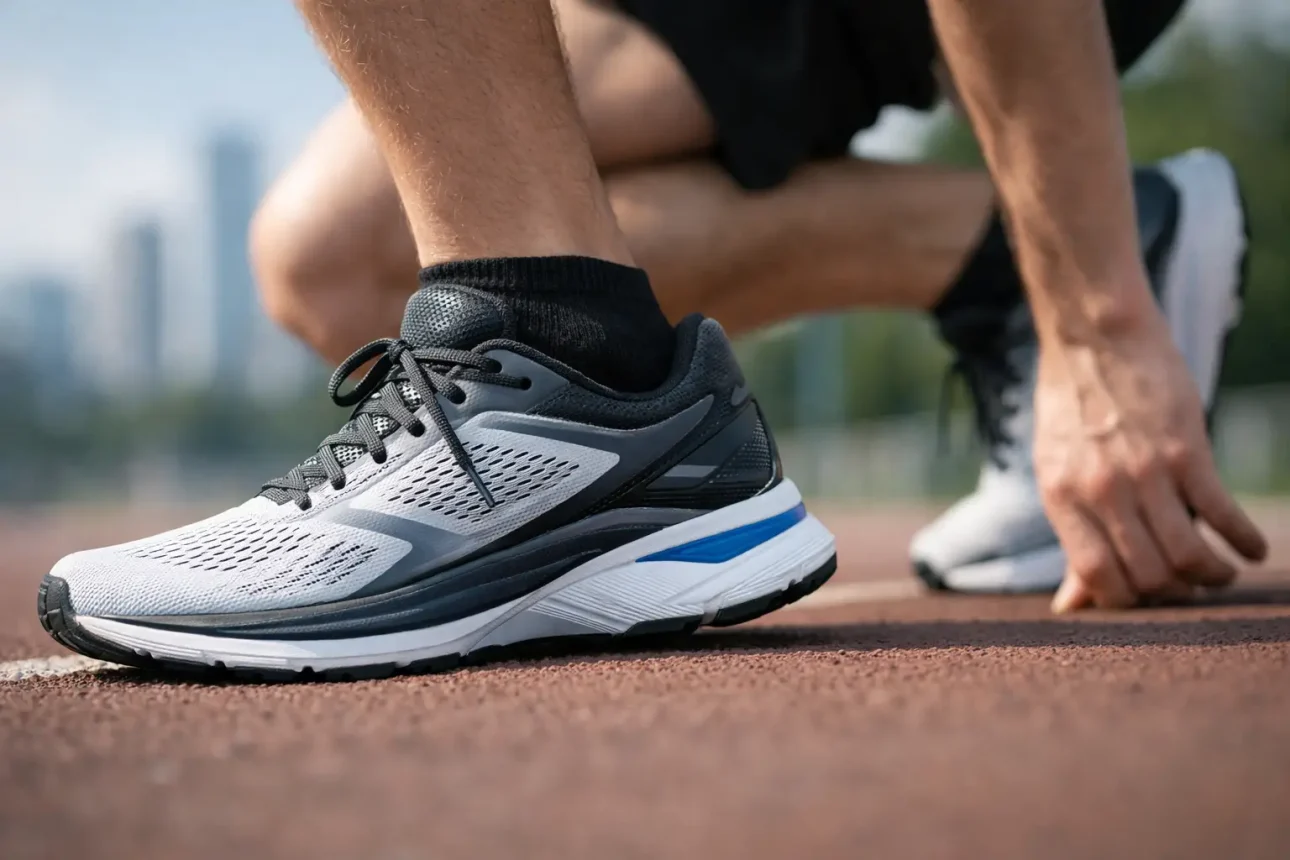
A bad run usually starts before you leave the house. Not with your pace. Not with the weather. With the wrong shoes.
That’s why performance running shoes for men matter more than most guys think. The right pair feels smooth in the first mile and still decent when your legs get heavy. The wrong pair feels fine for ten minutes, then starts rubbing, slapping, or sinking in ways that make you want to cut the run short.
We’re not here to sell you on buzzwords. We’re here to help you skip the pairs that look fast on a product page but feel terrible on the road.
A performance running shoe should do one job well – help you run better with less hassle. That can mean lighter weight, better grip, a smoother ride, or cushioning that doesn’t go dead too fast. It does not mean the shoe has to be stiff, weird-looking, or built only for serious racers.
For most men, performance comes down to three things. First, the shoe needs to feel stable when you land and push off. Second, it needs enough cushioning for your usual distance without turning soft and sloppy. Third, it needs an upper that holds your foot without squeezing it like a vise.
This is where people get burned. A shoe can have a big-name logo, a fancy foam, and a lot of online hype and still be a bad pick for your stride. Some shoes are quick but harsh. Some are plush but clunky. Some look clean and feel good for two runs, then flatten out. We skip those.
The biggest mistake we see is guys buying one shoe and expecting it to do everything. It can work, but only if you’re honest about how you run.
If you run a few times a week at an easy pace, your best move is a daily trainer. This is the workhorse pair. It should feel comfortable right away, handle pavement well, and not beat up your feet after 30 to 60 minutes. Think Brooks Ghost, New Balance 880, Asics Gel-Cumulus, or Nike Pegasus. These models stay popular for a reason. They’re not flashy, but they usually get the job done.
If you like faster runs, intervals, or just want a snappier feel, then a lightweight trainer makes more sense. This is where shoes like the Adidas Adizero line, certain Puma Deviate models, or a responsive Nike option can feel more alive. The trade-off is simple. You get more speed and less bulk, but often less forgiveness on long easy days.
If your runs are getting longer, cushioning matters more. That doesn’t mean you need the tallest, softest midsole on the shelf. Too much softness can feel unstable, especially if your form gets sloppy when you’re tired. Hoka does this category well when you want protection without a brick on your foot. Brooks and New Balance also have solid long-run options that feel more controlled.
And if you’re buying a shoe mainly for race day, be honest about how often you’ll actually use it. Some race shoes feel amazing when you’re fresh and pushing hard. They can also feel awkward for normal training. If you want one pair for everything, don’t make a full-on race shoe your only pair.
Start with your real routine, not your ideal one. If you tell yourself you’re training for speed but mostly jog three miles after work, buy for the runs you actually do.
Cushioning is the first filter. If you want a softer ride, pick a shoe with enough foam to take the edge off pavement. If you hate mushy shoes, go firmer. There’s no gold medal for suffering through a shoe that feels hard just because someone online says it’s more “connected.”
Fit matters just as much. Your heel should stay put. Your midfoot should feel secure. Your toes need room to move. Not a ton of room. Just enough so you’re not jamming into the front on downhills or during longer runs. A lot of men size their running shoes too tight because they buy them like casual sneakers. That’s a mistake.
Then there’s support. Some runners do fine in neutral shoes. Others feel better in shoes with a little structure through the arch or heel. You do not need to overthink this unless you’ve already had problems in neutral pairs. If a shoe feels wobbly under you in the store, it probably won’t get better on mile four.
Weight matters, but less than people think. A slightly heavier shoe that fits well will almost always beat a super-light shoe that rubs, slips, or feels unstable. We like light shoes. We just don’t worship them.
Nike makes some great running shoes, but not every Nike runner is worth the money. The Pegasus is a safe pick for a lot of guys because it balances comfort, grip, and everyday usability. Some of Nike’s more aggressive models feel better on fast days than they do on regular training runs. If you want one pair for normal use, don’t get distracted by the loudest option.
Asics has cleaned up its lineup over the years. A lot of their shoes now feel smoother and less stiff than older versions. They’re often a smart choice if you want something dependable and don’t care about chasing trends. Not always the coolest look. Usually a solid ride.
Brooks is still one of the easiest brands to recommend if you want comfort without drama. The designs can be plain. Fine. Your feet don’t care. Brooks tends to work well for daily mileage, especially if you want consistency more than flash.
Hoka is popular for a reason, but let’s be honest – some pairs look bulky. If you can live with that, the cushioning can be worth it. Just don’t assume more stack height automatically means a better run. Some men love that protective feel. Others feel disconnected from the ground.
New Balance has gotten a lot stronger in both fit and style. Good option if you want performance and a cleaner look. Their lineup has enough variety that most runners can find something that works, from easy-day shoes to faster models.
Adidas and Puma both have some underrated performance pairs. When they get it right, the ride feels lively without being harsh. When they miss, the fit can be picky. Try these if you know what kind of feel you like and don’t mind being a little more selective.
Outsole grip matters. Maybe not on a dry sidewalk in perfect weather. But once roads get slick, bad grip gets annoying fast. If you run early, late, or through mixed weather, don’t brush this off.
Durability matters too. A shoe that feels great for three weeks and then starts breaking down is not a deal. Some soft, ultra-cushioned models lose their pop faster than firmer daily trainers. If you run often, that difference shows up quickly.
Upper comfort gets overlooked because people focus on foam. Big mistake. If the tongue slides, the collar rubs, or the laces create pressure on the top of your foot, it doesn’t matter how good the midsole is. You’ll still hate the shoe.
And yes, style matters. Not more than comfort, but it matters. You’re more likely to wear a pair that looks sharp. We’re not pretending otherwise. The sweet spot is a shoe that runs well and doesn’t look like medical equipment.
If a shoe feels too narrow, skip it. Don’t talk yourself into a break-in period that probably won’t fix the problem.
If the foam feels unstable when you walk, skip it. Running won’t magically improve that.
If a shoe only feels good at one pace, make sure that’s actually your pace. A lot of fast-feeling shoes are fun for ten minutes and annoying everywhere else.
And if you’re buying based only on hype, stop. Some of the most talked-about running shoes are built for a very specific runner. That runner might not be you.
The best performance running shoe is not the most expensive one or the one with the loudest ad campaign. It’s the pair you forget about once the run starts. Secure fit. Solid ride. No weird hot spots. No fighting the shoe.
If you’re new to running, start with a dependable daily trainer from a brand that has a track record – Brooks, Asics, Nike, New Balance, Hoka, Adidas, or Puma all have good options. If you already know you like a softer or faster ride, narrow it down from there. Keep it simple.
That’s how we look at it at Sneaker Loft. Less noise. Better picks.
Your feet will tell you pretty quickly when a shoe is right. Listen to them before you listen to the hype.