Cart
No products in the cart.
Your commute can turn into a lot of walking fast. A few blocks to the train, a platform change, stairs, another walk to work, then the same trip home when your feet are already done. The best shoes for commuting are not the loudest pair in your closet. They are the pair you can wear from 7 a.m. to 7 p.m. without thinking about your feet every ten minutes.
We pick commuter shoes for real city days. That means cushioning that does not feel mushy, grip that handles wet sidewalks, and a shape you can wear with regular clothes. You do not need a hardcore running shoe for every commute. But if your route involves a lot of pavement, flat fashion sneakers will catch up with you.
Start with the bottom of the shoe. Your commute is mostly hard ground: concrete, tile, asphalt, train platforms, office floors. A little cushioning takes the edge off those surfaces. Too much can feel bouncy and unstable when you are rushing down stairs or standing on a moving train. We want a shoe that feels protected but planted.
Then look at the upper. Knit and mesh breathe well, which matters when the train is crowded or the weather turns warm. They also get wet quickly in rain. Leather and suede handle light weather better and look sharper with jeans or work pants, but they usually run warmer. There is no perfect material. Pick based on your route, not a product photo.
A commuter shoe also needs a stable heel and enough room through the toe box. If your toes feel squeezed in the store, skip the shoe. Do not talk yourself into a break-in period for a daily pair. Some shoes soften slightly. A bad fit stays bad.
Finally, be honest about your style. If a running shoe feels right but looks too athletic for your office, you will stop wearing it. The best pair is the one that makes the whole trip easier and still works when you walk into the building.
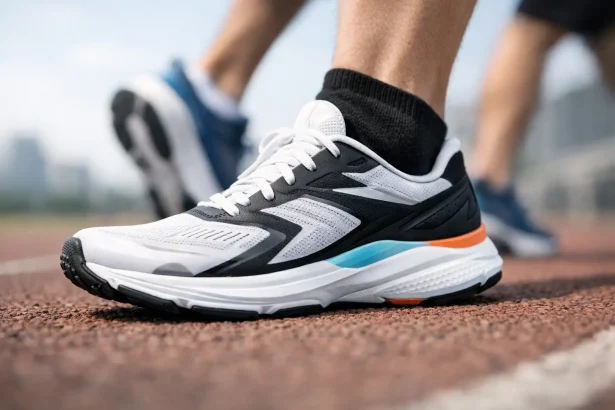
If you walk more than a mile each way, start with a running-inspired shoe. The Brooks Ghost is a safe pick for people who want balanced cushioning without a huge, squishy platform. It feels predictable. That sounds boring, but boring is good when you are late, carrying a bag, and trying to catch a light.
The New Balance 1080 is softer and more relaxed underfoot. We like it for commuters who spend a lot of time walking and standing, especially if hard sidewalks leave their feet feeling beat up. The trade-off is its thicker, softer feel. It is not the sharpest choice for quick direction changes or a fast walk through a packed station. For a long, steady commute, though, it earns its place.
Both styles lean athletic. Wear them with casual work clothes, denim, joggers, or a simple overshirt and they look clean enough. If your workplace expects dress shoes, keep a pair at your desk. Do not force one sneaker to do a job it cannot do.
The ASICS GEL-Nimbus is for the commuter who wants more protection from hard ground. It has a cushioned ride that helps long walks feel less punishing, yet it is usually more controlled than the softest max-cushion shoes. It is a strong choice if you are on your feet at work after the commute instead of sitting at a desk all day.
The HOKA Clifton also works well here. It is light for a shoe with that much stack underfoot, and its rolling shape can make walking feel easier when your legs are tired. But here is the honest part: HOKA’s tall sole is not for everyone. If you like feeling close to the ground or you often move quickly on uneven sidewalks, try it before you commit. A big sole can feel great on a straight walk and awkward when you are cutting around people.
Pick the GEL-Nimbus if you want a more traditional, secure feel. Pick the Clifton if you want lighter weight and a softer rolling stride. Neither is a formal office shoe. Both are much better than a thin canvas sneaker when your day includes stairs, concrete, and eight hours upright.
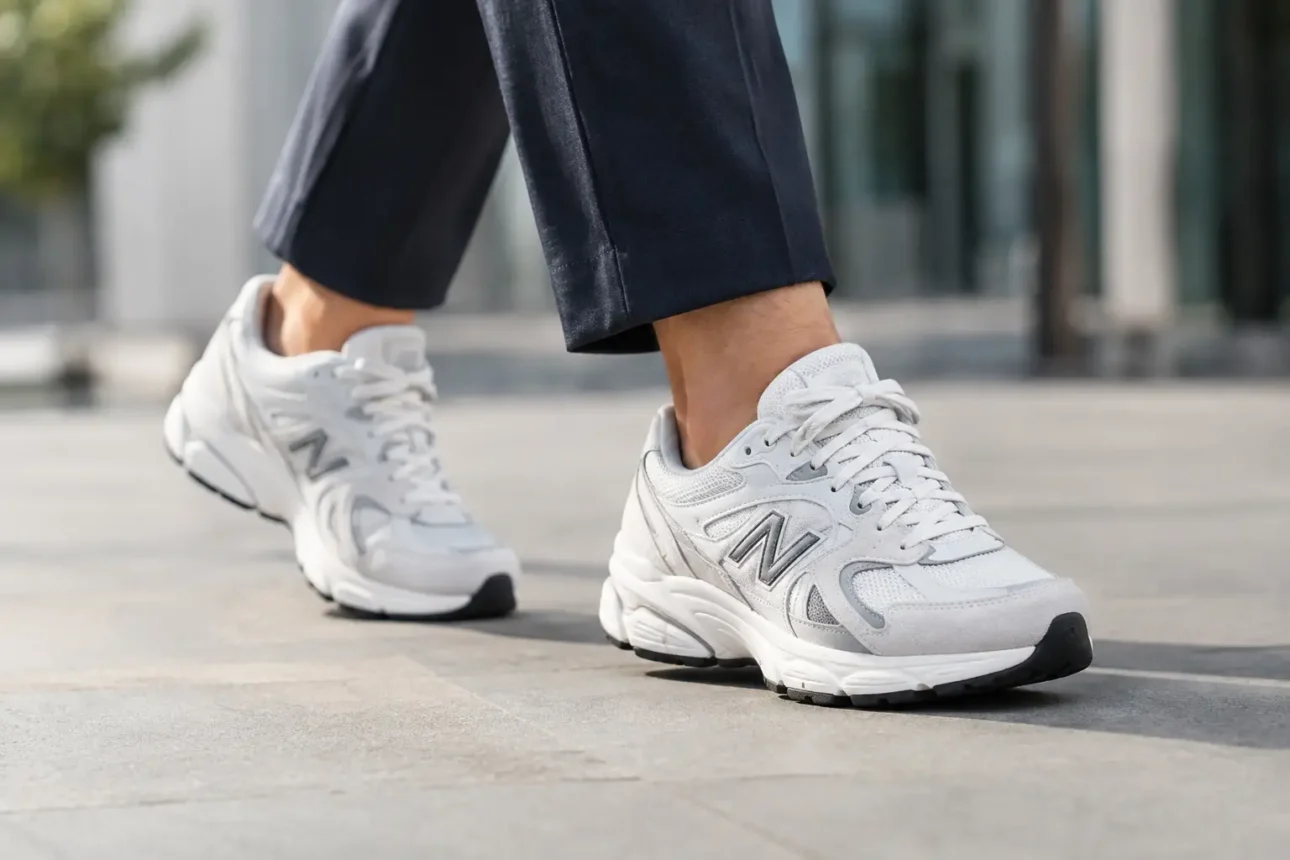
Not every commute calls for a performance runner. The New Balance 990 line is one of our favorite answers when you need comfort without looking like you are heading to a 10K. It has enough support and cushioning for regular city walking, while suede and mesh give it a more grown-up look than a bright running shoe. It costs more than many everyday sneakers. We will not pretend otherwise. But if you wear it several days a week, it makes more sense than a cheaper pair that feels tired after two months.
The Nike Air Max 1 is another solid lifestyle option for shorter or moderate commutes. It has more underfoot comfort than most flat retro sneakers and works with nearly anything. We like it for a walk to transit, a few blocks downtown, and a normal office day. For a three-mile walk each way, we would take the Ghost or 1080 instead. The Air Max 1 looks better than it performs, and that is fine as long as you do not expect it to be a distance shoe.
The Adidas Samba and Puma Palermo are easy style picks. They sit low, pack easily, and work with jeans, chinos, shorts, and casual office fits. They are also fairly flat. That is the point. It gives them that clean, old-school look.
For a short walk, train ride, and mostly seated workday, they are a good call. For long walks or all-day standing, skip them. A shoe can look great and still leave your heels tired by late afternoon. We would rather be blunt than tell you a terrace sneaker is built for pavement miles.
A lot of people buy for the version of their commute they wish they had. They buy a sleek low-profile sneaker because it looks good online, then remember they walk 25 minutes each way on cracked sidewalks. Or they buy a heavily cushioned runner when their actual route is a five-minute walk to the car and a day in a relaxed office.
Think about the trip you take most often. If you walk more than 30 minutes total, put comfort first. A Brooks Ghost, New Balance 1080, ASICS GEL-Nimbus, or HOKA Clifton makes sense. If you have a moderate walk and want something that works with better clothes, look at the New Balance 990 or Nike Air Max 1. If walking is minimal and style is the main thing, the Samba and Palermo do the job.
Weather matters too. Mesh runners are comfortable in heat, but a soaked mesh shoe on a rainy commute is miserable. If rain is common where you live, save your lightest knit pair for dry days. A suede lifestyle shoe is not a rain shoe either. Water marks and wet suede are not a good look. Keep a tougher pair for bad weather instead of wrecking the shoes you actually like.
Your feet often swell a little after walking and standing. That is why a shoe that feels barely okay in the morning can feel cramped by the ride home. Try shoes later in the day if you can. Wear the socks you actually commute in. Leave about a thumb’s width in front of your longest toe, and make sure your heel is not slipping when you walk.
Do not buy a narrow shoe hoping it will stretch across the toes. Uppers may give a little, but the platform underneath will not change. If one foot is slightly bigger, fit the bigger foot. It is normal. It is also better than getting home with one angry foot every day.
If you use orthotics or like a more structured insole, check whether the shoe has a removable insole and enough volume inside. Some sleek lifestyle shoes do not. Running models usually give you more room to work with.
Even the best commuter sneaker needs a break. Alternating between two pairs lets the foam recover and gives you a backup when one gets soaked or dirty. It also keeps you from wearing a worn-out sole longer than you should just because it is your only option.
At Sneaker Loft, we would start with one practical walking pair and one cleaner lifestyle pair if your budget allows. Use the cushioned pair for the long days. Use the lower-profile pair when the walk is short and the outfit matters more. That is a better plan than buying one expensive shoe and asking it to cover every mile, meeting, and rainy platform.
Pick for the walk home, not the mirror at breakfast. When it is 5 p.m., your feet will tell you whether you bought the right shoe.