Cart
No products in the cart.
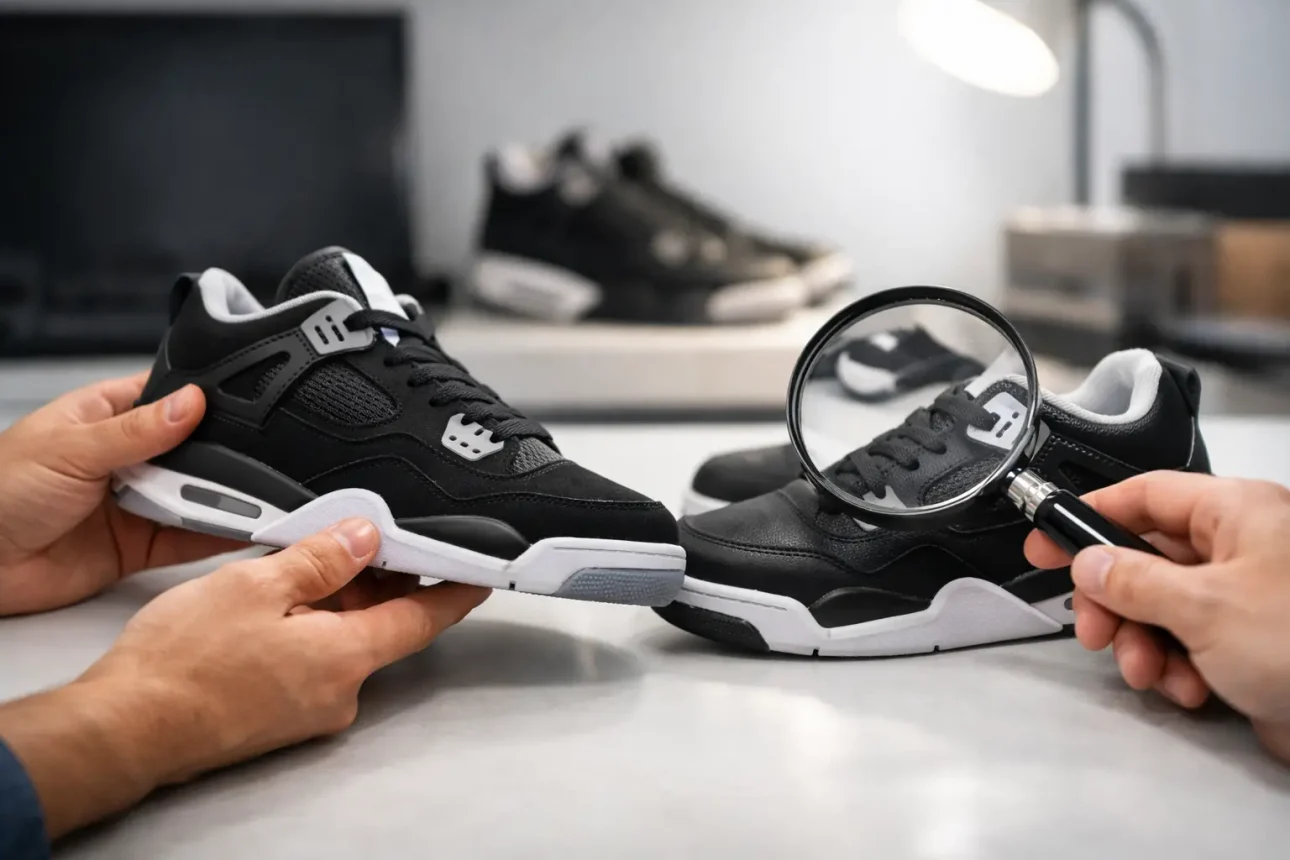
That pair looks right in photos. The box has the logo. The price is almost believable. Then they show up, the shape is off, the glue is sloppy, and the cushioning feels dead by lunchtime. That’s why knowing how to spot fake sneakers matters before you buy, not after.
Fake pairs have gotten better. Some are obvious junk. Some are close enough to fool people scrolling fast on a marketplace app at 11 p.m. But close is not the same as real. If you know what to check, most fakes start falling apart pretty quickly.
Start with the seller, not the shoe. A lot of people do the opposite. They zoom in on stitching and miss the bigger problem – the listing itself feels shady. If the seller has stock photos only, no clear shots of the actual pair, vague sizing, weird return terms, or a price that looks way lower than everyone else, that’s your sign. Skip them.
Price is the first filter because it saves time. We all like a deal. We also know when a deal makes no sense. If a new pair of popular Nikes or New Balance styles is going for half of normal retail with no real explanation, you’re not beating the system. You’re probably looking at fakes.
That said, price alone doesn’t prove anything. Some real pairs get discounted. Older colorways sit. Less popular sizes get marked down. The point is simple – cheap can be real, but suspiciously cheap plus a sketchy listing usually means trouble.
You do not need detective skills here. Look for clear product photos, solid reviews, normal return policies, and consistent brand naming. Fake sellers often rush the details. They misspell model names, use strange product codes, or mix up colors in the title and description.
Look at the rest of their inventory too. If they somehow have every hot size in every hard-to-find sneaker, all brand new, all under market price, come on. That’s not luck. That’s a red flag wearing a fake box label.
A fake box can look decent from across the room. Up close, it usually gets shaky. The cardboard may feel flimsy, the print may look slightly blurred, and the label can have spacing issues or fonts that feel off. Small stuff matters here.
The SKU is one of the easiest checks. Most branded sneakers have a style code on the box label and on the size tag inside the shoe. Those codes should match. If they don’t, walk away. If the code format looks wrong for the brand, same answer.
Packaging is not everything, though. Boxes get damaged, replaced, or lost. Real shoes can show up in rough packaging. Fake shoes can come in a clean box. Use the box as one piece of the puzzle, not the whole case.
Size tags are hard for counterfeiters to get completely right. Look at the spacing, font weight, date format, production country, and barcode layout. You don’t need to memorize every brand tag. You just need to notice when it looks cheap, crowded, or inconsistent.
For Nike and Adidas especially, fake tags often try too hard to look official. Too much bold text. Strange alignment. Numbers that look slightly stretched. If the tag feels messy, it usually is.
Real sneakers usually have a clean shape. That sounds basic, but it’s one of the best checks. Fakes often miss the silhouette. The toe box may be too bulky, the heel too tall, the collar too stiff, or the whole shoe too flat.
This shows up a lot on running shoes and lifestyle pairs with a distinctive profile. A real Hoka or Asics model has a shape the brand repeats over and over. Fake versions get the broad look right, but the lines are sloppy. The curve is wrong. The proportions feel weird. Even before you touch them, something looks off.
If you’ve worn a real pair from that brand before, trust your eyes. People talk themselves out of obvious red flags because they want the deal to be real. Don’t do that.
Counterfeit shoes love getting 90 percent there. That last 10 percent is where they fail. A swoosh might sit too high. Adidas stripes may be too thick. New Balance logos may look puffy or uneven. Puma branding can feel slightly stretched.
Close enough is fake. Brands are obsessive about logo placement. If one shoe looks different from the other, or the logo edges look rough, that’s not a harmless factory variation. That’s bad copying.
You don’t need to be a materials expert. Just pay attention to what your hands and eyes are telling you. If the suede feels dead, the mesh looks shiny in a weird way, the leather looks plasticky, or the glue lines are easy to spot, something’s wrong.
Real pairs can have minor flaws. That happens. But they usually still feel intentional. Fake pairs feel rushed. Panels don’t line up well. Perforations are uneven. Stitching wanders. The insole print rubs off too fast. The outsole rubber feels too hard or too slick.
This matters beyond looks. A fake sneaker usually wears badly. The upper creases in the wrong places. The cushioning bottoms out faster. The shoe may feel fine for ten minutes and awful after a full day on your feet. That cheap pair stops looking cheap the second your knees and arches start complaining.
Yes, smell the shoes. We would. A lot of fake sneakers come with a strong chemical smell from cheap glue, bad dye, or low-grade synthetic materials. Real shoes can smell new, sure. But they usually don’t smell harsh enough to clear a room.
Smell alone won’t prove a pair is fake. Combined with bad shape, sloppy tags, and weird materials, it helps make the call.
If you’re buying online, photos are your whole case file. You need shots of the box label, size tag, heel, outsole, toe shape, and both side profiles. If the seller avoids these angles, there’s a reason.
Look for mismatched details between pairs in the same listing. One shoe may have cleaner stitching than the other. The heel tabs may sit at different heights. The outsole pattern may look soft or poorly defined. Fake pairs often struggle with symmetry.
Watch out for heavy filters too. Oversaturated colors can hide bad materials. Soft focus can hide messy stitching. If every photo looks edited like a nightclub promo, ask for plain daylight shots. If the seller refuses, skip them.
This part helps, but don’t overcomplicate it. Compare the pair to standard retail images from the brand or trusted stores. Focus on shape, panel layout, logo placement, and outsole pattern. Not every color looks the same in every light, so don’t obsess over tiny shade differences.
What you’re looking for is structural mismatch. Wrong stitching lines. Wrong mesh pattern. Wrong heel shape. Wrong tongue height. Those are harder to explain away.
Some counterfeit pairs copy the obvious stuff well. The branding looks decent. The box is close. The color is mostly there. Then you put them on and the truth shows up fast.
The fit is weird. The cushioning feels flat. The heel slips. The tongue cuts in. The midsole feels too hard. That’s because fake sneakers are built to sell, not to wear. If you work on your feet, run casually, or just want a pair that still feels good at 5 p.m., fake shoes are a bad bet every time.
This is where buying from a trusted retailer saves you the headache. You’re not just paying for the logo. You’re paying for the actual shape, materials, comfort, and build the brand intended. That’s the stuff fake pairs usually mess up.
Sometimes a pair might be authentic and still be a bad buy. No returns. No clear history. Beat-up condition sold as lightly worn. A seller who can’t answer simple questions. We’d still pass.
A real sneaker with a shady buying process can be almost as annoying as a fake one. The whole point is to get shoes you actually want to wear, not to spend three days arguing over tags and tracking numbers.
If you remember one thing, make it this: fake sneakers usually ask you to ignore something. The price is weird, but maybe it’s fine. The shape is off, but maybe it’s just the angle. The tag looks messy, but maybe the factory changed it. That “maybe” is where people get burned. If enough details feel wrong, they are wrong. Save your money for a pair you don’t have to talk yourself into.