Cart
No products in the cart.
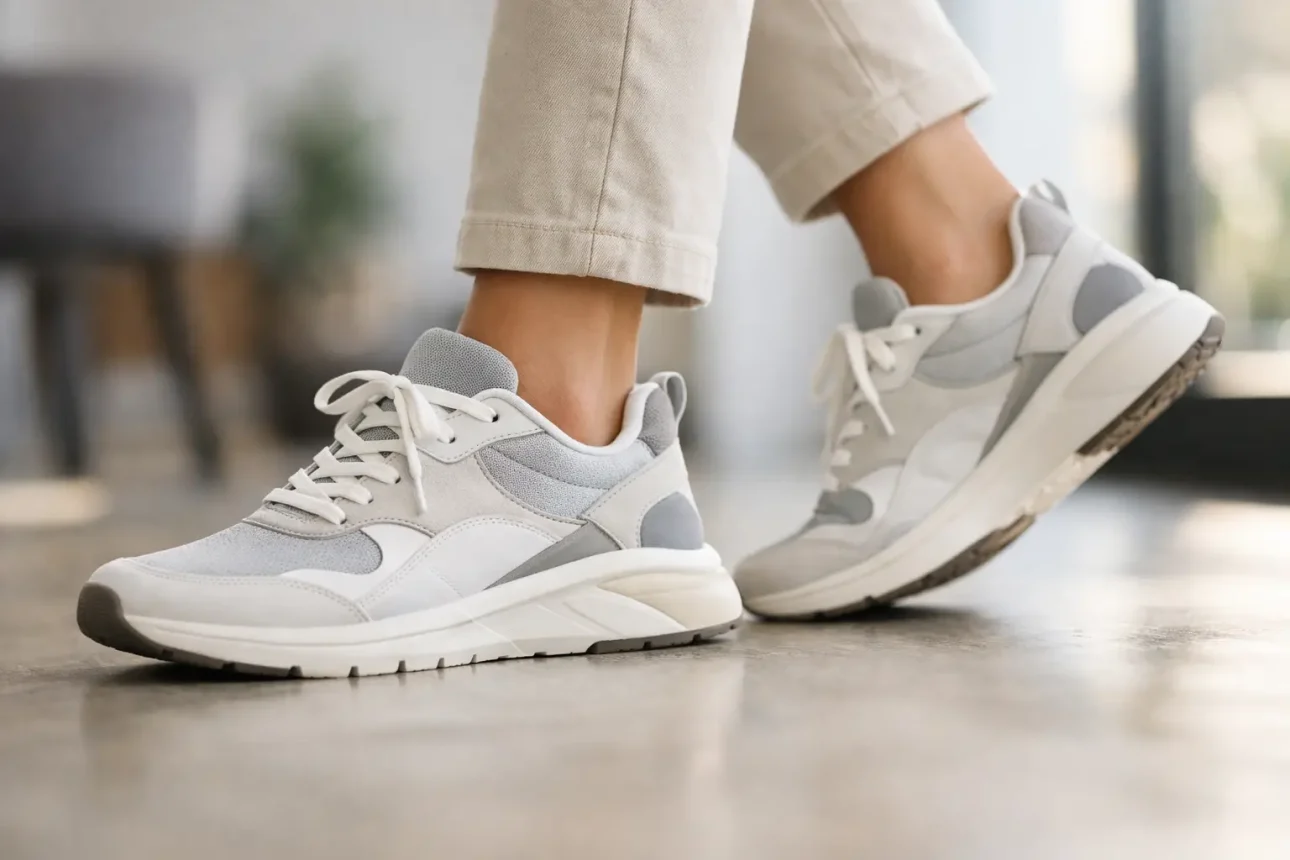
By noon, bad shoes tell on themselves.
You feel it in the heel first. Then your arches start complaining. By 5pm, even standing still feels annoying. That is why picking the right sneakers for all day wear matters more than whatever looks hottest on a shelf. If your shoes feel good at 8am but punish you by lunch, they are not the pair.
We like good-looking sneakers as much as anyone. But if you are walking, commuting, working retail, running errands, or just spending long hours on your feet, comfort has to carry the load. Style still matters. It just cannot be the only thing doing any work.
Forget the buzzwords. What matters is simple. You want cushioning that still feels decent after hours, support that keeps the shoe from going sloppy, and a fit that does not fight your foot.
Soft foam sounds great until it bottoms out and makes you feel every hard floor under you. On the other hand, a shoe that is too firm can feel harsh by the end of the day. The sweet spot is balanced cushioning. Enough softness to take the edge off. Enough structure so you do not feel like you are standing on a sponge.
Support matters just as much. Some sneakers feel amazing for twenty minutes, then start leaning inward or letting your heel slide around. That is a fast way to get tired feet. A solid heel counter, stable midsole, and decent platform width usually make a bigger difference than flashy tech names.
Then there is fit. This is where a lot of people get it wrong. They buy the shoe that looks clean, ignore the narrow toe box, and spend the next month pretending it will break in. Skip that. Your toes need room. Your heel needs to stay put. The upper should feel secure without squeezing the life out of your foot.
Some pairs look sharp in photos and wear terribly in real life. We have all seen it. Flat lifestyle sneakers with almost no cushioning. Super soft runners that feel unstable on long workdays. Trendy models with stiff uppers that rub in all the wrong places.
That does not mean lifestyle shoes are always bad or running shoes are always right. It depends on how you spend the day. If you mostly walk on city streets and want something clean with decent support, a well-built lifestyle sneaker can work. If you are standing on hard floors for eight hours, we usually lean toward walking or running-inspired models with more underfoot comfort.
The point is simple. Do not buy based on hype. Buy based on what your day actually looks like.
If you want the safest pick, walking shoes and daily running shoes are where we start. Brands like New Balance, Brooks, Asics, Hoka, and Adidas all make pairs that are built to handle long hours better than flat casual sneakers.
New Balance is strong when you want that middle ground of comfort and everyday style. A lot of their models feel stable, roomy, and easy to wear with regular clothes. They are not always the flashiest, but that is not a problem when your feet still feel fine later.
Brooks is a solid call if comfort is the whole mission. Some pairs are a little plain, sure. But plain is easy to forgive when the midsole feels reliable and the fit works for long shifts or long walks.
Asics usually gets it right on support. If your feet get tired in softer, wobblier shoes, Asics is often a smart move. The feel can be a little more structured than some people want, but for all-day wear, that structure often helps.
Hoka is the obvious name when people want max cushioning. Sometimes the hype is real. If you spend long hours on hard floors, the extra stack can feel like a relief. The trade-off is that not everyone likes the bulkier shape, and some Hokas can feel too tall or too soft if you want more ground control.
Nike and Adidas both have strong options too, but you need to pick carefully. Some of their lifestyle models are more about looks than all-day comfort. Their better daily trainers and walking-friendly pairs are usually the smarter bet if your feet are doing real work.
Start with the midsole. Pressing it with your thumb does not tell you much, but the shape does. Look for a base that is wide enough to feel planted. If it is narrow through the middle and super high off the ground, it may feel less steady than you want for a full day.
Check the heel next. It should feel secure, not floppy. If the back of the shoe folds too easily or your heel lifts when you walk, that is a bad sign. You should not have to over-tighten the laces just to feel held in place.
Then pay attention to the forefoot. Your toes should spread naturally. If the front of the shoe pinches in hard, skip it. Shoes do not become magically roomier because you want them to.
Weight matters too, but not in the way people think. Ultra-light sounds nice, but a little more structure can be worth it for long wear. We would take slightly heavier and more supportive over featherlight and flimsy every time.
Most people do not want to wear a giant orthopedic-looking shoe with every outfit. Fair enough. You want something that works with jeans, joggers, or work pants and does not look like you gave up.
The good news is you do not have to choose between comfort and style as often as you used to. A lot of modern runners and walking sneakers have cleaner lines, better color options, and less of that bulky medical look. New Balance does this well. So do Adidas and certain Nike models. Even some max-cushion pairs are easier to style now than they were a few years ago.
Still, be honest with yourself. If a sneaker looks amazing but feels dead underfoot after two hours, it is not an all-day shoe. It is a short-trip shoe. There is nothing wrong with that. Just do not make it your only pair.
A lot of shoppers chase the softest possible shoe. We get it. That step-in feel is convincing. But all-day comfort is not just about softness.
If you are mostly walking, commuting, or standing on concrete, softer cushioning can feel great. It takes the edge off repetitive impact and helps reduce that beat-up feeling later in the day.
But if you need more stability, very soft shoes can work against you. They can feel mushy, a little sloppy through corners, or tiring in a different way because your foot keeps working to stay centered. If that sounds familiar, go for something more balanced. Not brick-hard. Not marshmallow-soft. Just steady.
People buy too small because they like a snug look. Bad move. Your feet swell during the day. What feels fine in the morning can turn ugly later.
They also keep dead shoes way too long. If the outsole is worn down, the midsole feels flat, or the shoe leans to one side, it is done. No speech. No second chance.
And a big one – people wear flat fashion sneakers for ten-hour days because they match everything. We get the appeal. But if you are on your feet all day, skip the flat ones.
If your day is mostly standing, pick cushioning and stability first. If your day is mostly walking, go for a smooth ride with enough support to keep you comfortable late into the afternoon. If you care a lot about looks, find the cleanest shoe in the comfort category, not the most comfortable shoe in the fashion category. That switch saves a lot of regret.
At Sneaker Loft, we always come back to the same question: how will this shoe feel after hours, not minutes? That is the difference between a pair you keep by the door and a pair you avoid unless you have no other choice.
The right all-day sneaker is not the loudest one or the trendiest one. It is the pair you stop thinking about because your feet are not complaining. That is the pair worth buying.